
How Novak Djokovic Uses AI to Stay Competitive in 2026
The tennis legend integrates artificial intelligence into training, match analysis, and recovery strategies to maintain peak performance in 2026. AI is reshaping how elite athletes prepare for competition.

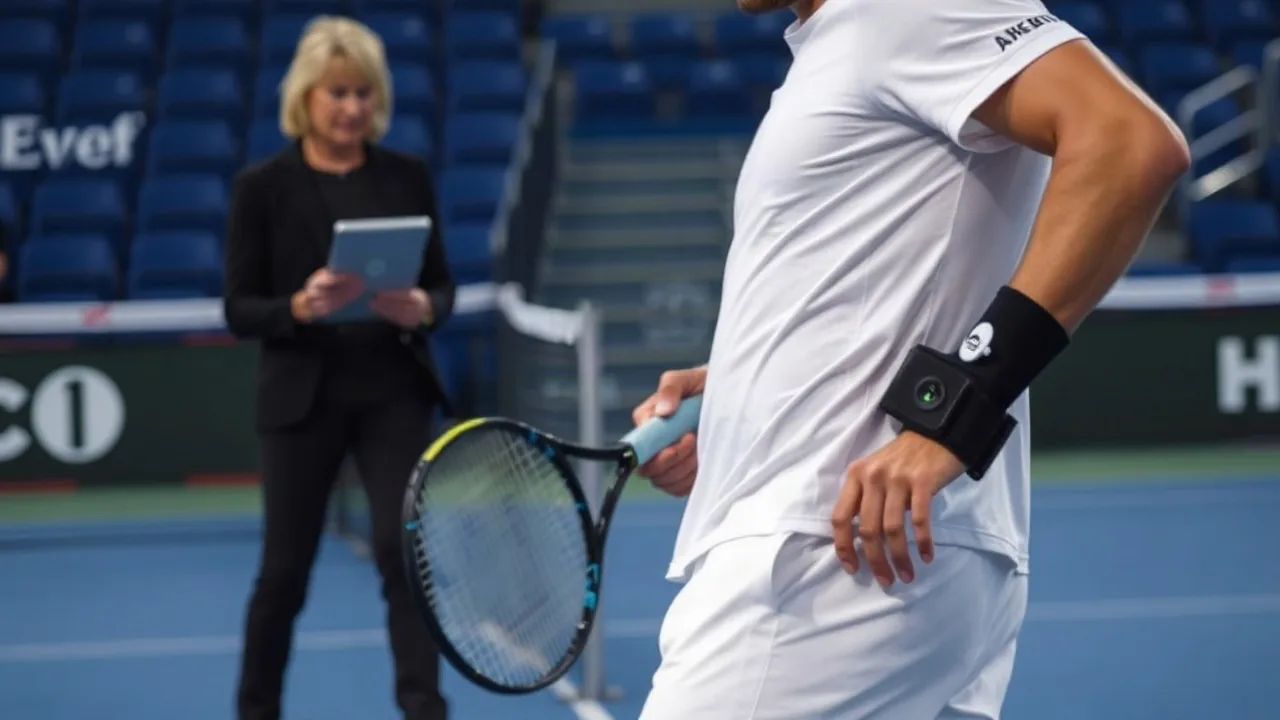
Novak Djokovic stepped onto the practice court at the Adria Tour facility in Belgrade in early September 2026 with a tablet in his coaching staff's hands displaying real-time biomechanical analysis. The data streaming across the screen represented a fundamental shift in how the 39-year-old champion prepares for matches: every serve, every footstep, every angle of his racket is now captured and processed by machine learning systems designed to identify marginal gains in performance.
The integration of artificial intelligence into professional tennis has accelerated dramatically over the past eighteen months, with Djokovic emerging as one of the most aggressive adopters of the technology. His coaching team now relies on AI-powered video analysis, predictive modeling, and personalized recovery protocols that would have seemed like science fiction a decade ago.
"We're using AI to process thousands of data points from Novak's matches and training sessions," explained Dr. Milan Martic, a sports scientist working with Djokovic's camp, in an interview on August 28, 2026. "What used to take hours of manual review now happens in minutes, allowing us to spot patterns and opponent tendencies that human analysis might miss."
The Technology Behind the Racket
Tennis strategy at the professional level has always demanded precision, but 2026 marks a turning point in how that precision is achieved. Djokovic's team employs multiple AI systems working in concert: motion capture cameras track his movement patterns, serve velocity is analyzed for consistency and effectiveness, and opponent footage is processed to identify tactical weaknesses.
The hardware setup includes:
- High-speed cameras recording serves and groundstrokes at 300 frames per second
- Wearable sensors tracking heart rate, muscle fatigue, and proprioceptive data
- Court-side AI terminals providing real-time shot classification and strategic recommendations
- Recovery monitoring systems that adjust training intensity based on physiological indicators
One particularly innovative application involves predictive modeling of opponent tactics. By feeding historical match data into neural networks, Djokovic's team can forecast which shots an opponent is likely to deploy in specific situations, allowing him to position himself more effectively before the ball is struck.
Sports technology firms competing for contracts with elite athletes have invested heavily in these systems. Companies like Genius Sports and StatsBomb, along with specialized tennis analytics startups, have developed algorithms that parse not just the outcome of points but the biomechanics of how they're won or lost.
Why AI Matters More Now Than Before
Djokovic's return to competitive tennis at age 39 faces a younger generation of players equipped with superior conditioning and athleticism. Jannik Sinner, Carlos Alcaraz, and other rising competitors bring raw physical advantages that training alone cannot overcome. AI levels the playing field by multiplying the efficiency of preparation and recovery.
The data-driven approach addresses specific challenges. Djokovic's aging knees and the accumulated wear of a 25-year professional career require intelligent load management. AI systems analyze training load versus adaptation to optimize the volume and intensity of practice without incurring injury risk.
"The mental side is also crucial," Martic noted. "AI can flag when Novak's performance metrics deviate from baseline levels, which often correlates with tactical adjustments needed mid-match or emotional factors affecting play."
Athlete performance optimization in 2026 extends beyond the individual. Opponent scouting has become a team sport. Within 24 hours of Djokovic facing a new opponent, AI systems generate comprehensive tactical dossiers: shot distribution maps, average rally lengths, serve patterns under pressure, net approach frequency, and conversion rates for each shot type.
This intelligence feeds directly into practice sessions. If an opponent favors a particular tactic in critical moments, Djokovic's team can simulate that scenario repeatedly, training neural pathways and building confidence through repetition grounded in actual match probabilities.
The Competitive Landscape in Professional Tennis
Djokovic is not alone in embracing this technology. Major tournaments and coaching staffs across the ATP and WTA circuits now employ similar systems. However, the depth of integration varies significantly. Well-funded teams have 2-3 full-time data scientists and sports engineers; smaller operations rely on commercial platforms with less customization.
The accessibility gap creates a subtle advantage for players backed by substantial financial resources. Sinner's Jannik team, for instance, has partnerships with Italian tech firms focusing on machine learning in sports. Alcaraz's coaching group leverages advanced facilities in Spain with integrated AI systems.
Yet Djokovic's advantage lies in experience and institutional knowledge. His team has been experimenting with these tools for three years, longer than most competitors. The accumulated insights and refined workflows provide tangible edges in crucial matches, particularly in Grand Slam tournaments where small margins determine outcomes over two-week campaigns.
Beyond individual match preparation, AI is reshaping tournament strategy. Which tournaments should an aging champion prioritize? Which surfaces favor his game relative to physical recovery cost? Machine learning models simulate seasonal scenarios, optimizing the calendar to maximize Grand Slam performance while managing career longevity.
The broader impact on professional tennis cannot be understated. Young players entering the professional circuit in 2026 and beyond assume AI coaching as standard. This generation will not remember tennis without data-driven feedback, just as today's players cannot imagine matches without electronic line-calling.
For Djokovic, AI represents a technological equalizer against biological time. Whether it proves sufficient to reclaim a Grand Slam title or sustain top-10 rankings through age 40 remains uncertain. What is clear is that professional tennis has permanently entered an era where the athlete, coach, and machine learning system form an inseparable triangle, and champions are those who integrate all three most effectively.