
Social Security Adjustment: AI Predicts 2026 Benefit Changes
Machine learning models now forecast Social Security cost-of-living adjustments for 2026. Financial planners are using AI insights to help clients prepare for shifts in retirement income.

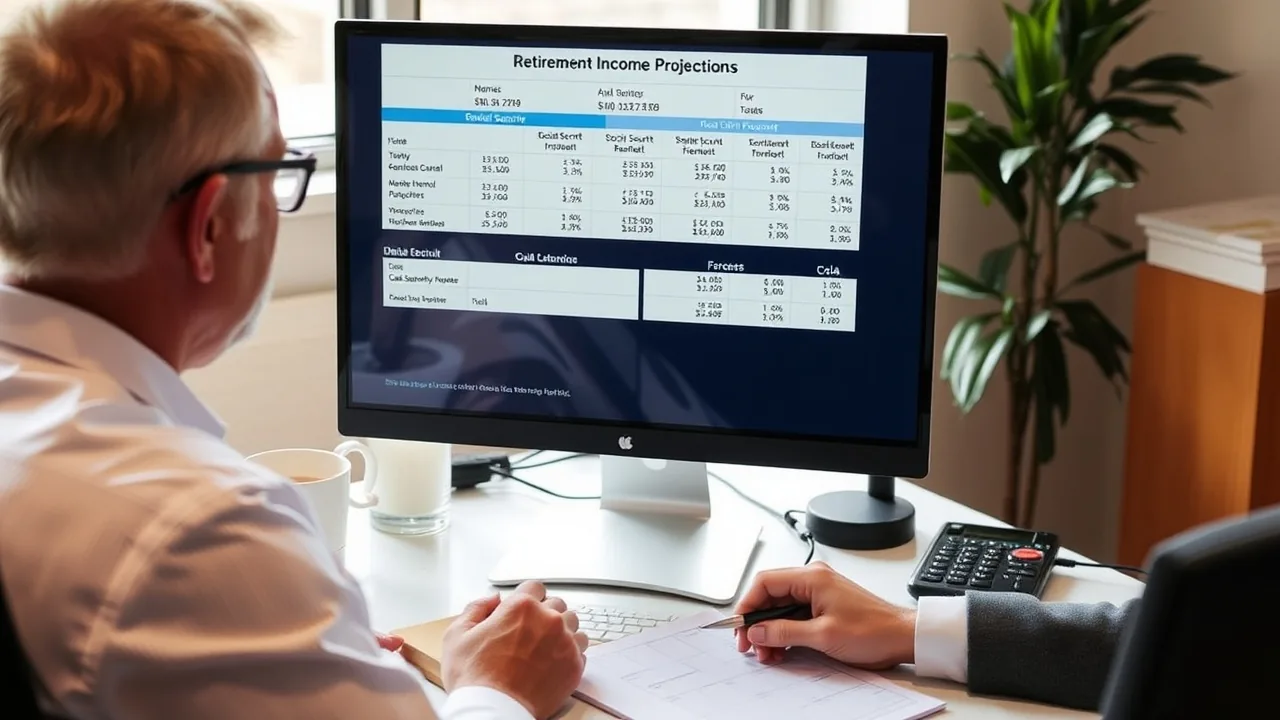
The Social Security Administration will announce its 2027 cost-of-living adjustment (COLA) in October 2026, but artificial intelligence researchers are already deploying predictive models to estimate the benefit increase retirees will receive. Early AI forecasts suggest the adjustment could range from 2.1% to 2.8%, significantly lower than the 3.2% increase retirees saw in 2026.
"Machine learning models trained on inflation data, wage indices, and historical COLA patterns can give us a reasonable ballpark six to eight weeks before the official announcement," said Dr. Jennifer Hartwell, a computational economist at the Urban Institute, in an interview on July 28, 2026. "The uncertainty band is still wide, but it helps financial advisors counsel clients on cash flow planning."
The COLA is tied to the Consumer Price Index for Urban Wage Earners and Clerical Workers (CPI-W) measured from the third quarter of 2025 through the third quarter of 2026. This year, that data window has included periods of moderating inflation after the elevated prices of 2024 and 2025, creating conditions for a smaller adjustment than 2026 saw.
How AI Models Forecast the Adjustment
Predictive systems now ingesting real-time inflation reports, employment data, and energy prices are generating forecasts weeks before the Social Security Administration publishes official figures. Several fintech platforms and registered investment advisors have integrated these AI-powered AI predictions into their retirement planning tools.
The models work by:
- Analyzing monthly CPI releases from the Bureau of Labor Statistics and extrapolating the third-quarter average
- Cross-referencing historical COLA calculations against current wage growth and benefit payment levels
- Running Monte Carlo simulations to calculate confidence intervals around the predicted adjustment
- Updating forecasts weekly as new inflation data becomes available
One major limitation remains: AI models cannot predict unexpected economic shocks. A sudden spike in energy prices or a shift in consumer spending patterns could shift the final COLA calculation outside current forecasts. Nonetheless, advisors say the models are accurate enough to help clients understand potential budget scenarios for 2027.
What This Means for Your Retirement Budget
The adjustment directly affects the monthly payment received by more than 67 million Americans collecting Social Security benefits. A 2.5% increase, roughly in the middle of AI forecasts, would raise the average monthly benefit by approximately $41 for a retiree currently receiving $1,640 per month.
For couples and higher-income earners, the dollar impact is more substantial. A beneficiary receiving the maximum Social Security payment of $3,822 per month in 2026 could see an increase of roughly $96 in January 2027 if the COLA lands at 2.5%.
Retirement benefits also extend to disabled workers and survivors' benefits, which receive the same percentage increase. The impact cascades across supplemental security income (SSI) programs and other federal payments indexed to COLA.
Workers still decades away from retirement should also pay attention. The 2026 changes to the earnings test and wage index affect when people can claim benefits without reductions and how future benefits are calculated. A lower COLA for new retirees in 2027 means early-claiming decisions become more strategically important.
Financial Planning Tools Go AI
Major investment platforms and financial planning software now include AI-driven COLA forecasts in retirement projections. Vanguard, Fidelity, and several robo-advisor firms have rolled out COLA scenario planning tools during the second half of 2026.
"Clients want to see the range of outcomes, not just one number," said Michael Reeves, a certified financial planner at Whitmore Wealth Management in Chicago. "AI models let us show them a 2.1% scenario and a 2.8% scenario side-by-side, along with the probability distribution. It changes how people think about their buffer."
The tools are also helping advisors stress-test portfolios. If Social Security income rises less than expected, will a client's portfolio withdrawal strategy still work? AI simulations can answer that question in minutes rather than days.
Critics caution that over-reliance on forecasts can create false precision. The Social Security Administration's official methodology, though straightforward, depends on data released in real time, and no AI model can perfectly replicate government rounding or policy decisions made by the agency's leadership.
Regardless of whether AI predictions prove exact, the shift toward predictive analytics in retirement planning signals a broader trend: algorithms are moving upstream into financial advice. By October 2026, when the true COLA is announced, millions of Americans will have already adjusted their expectations based on machine learning forecasts, demonstrating how thoroughly AI has woven itself into personal social security decision-making.