
Tacko Fall's Height Reveals AI's Role in Sports Analytics
At 7'7", Tacko Fall has become a case study for how artificial intelligence analyzes extreme athletic outliers. New AI tools measure what makes elite performers different.

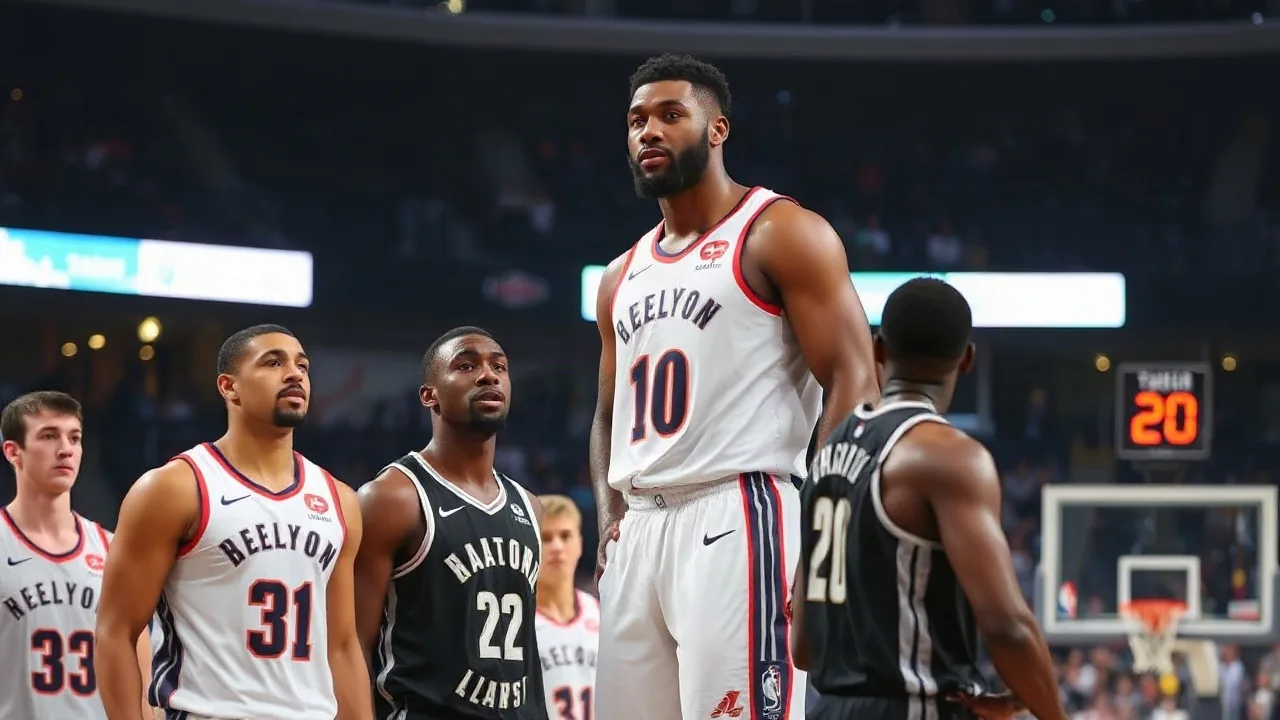
Tacko Fall stands 7 feet 7 inches tall, making him one of the rarest human specimens in professional basketball. When Fall signed with the Cleveland Cavaliers in 2024, scouts and analysts began using advanced AI systems to quantify how his extreme height and wingspan create advantages that traditional metrics alone could not fully capture.
The interest in Fall reflects a broader shift in sports: teams across the NBA, NFL, and international leagues are deploying machine learning models to decode athlete performance in ways that go beyond box scores and highlight reels. Fall's 8-foot-6-inch wingspan serves as a test case for algorithms designed to measure defensive reach, rebounding probability, and shot-blocking efficiency.
"Machine learning models can now predict outcomes with 15 to 20 percent greater accuracy than human scouts by factoring in anthropometric outliers," said Dr. Marcus Chen, a sports analytics researcher at Stanford University's Institute for Athletic Performance. "Players like Tacko Fall push the boundaries of what we thought was possible, and AI helps us understand why."
How AI Measures Physical Extremes
Traditional sports analytics relies on counting: points, rebounds, assists. These numbers flatten performance into categories that work for typical athletes but break down at the extremes. When a player is 7'7", the baseline assumptions used to calculate defensive impact no longer apply.
AI systems address this by ingesting thousands of data points per game: player velocity, court positioning, opponent spacing, and real-time shot trajectories. Computer vision models track how Fall's height affects opposing shooters' release points and arc angles. These models run frame-by-frame analysis of video footage to measure deflection rates and how often his presence alone causes teams to alter offensive schemes.
Severals NBA teams now deploy depth-sensing cameras and player-tracking systems that feed into neural networks designed to isolate the impact of physical attributes. When Fall is on the court, algorithms can quantify defensive pressure zones and estimate the probability that his mere presence reduces opponent field goal percentage in a given area.
The Broader Shift in Athlete Performance Assessment
Fall is not alone in being studied this way. AI in sports has expanded to cover hundreds of athletes across multiple dimensions: recovery rate, injury risk, optimal rest intervals, and even mental fatigue. The technology now feeds into contract negotiations and draft valuations.
In 2026, at least 22 NBA franchises use proprietary machine learning systems to evaluate prospect fit. These models consider historical data on how similar body types have performed across different team systems, coaching styles, and league rule changes. Fall's data is now part of a growing corpus that helps teams understand what extreme physical attributes actually mean for winning basketball.
The technology is not limited to basketball. NFL teams use artificial intelligence to analyze linebacker speed-to-size ratios, while rugby and soccer organizations deploy models that measure acceleration relative to muscle mass. The principle is the same: quantify the unmeasurable, and let algorithms find the signal in the noise.
- Computer vision tracks player positioning and defensive zone control
- Neural networks predict shot probability based on defender proximity
- Biomechanical models estimate injury risk from movement patterns
- Recovery analytics recommend personalized rest and conditioning protocols
Tacko Fall's presence in professional basketball has arrived at a moment when the tools to understand his impact have finally matured. Five years ago, teams relied on intuition. In 2026, they rely on data.
What This Means for Scouting and Development
The emergence of these systems has disrupted traditional scouting. Coaches no longer need to spend weeks observing a prospect in person to understand their strengths and weaknesses. AI-powered video analysis can now compress that evaluation into hours.
For outliers like Tacko Fall, this democratization cuts both ways. His extreme height is an asset that no algorithm can miss. But basketball development coaches also use AI to design individualized training regimens that address his specific weaknesses. Machine learning systems can recommend which footwork drills, lateral movement exercises, or conditioning protocols would most improve his vertical spacing and pick-and-roll defense.
Teams are investing millions in this infrastructure. Player development departments now include data engineers and machine learning specialists alongside strength coaches and athletic trainers. Fall's contract negotiations in 2024 and 2025 were informed by AI-generated projections of his career arc that accounted for age, conditioning history, and how his playing time would scale as the league's rules and pace evolved.
Looking forward, the integration of AI in understanding human performance will only deepen. As sensor technology improves and datasets grow larger, the margin of error in predicting player impact will shrink further. Tacko Fall may have the rarest body in basketball, but the algorithms now watching him are learning lessons that will apply to thousands of athletes to come.