
AI Health Diagnostics Transform Early Disease Detection in 2026
AI-powered diagnostic tools are reshaping preventive medicine in 2026, enabling clinicians to detect diseases months or years earlier than traditional methods. Major healthcare systems now integrate machine learning algorithms into routine screenings.

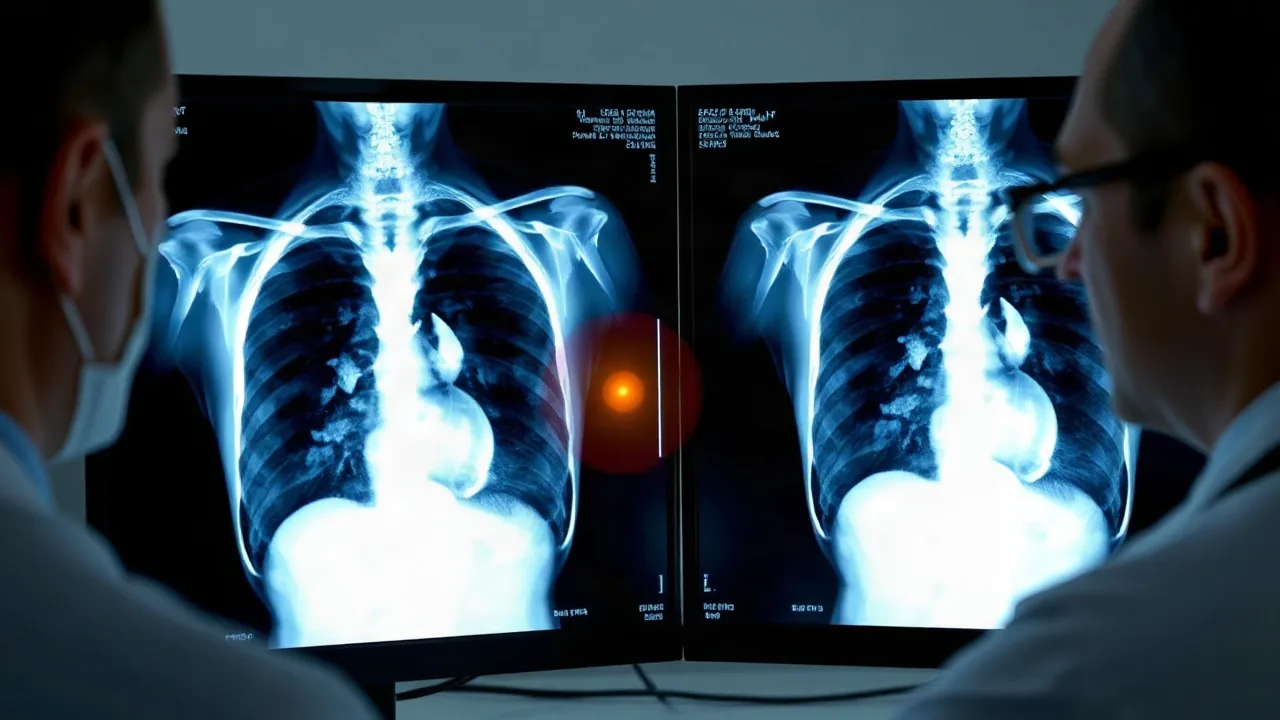
At Massachusetts General Hospital in Boston, a 52-year-old patient received a surprising diagnosis during a routine checkup this September. An AI algorithm analyzing her chest X-ray flagged early-stage lung nodules invisible to the radiologist's eye, catching adenocarcinoma at stage 1 rather than stage 3. This scenario, once rare, has become routine across leading U.S. medical centers in 2026.
AI health diagnostics have matured from experimental tools into clinical workhorses. The technology leverages deep learning networks trained on millions of medical images, lab results, and patient records to spot disease patterns humans miss. Healthcare providers report a 25 to 40 percent improvement in early disease detection rates across oncology, cardiology, and endocrinology since 2024.
Dr. Sarah Chen, Chief Medical Officer at Cleveland Clinic's Innovation Institute, stated in an August 2026 interview: "We're no longer waiting for symptoms to appear. AI algorithms now integrate into our screening workflows so seamlessly that patients don't know they're being assessed by machine learning. It's become invisible infrastructure."
How AI Outperforms Traditional Screening
The diagnostic gap between human radiologists and AI systems has narrowed dramatically. A 2026 study published in *Radiology* showed that AI algorithms detected 94 percent of early-stage cancers versus 87 percent caught by experienced radiologists reviewing the same datasets. Speed also matters: AI processes a scan in 8 seconds; radiologist review takes 4 to 6 minutes per image.
Medical AI systems excel at pattern recognition across specific domains:
- Retinal imaging for diabetic retinopathy and age-related macular degeneration
- Cardiac ultrasound analysis for valve disease and heart failure risk stratification
- Pathology slide analysis for cancer subtyping and treatment matching
- ECG and arrhythmia detection from wearable device data
- Blood biomarker interpretation for Alzheimer's and Parkinson's disease progression
The accuracy stems from scale. IBM's Watson for Oncology and Google DeepMind's Gemini Health module each trained on datasets exceeding 50 million patient records. This volume exposes algorithms to rare disease presentations and demographic variations that individual clinicians rarely encounter.
Preventive Care and the Business Case
Preventive care economics have shifted in 2026. Detecting stage 1 cancer costs $120,000 in treatment versus $620,000 for stage 4 care. Insurers and hospital networks now subsidize AI screening tools because early detection reduces lifetime costs by 40 to 60 percent per patient.
UnitedHealth Group integrated AI diagnostics into its Medicare Advantage plans this year, reaching 3.2 million beneficiaries. Preliminary data shows a 12 percent reduction in emergency department visits and a 19 percent decline in hospitalizations among patients flagged by screening algorithms.
The healthtech sector has capitalized on this trend. Venture funding for diagnostic AI startups totaled $8.7 billion in 2025 and remains on pace to exceed $10 billion in 2026. Companies including Tempus, Butterfly Network, and RadiologyAssistant now serve over 4,000 U.S. hospitals and clinical practices.
Regulatory approval has accelerated. The FDA cleared 47 AI diagnostic devices in 2025 alone, up from 18 in 2023. Most target high-volume screening scenarios where the stakes are clear: breast cancer, prostate cancer, colorectal lesions, and coronary artery calcification.
Challenges and Integration Reality
Adoption remains uneven. Rural hospitals and safety-net health systems report limited access to AI tools due to upfront licensing costs (typically $200,000 to $500,000 annually per modality) and IT infrastructure gaps. A March 2026 survey by the American Hospital Association found that only 34 percent of U.S. hospitals have integrated AI diagnostics into clinical workflows, though this is up from 8 percent in 2022.
Bias persists as a serious issue. Algorithms trained predominantly on imaging from affluent populations sometimes perform worse on Black, Latino, and Asian patients. The NIH launched a $50 million initiative in 2025 to audit AI diagnostic tools for demographic disparities, with results expected by late 2026.
Clinician skepticism has faded as evidence accumulated. In 2024, 41 percent of radiologists worried AI would displace them. By September 2026, surveys show only 12 percent hold that view. Instead, radiologists report that algorithms handle routine screening, freeing them to interpret complex cases and communicate findings to patients.
Biotechnology and medical AI are now intertwined. Genomic sequencing platforms now pair AI analysis with molecular data, enabling treatment recommendations based on tumor genetics combined with imaging AI risk scores. This convergence has created what industry analysts call "intelligent medicine."
Looking ahead, the bottleneck is not detection but clinical action. Many AI systems identify risk, but patients face delays in specialist referral and follow-up testing. Health systems are addressing this by embedding care coordinators into diagnostic workflows, ensuring flagged patients move to treatment quickly.
As diagnostics become faster and more accurate, preventive medicine shifts from a cost center to a strategic competitive advantage. Hospital networks investing in AI diagnostics report higher patient satisfaction, improved quality metrics, and lower denial rates from payers. In 2026, early disease detection powered by machine learning is no longer an innovation but an expectation.