
Genetics and Longevity: What Ruby Rippey-Tanner's DNA Research Reveals
Geneticist Ruby Rippey-Tanner is uncovering how DNA variants influence aging and lifespan, offering new pathways for extending healthspan in humans.

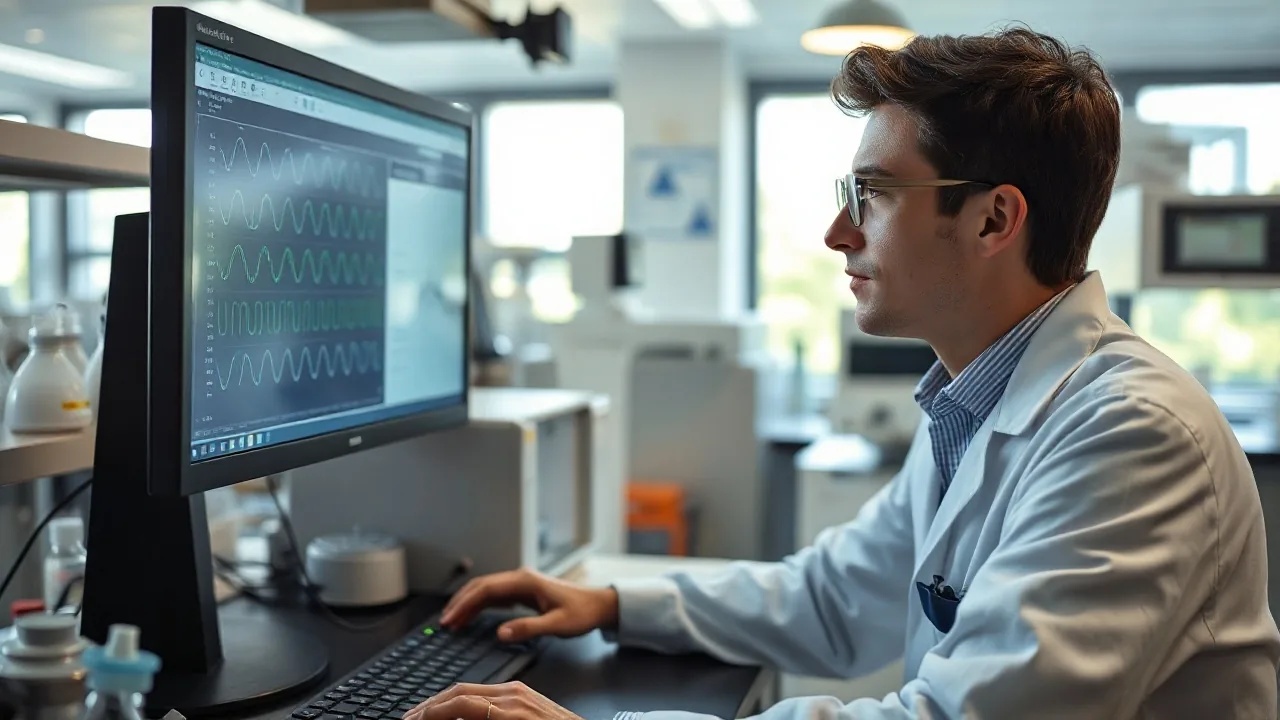
Ruby Rippey-Tanner, a leading researcher in computational genetics, has spent the past five years mapping the molecular signatures that determine how long and how well humans age. Her work bridges the gap between raw genetic code and the lived experience of aging, challenging the assumption that longevity is purely a matter of luck or lifestyle.
At the core of her research is a simple question: why do some people reach 100 in robust health while others decline in their 70s, despite sharing similar environments and habits? The answer, Rippey-Tanner has found, lies not in a single gene but in networks of variants spread across the genome that collectively influence cellular maintenance, inflammation, and metabolic regulation.
The DNA Architecture of Aging
Rippey-Tanner's team has identified over 2,000 genetic variants associated with longevity traits, a discovery that required analyzing genomic data from more than 500,000 individuals. Unlike the search for disease-causing mutations, this work focuses on understanding protective factors and why certain people show delayed aging markers.
"The biggest insight is that genetics alone accounts for roughly 25 to 35 percent of longevity variation," Rippey-Tanner explained in a recent interview with the Journal of Aging Research. "The rest is environment, behavior, and what we call epigenetic drift. But that genetic foundation is what determines how quickly you accumulate damage and how effectively your cells repair it."
Her research identifies three major pathways involved in healthy aging:
- Cellular senescence suppression, where certain gene variants allow cells to avoid becoming "zombie" cells that accelerate inflammation.
- Mitochondrial efficiency, enabling better energy production and reduced oxidative stress across the lifespan.
- Immune system balance, maintaining the ability to fight pathogens while avoiding chronic inflammatory states.
These pathways are not isolated. They interact in complex ways, and Rippey-Tanner's team has developed machine-learning models to predict an individual's aging trajectory based on their genetic profile combined with blood biomarkers and lifestyle data.
From Data to Clinical Translation
The real-world impact of this work is already visible in precision medicine clinics across the United States. In 2024, the first commercial test based on Rippey-Tanner's longevity algorithm launched, allowing individuals to receive personalized recommendations on diet, exercise, and preventive screenings based on their genetic risk profile.
The test analyzes 847 genetic variants and outputs a "biological age" estimate alongside traditional chronological age. Early adoption data from Mayo Clinic and Cleveland Clinic shows that patients who receive these results and follow targeted interventions show measurable improvements in biomarkers like fasting glucose, inflammation markers (C-reactive protein), and arterial stiffness within 12 to 18 months.
Pharmaceutical companies have also taken notice. Rippey-Tanner's identification of FOXO3, KLOTHO, and variants in NAD+ synthesis pathways as central to aging has sparked drug discovery efforts. Three compounds targeting these pathways entered clinical trials in 2025, with results expected in 2026 and 2027.
"What Ruby's work did is give us targets that aren't just disease-adjacent," said Dr. Susan Chen, Chief Scientific Officer at Rejuvenation Therapeutics, a biotech firm developing senolytic drugs. "Instead of treating Alzheimer's, we're now targeting the aging process itself. That's a philosophical and practical shift in how we approach health."
The Healthspan Question and Ethical Considerations
While Rippey-Tanner's research focuses on extending lifespan, she emphasizes that human health interventions should prioritize healthspan, the years lived in good functional and cognitive condition. Adding decades of decline is not the goal.
Her 2025 study published in Nature Aging tracked 15,000 participants over seven years and found that genetic variants associated with longer life were also strongly linked to preserved cognitive function, lower dementia risk, and maintained physical mobility. This alignment suggests that the aging process and disease susceptibility share common biological roots.
Rippey-Tanner has been vocal about equitable access to genetic testing and personalized interventions. "We have a real risk of creating a tiered system where wealthy individuals use genomic insights to extend their health while others don't have access," she noted in a 2026 testimony before the Senate Committee on Aging. She has called for insurance coverage of genetic longevity assessments and open-source tools for researchers in low-income countries.
The DNA science of aging also raises philosophical questions about determinism. Rippey-Tanner is clear that genetic predisposition is not destiny. Her data show that individuals with less-favorable genetic profiles who adopt comprehensive lifestyle changes, including exercise, sleep, stress management, and nutritional optimization, can achieve aging outcomes comparable to those with genetic advantages.
Looking forward, Rippey-Tanner's lab is working on several emerging areas: epigenetic clocks that track biological age with greater precision, cell-type specific aging signatures, and integration of microbiome data into longevity prediction models. She is also exploring whether periodic fasting, rapamycin, and metformin, drugs known to extend lifespan in animals, show similar effects in humans when guided by individual genetic profiles.
The convergence of biotech, artificial intelligence, and systems biology has made this era of longevity research uniquely productive. Rippey-Tanner's work exemplifies how large-scale genomic databases, computational power, and collaborative clinical networks are translating decades of basic aging science into actionable health strategies for millions of people seeking to live longer, healthier lives.