
Green Hydrogen Production Surges With Steel Industry Innovation
Steel manufacturers are driving a major shift in green hydrogen production through breakthrough industrial processes. These innovations are reshaping clean energy and sustainability across heavy industry in 2026.

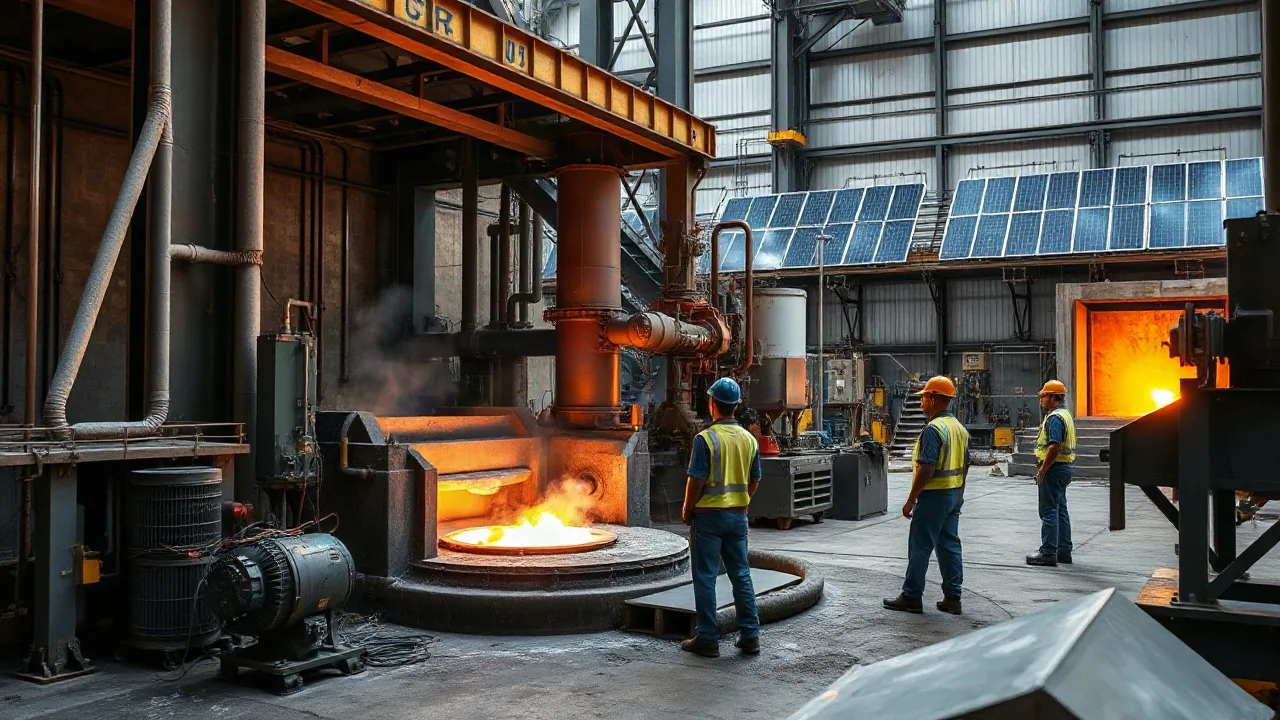
ArcelorMittal announced in July 2026 that its Hamburg facility would begin commercial trials of hydrogen-based steel production by Q4, marking a watershed moment for industrial decarbonization. The European steelmaker's move signals a fundamental pivot: major producers are now using green hydrogen not just as a fuel additive, but as the primary reducing agent in blast furnaces, displacing carbon-intensive coke.
This convergence reflects years of research finally reaching industrial scale. Steel production accounts for roughly 8 percent of global CO2 emissions, making it one of the hardest-to-abate sectors. Green hydrogen, produced by electrolysis using renewable electricity, offers a direct path to near-zero emissions at the point of production.
How Steel Mills Are Driving Hydrogen Demand
The steel industry consumes roughly 2 percent of global hydrogen already, but nearly all of it comes from steam methane reforming, which generates substantial CO2. The shift toward electrolytic hydrogen is reshaping procurement and energy strategy across integrated mills.
Three major pathways are accelerating adoption:
- Direct reduction iron (DRI) plants that replace blast furnaces entirely, using hydrogen gas to convert ore directly to sponge iron.
- Partial hydrogen injection into existing blast furnaces, reducing coke demand while maintaining current infrastructure.
- Hydrogen-based electric arc furnaces that melt scrap steel using both hydrogen and renewable electricity.
BlueScope Steel, Australia's largest steelmaker, completed its first hydrogen pilot at its Port Kembla facility in March 2026, producing test batches of structural steel with zero coal input. "The technical barriers have largely been solved," said Dr. Helen Chen, chief sustainability officer at BlueScope, in a September 2026 interview. "The real challenge now is securing long-term contracts for affordable green hydrogen at scale."
Germany's ThyssenKrupp has invested 2.5 billion euros in its hydrogen-ready facility in Duisburg, designed to handle up to 1.2 million tons of hydrogen-based steel annually once hydrogen supply chains mature. The plant is expected to reach full capacity by 2028.
The Clean Energy Feedback Loop
The surge in industrial hydrogen demand is directly accelerating renewable electricity expansion. Dedicated solar and wind farms are being built specifically to power electrolyzers supplying mills. In Texas, Plug Power and Nucor Corporation announced a joint venture in June 2026 to build a 250 megawatt electrolyzer complex to supply hydrogen to Nucor's Arkansas mill.
This creates a virtuous cycle: steel mills reduce emissions, renewable energy projects become economically viable at scale, electricity costs decline, and green hydrogen becomes cheaper. Average green hydrogen production costs have fallen 35 percent since 2023, now reaching 3.50 to 4.20 dollars per kilogram in favorable regions.
However, infrastructure gaps persist. Hydrogen pipelines are limited in North America; most mills currently receive hydrogen via truck, which adds 15 to 20 percent to delivered cost. The Interstate Natural Gas Association of America released a report in August 2026 showing that retrofitting existing natural gas infrastructure for hydrogen transport could reduce delivered costs by 30 percent, but requires coordinated regional investment.
Why This Moment Matters for Global Sustainability
The steel sector's hydrogen transition signals that clean energy is no longer confined to power generation and transportation. Heavy industrial processes that were considered immovable are now shifting. This has ripple effects across supply chains.
Automotive suppliers, construction companies, and manufacturers that use structural steel are beginning to demand hydrogen-produced grades. Volvo and BMW have both pledged to use only hydrogen-based steel in select vehicle frames by 2027, creating market pull that justifies mill investment in the technology.
The innovation cycle is accelerating. In May 2026, MIT researchers published findings showing that modifying blast furnace geometry can increase hydrogen utilization efficiency from 65 percent to 78 percent, reducing hydrogen volume requirements significantly. These incremental engineering breakthroughs are compounding into systemic change.
Energy-intensive industries beyond steel are watching closely. Cement producers, aluminum smelters, and petrochemical manufacturers face similar decarbonization pressures and lack obvious electrification pathways. The steel sector's successful deployment of hydrogen could provide a blueprint for those industries.
By September 2026, governments have begun tightening carbon border adjustment mechanisms. The EU's CBAM expansion now covers steel entering from regions with weaker climate standards. This regulatory pressure is converting hydrogen adoption from an environmental preference into a competitive necessity for mills serving global markets.
The convergence of mature hydrogen technology, falling renewable electricity costs, and regulatory mandates suggests that hydrogen-based steel production will reach 15 to 20 percent of global output by 2030. That shift alone would eliminate roughly 250 million tons of annual CO2 emissions, equivalent to taking 54 million cars off the road for a year.