
Stanford Scientists Achieve Rapid Coral Bleaching Reversal
Researchers at Stanford University have developed a groundbreaking method to rapidly reverse coral bleaching, offering new hope for threatened marine ecosystems. The innovative technique addresses the urgency of coral reef degradation.

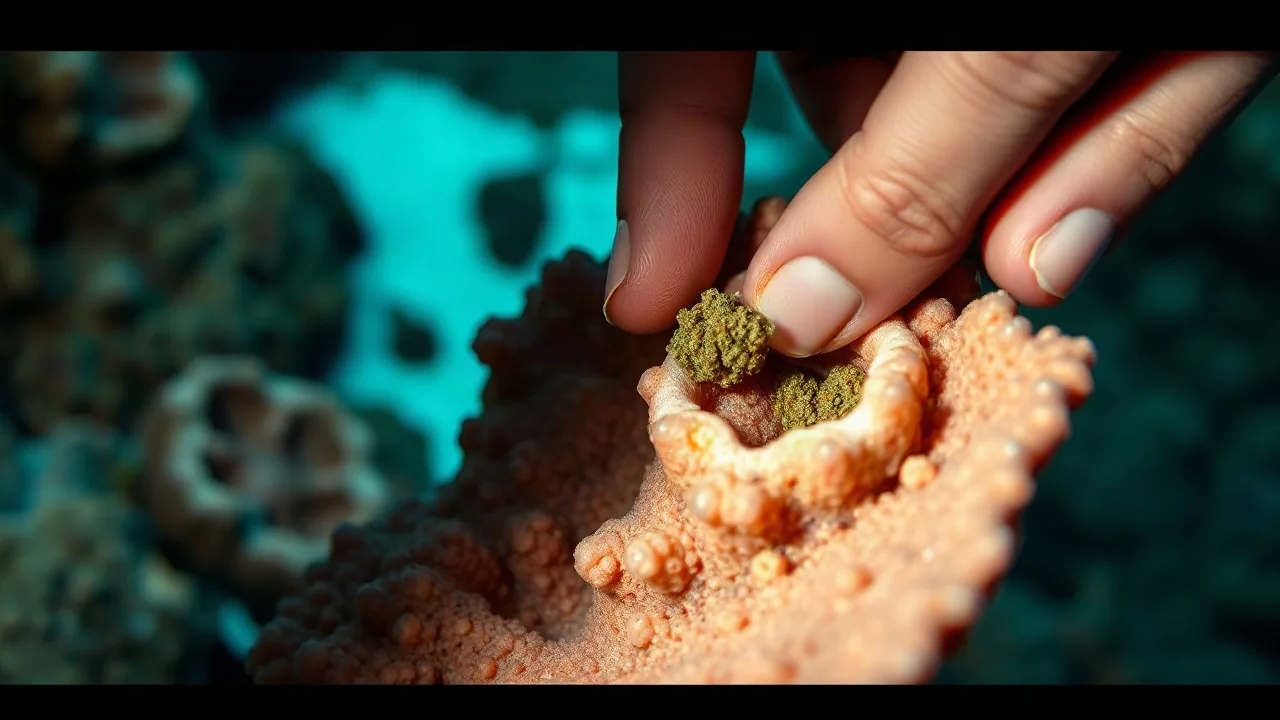
Stanford University scientists have successfully demonstrated a novel method for rapidly reversing coral bleaching, a phenomenon that has devastated marine ecosystems worldwide. The breakthrough, detailed in a recent study, involves a gentle reintroduction of microscopic algae, known as zooxanthellae, into bleached coral polyps, enabling them to regain their symbiotic relationship and color.
Coral bleaching occurs when stressed corals expel the symbiotic algae living in their tissues, causing them to turn white and potentially die if conditions do not improve. This process has accelerated dramatically due to rising ocean temperatures driven by climate change. Historically, reversing bleaching has been a slow, unpredictable process, often dependent on external factors improving without intervention. The new Stanford method, however, offers a proactive and significantly faster solution.
Accelerated Recovery Process
The research team, led by Dr. Anya Sharma of Stanford's Hopkins Marine Station, discovered that by carefully manipulating the water temperature and salinity around bleached corals and then reintroducing cultured zooxanthellae, they could accelerate the repopulation process by several orders of magnitude. In laboratory trials, corals that would typically take months or even years to recover—if they recovered at all—showed significant signs of recolonization and color restoration within weeks. Some specimens even achieved a full recovery, regaining their vibrant hues and healthy symbiosis, in as little as 14 days.
"We were astonished by the speed and efficacy of the method," stated Dr. Sharma in a press release. "It suggests that with the right intervention, many corals facing bleaching events are not a lost cause, at all. This gives us a critical tool to potentially buy time for these vital ecosystems while we address the root causes of climate change."
The technique involves collecting coral fragments from healthy reefs, inducing bleaching in a controlled laboratory setting to understand the process, and then applying the reversal method. The key lies in preparing the coral polyps to readily accept the reintroduction of the zooxanthellae, a step that was previously a significant bottleneck. This involves a brief period of mild thermal shock, paradoxically preparing the coral for a more stable symbiotic relationship under future warming conditions.
This development arrives at a critical juncture for global coral reefs. The Great Barrier Reef, for instance, has experienced multiple mass bleaching events in recent years, with severe impacts recorded in 2016, 2017, and 2020. Scientists estimate that up to half of the world's coral reefs have been lost or severely degraded since the 1950s. The urgency to find effective conservation strategies has never been greater, as these underwater cities support an estimated 25% of all marine life and provide crucial coastal protection and economic benefits through tourism and fisheries.
While the laboratory results are promising, the researchers emphasize that this is not a silver bullet for saving all coral reefs. Scaling up the process for large-scale reef restoration presents significant logistical and financial challenges. "This method offers a powerful new option for targeted interventions, especially for high-value or genetically important coral populations," explained Dr. Ben Carter, a co-author on the study. "It's a vital piece of the puzzle, but it must be combined with aggressive global action to reduce greenhouse gas emissions and mitigate ocean warming."
The team plans to conduct field trials in the coming year to assess the method's viability in natural reef environments. The potential to rapidly reverse coral bleaching could significantly alter conservation strategies, moving from passive monitoring to active, rapid intervention. The success of this Stanford University research could mark a turning point in the fight to preserve these invaluable marine ecosystems.