
Wildfire Beetles Sense Flames, Race Toward Fires; Ticks Face Danger
Certain beetle species can detect wildfires and are drawn to their heat, but the creatures also face significant risks on burned landscapes. Meanwhile, ticks in the same areas have a different fate when fires erupt.

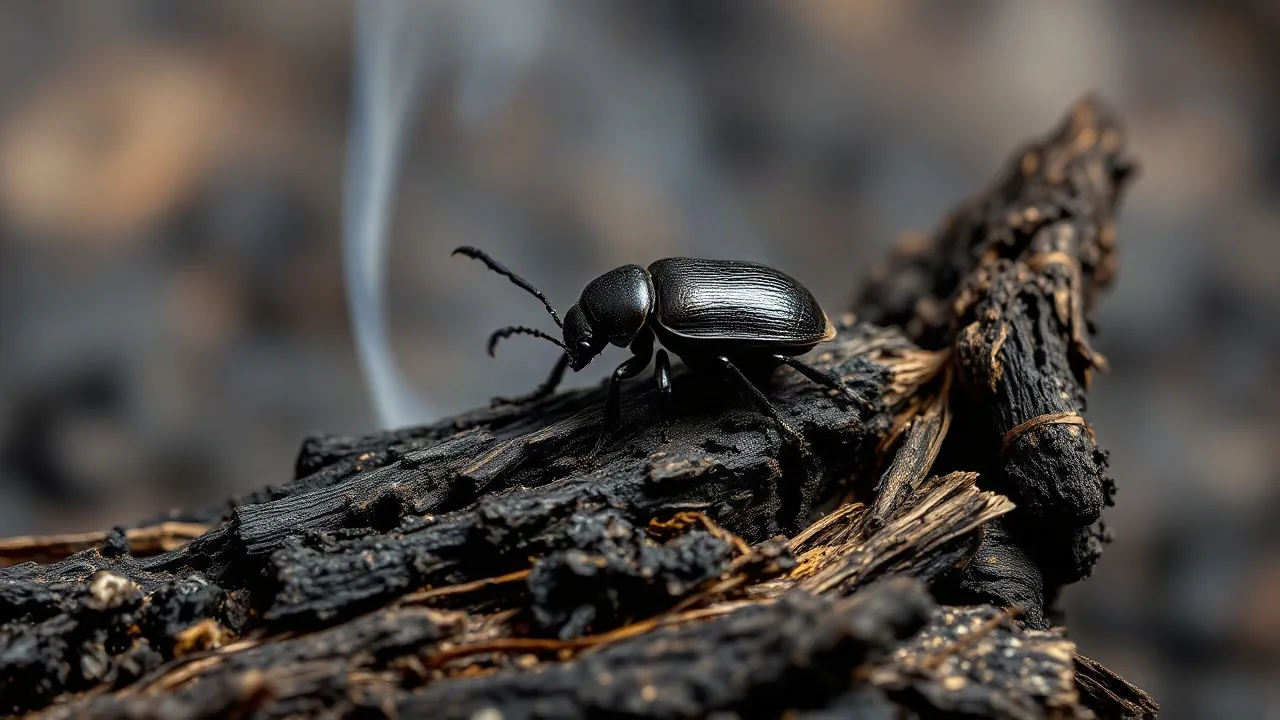
Some beetle species possess an extraordinary ability to detect wildfires, sensing the impending flames and even moving towards them, while others face a dire fate in the aftermath of a blaze. A recent study observed these remarkable insects, highlighting their complex relationship with fire and the ecosystems they inhabit. The research, focusing on post-wildfire environments, reveals how these creatures navigate landscapes transformed by heat and destruction.
Fire beetles, particularly certain species within the Buprestidae family, are known for their ability to locate active wildfires. They are attracted to the heat and smoke, which signal both a potential food source – burnt wood – and a place to lay eggs. These insects have evolved specialized sensory organs that can detect infrared radiation emitted by fires, allowing them to find newly ignited blazes from miles away. This instinctual drive towards danger is a crucial part of their life cycle, ensuring the next generation thrives in areas recently impacted by fire.
Navigating Post-Fire Ecosystems
While some beetles race toward the flames, others, like the common American dog tick (*Dermacentor variabilis*), face a significantly different outcome. Research conducted in the Spokane, Washington area following controlled burns and wildfire events indicates that high temperatures and the resulting environmental changes can be detrimental to tick populations. Unlike fire beetles, ticks do not benefit from fire; instead, the extreme conditions often lead to their demise. A study published in the Journal of Applied Ecology found that tick survival rates plummeted in areas subjected to intense heat, demonstrating the varied impacts of fire across different species.
The presence of these beetles on burn scars and in the vicinity of controlled fires offers a unique insight into ecological resilience. These insects are not just passive survivors; they are active participants in the post-fire environment, often acting as indicators of ecosystem health. Their ability to locate and utilize fire-affected areas underscores the intricate balance of nature, where even destructive events can foster new life and adaptation. For instance, the presence of gravid female beetles on scorched earth suggests a successful breeding strategy linked directly to fire events.
Understanding these natural processes is crucial for conservation efforts and for managing landscapes prone to wildfires. Scientists are studying these insects to better comprehend the complex ecological dynamics that unfold after fires. This knowledge can inform strategies for habitat restoration and species protection, ensuring that the diverse life forms that depend on these ecosystems can recover and thrive. The beetles' remarkable adaptation to fire provides a compelling case study in evolutionary biology and ecological adaptation.