
Android 17 Motion Assist Feature Aids Car Sickness Relief
Google's new Motion Assist feature is rolling out on Android 17 devices, designed to alleviate motion sickness for users in moving vehicles by displaying on-screen motion cues. The feature is currently appearing on Pixel phones.

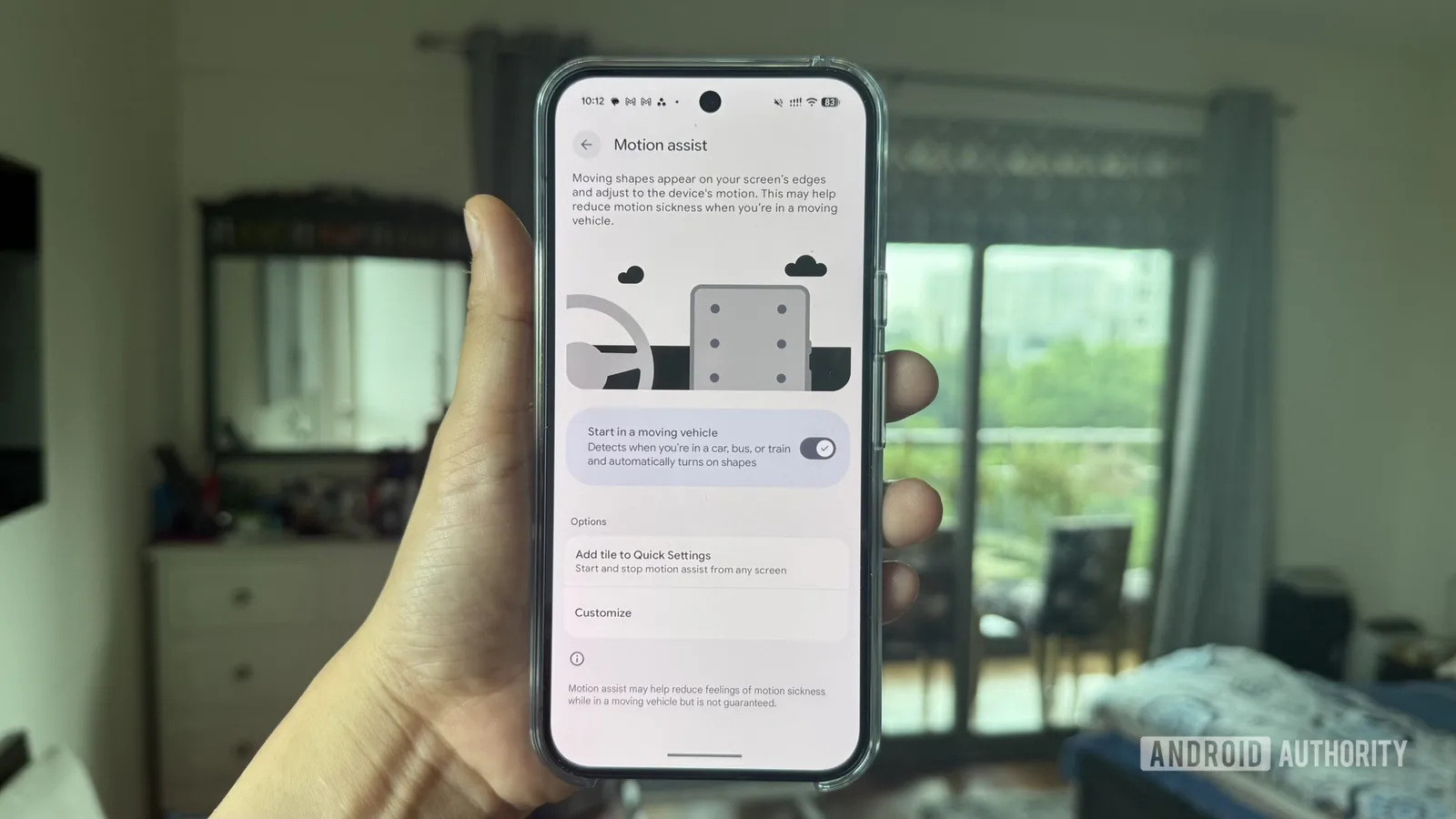
Google is gradually rolling out its new Motion Assist feature for Android 17 devices, with Pixel phone owners being among the first to receive it. This innovative feature aims to reduce the discomfort of motion sickness by providing visual cues on the smartphone screen while the user is inside a moving vehicle.
The rollout began subtly, with some users reporting the feature's appearance on their Pixel devices. However, availability seems to be staggered, indicating a phased deployment by Google. This suggests that not all Android 17 users will see the feature immediately, and its presence can vary even between similar devices.
First identified in December 2024 under the name "Motion Cues," the feature has undergone further development and is now being released as Motion Assist alongside the latest Android iteration. Users can locate Motion Assist within the Google Play Settings. To access it, navigate to Settings > Your profile > All services, then find the "Personal & device safety" section and select Motion Assist.
The primary interface for Motion Assist offers an automatic activation toggle. When enabled, the feature attempts to detect if the phone is in a moving vehicle and will then initiate the motion cues. For users who prefer manual control, a dedicated Quick Settings tile can be added, allowing for swift activation or deactivation without needing to navigate through the main settings menu.
Customizing the Visual Cues
Once Motion Assist is active, users will receive a notification confirming its operation, with an easy option to turn it off directly from the notification itself. The feature boasts several customization options to enhance user experience. Individuals can adjust the color, shape, and transparency of the on-screen motion indicators. An additional "Randomization" option allows these visual elements to change automatically, offering a dynamic display.
The core concept behind Motion Assist is to present subtle visual indicators around the screen's periphery that synchronize with the vehicle's movement. This aims to provide a stable visual anchor for the user, helping to counteract the sensory conflict that often leads to motion sickness. Early implementations faced limitations with Android's system-level restrictions on screen overlays, preventing motion indicators from appearing over certain critical UI elements like the status bar or lock screen. However, Google has since implemented specific API changes for Motion Assist, enabling the visual cues to display correctly over other applications and system interfaces.
The development of such features highlights ongoing efforts in the tech industry to improve user well-being and address common discomforts associated with technology use. While manufacturers like OPPO and vivo already offer similar functionalities, Google's integration directly into the Android operating system signifies a broader push towards native solutions for user comfort. As the rollout continues, users experiencing motion sickness while using their devices in transit can look forward to a more comfortable mobile experience.