
Budget Smart Telescopes: Dwarf Mini vs. Seestar S30 for Stargazing
Two new affordable smart telescopes, the Dwarf Mini and ZWO Seestar S30, offer entry-level astrophotography and wildlife observation. We compare their features and performance for hobbyists.

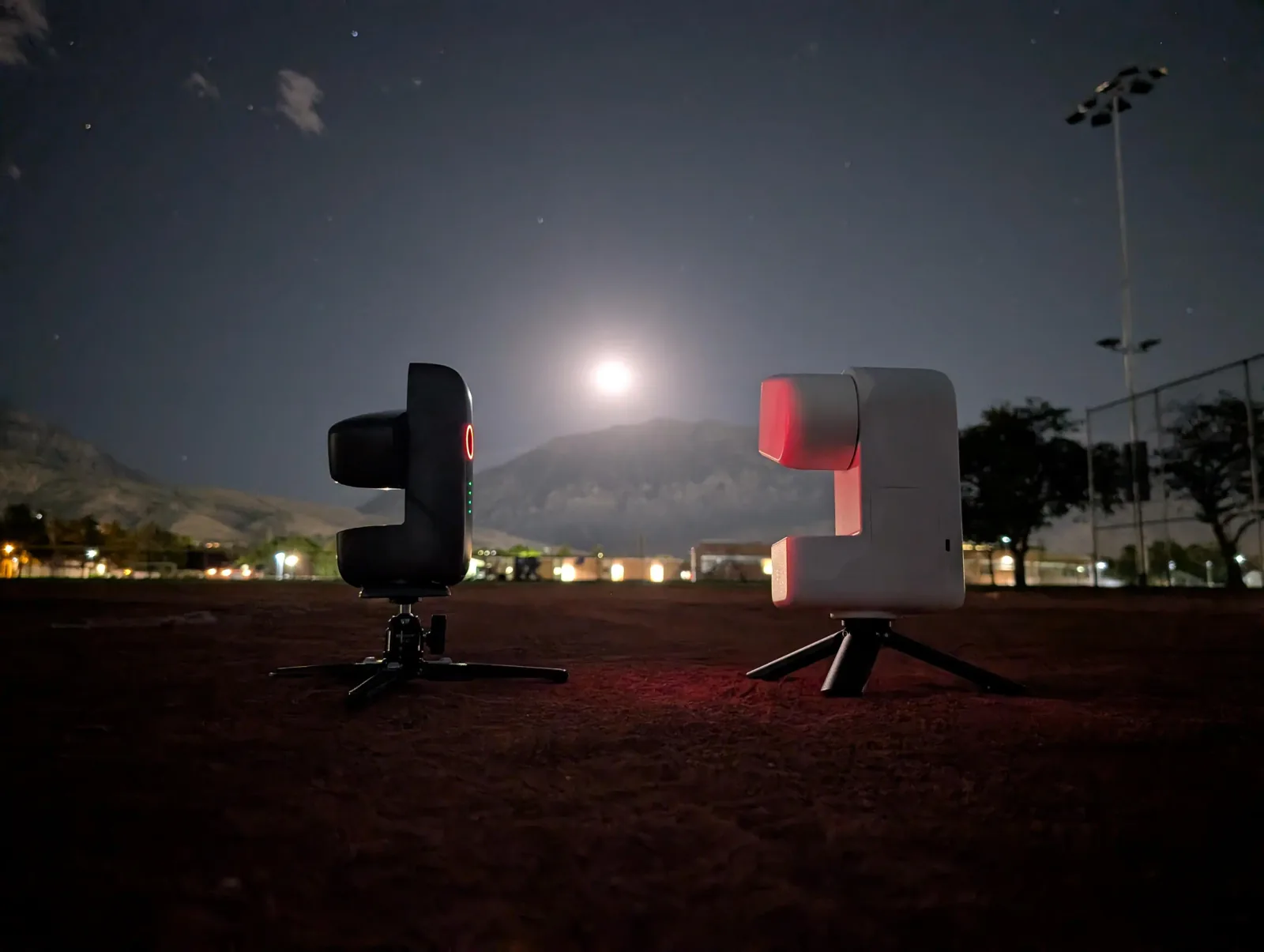
For aspiring astronomers and wildlife enthusiasts, the dream of capturing clear images of the cosmos or distant creatures has become more accessible with the emergence of budget-friendly smart telescopes. This year, two compelling options have emerged in the sub-$400 price bracket: the DwarfLab Dwarf Mini and the ZWO Seestar S30. While premium models from brands like Vaonis and Unistellar can cost well over $1,500, these more affordable devices aim to lower the barrier to entry, offering portability and capable performance for hobbyists. This review explores how these two telescopes stack up for beginners looking to make stargazing and nature photography their next pursuit.
The primary advantage of these budget smart telescopes lies in their portability and versatility. Unlike bulky, expensive astronomical setups, the Dwarf Mini weighs a mere 840 grams, and the Seestar S30 comes in at 1.65 kilograms. This significantly contrasts with professional-grade telescopes that often exceed 4 kilograms, making them far easier to transport, especially when hiking to dark sky locations or remote wildlife habitats. While this portability comes with trade-offs such as lower resolution and smaller aperture, it allows beginners to test their interest in astrophotography without a substantial financial commitment. Both the Seestar and DwarfLab models come equipped with built-in filters and include magnetic solar filters, enhancing their utility. Furthermore, unlike many high-end astronomy-focused telescopes, these budget models often include wide and telephoto cameras, making them suitable for daytime landscape and wildlife photography as well.
Comparing Features and Performance
In terms of core specifications, the Dwarf Mini and ZWO Seestar S30 present a relatively even match. Both telescopes utilize the same Sony IMX662 sensor for their telephoto imaging, leading to similar resolutions, focal lengths, and apertures. The Seestar S30 notably employs a portrait orientation for its telephoto images, a departure from the landscape orientation of its wide-angle lens and the Dwarf Mini. While this difference impacts image composition, it did not substantially affect the overall results during testing.
Key distinctions emerge when considering accessories and tracking capabilities. The Seestar S30 includes a carrying case and a simple tripod, providing a more complete out-of-the-box experience. The Dwarf Mini requires separate purchases for these essential accessories, though affordable third-party options are readily available. The Dwarf Mini's design also makes a tripod optional, although still recommended for stability. For astrophotography requiring equatorial tracking, the Dwarf Mini might necessitate an additional fluid head tripod, adding to the cost.
A significant advantage for the Seestar S30 is its smart tracking capability, which allows it to follow moving objects like animals and people for daytime photos and videos. The Dwarf Mini, in its current iteration, lacks this advanced tracking, necessitating an upgrade to a more expensive model for similar functionality. However, the Dwarf Mini offers a more intuitive double-tap navigation system for subjects using its wide-angle lens. The Seestar, conversely, uses double-tap for focusing with its telephoto lens, employing a slightly slower confirmation method for subject acquisition. Both devices connect to their respective mobile apps via a direct Wi-Fi network, a process that is optimized by disconnecting your phone from the internet beforehand to prevent connectivity issues. The Dwarf Mini also offers NFC connectivity, generally leading to faster setup times.
Regarding shooting modes, both telescopes offer general usage (photo, video, time-lapse), deep sky astrophotography, and solar system observation. The Dwarf Mini provides additional modes like Milky Way and Star Trails, leveraging its wide lens for specific astronomical phenomena. In general usage, the Dwarf Mini offers more adjustable settings and supports burst mode, beneficial for capturing fast-moving wildlife. For beginners, using the automatic shooting parameters in astrophotography modes is recommended, with the option to manually adjust settings like brightness, saturation, and exposure times as experience grows. While both are capable of observing the sun and moon, planetary details remain limited on these budget models, requiring more powerful equipment for sharper images.
The accessibility of smart telescopes like the Dwarf Mini and Seestar S30 represents a significant step for amateur astronomy and photography. They democratize hobbies that were once perceived as requiring expensive, specialized equipment. By offering a balance of features, portability, and affordability, these devices empower a new generation of observers to explore the universe and the natural world around them, potentially sparking a lifelong passion for discovery.