
Fitbit Air Review: Google's AI Health Tracker for a New Generation
Google's latest health tracker, the Fitbit Air, offers AI-powered insights and a minimalist design, integrated into the new Google Health app. This review explores its features, battery life, and user experience.

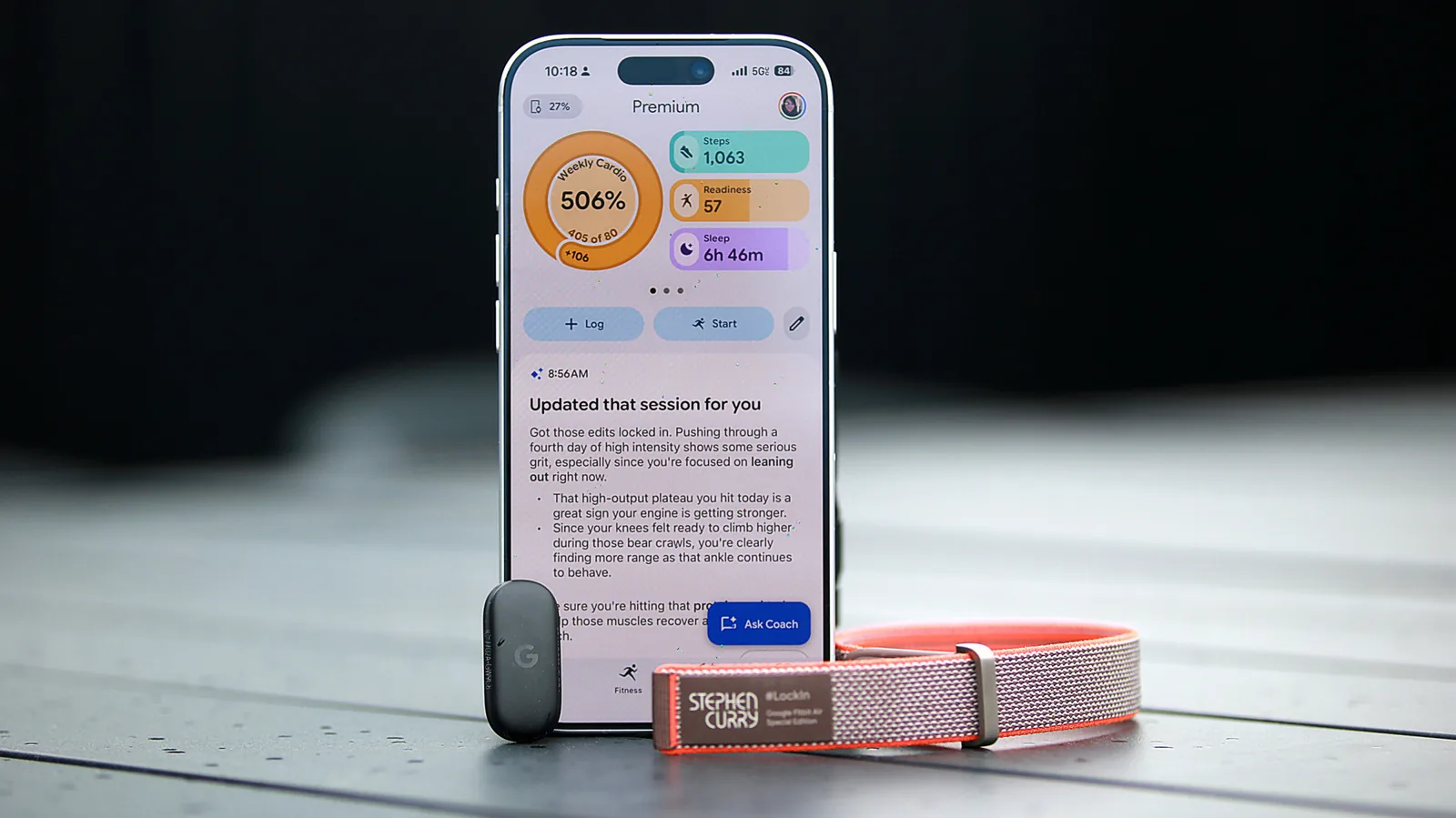
Google's new Fitbit Air, a compact health tracker designed to be worn without a strap, is being positioned as a tool for the next wave of health-conscious individuals. Unveiled alongside a revamped Google Health app and AI Coach, the device aims to provide comprehensive wellness monitoring in a minimalist form factor. Measuring just 34.9 x 17 x 8.3 mm and weighing a mere 5.2 grams, the Fitbit Air is significantly smaller and lighter than traditional trackers, offering a flexible approach to wearability through various accessory straps.
The device itself is remarkably unobtrusive, featuring a simple pill shape with a Google logo on top and its sensor array on the underside. An LED light on the edge serves as the primary indicator for battery status and can be activated by a double-tap. This minimal interface extends to its functionality, with most interactions and data analysis handled through the integrated Google Health app. The ease of switching between different straps, including a magnetic loop band, enhances its adaptability for daily use, whether at home or during outdoor activities. Compared to competitors like the Whoop, the Fitbit Air presents a less bulky profile, potentially making it more comfortable for sleep tracking, a common pain point for many wearable users.
Battery Life and Charging Innovations
Battery performance is a crucial aspect of any wearable, and the Fitbit Air promises approximately seven days of use on a single charge, a figure that appears to hold true in initial testing. While this is half the advertised battery life of current-generation Whoop products, which can extend to two weeks, the Air offers a compelling charging solution. Users can achieve a significant power boost with just a few minutes of magnetic charging, moving from below 20% to a usable level rapidly. For instance, a five-minute charge can elevate the battery from 36% to 58%, a testament to its fast-charging capabilities. This contrasts with the Whoop's reliance on an attachable battery pack for on-the-go charging, suggesting Google's approach prioritizes quick, convenient top-ups.
The integration with the Google Health app is central to the Fitbit Air experience. Google has been consolidating its wellness offerings, with the Google Health app set to replace existing platforms like Google Fit and the Fitbit app. This move, announced in August 2026 and rolling out in May 2026, signifies a unified approach to user health data. The redesigned app features a more intuitive interface, including a horizontally swipeable carousel on the Today page that displays key metrics such as cardio load, steps, readiness, and sleep. Users can customize this dashboard to prioritize their most important health data. Progress rings and pill-shaped bars offer glanceable statistics, with deeper dives available by tapping into specific metric sections.
Beyond the core tracking, the app incorporates AI-powered insights and summaries for sleep and activity. The Gemini-powered AI Coach, accessible via a prominent blue button on every page, offers conversational support for tasks like logging food or retroactive workout recording. This intelligent assistant aims to simplify data entry and provide personalized health advice. While the app aims for ease of use, some logging features, like hydration tracking, could benefit from greater flexibility, mirroring the more user-friendly approaches found in competing devices such as Samsung's Galaxy watches, where simple icon taps can log common intake amounts.
The Fitbit Air represents Google's latest effort to innovate in the crowded wearables market, emphasizing a sleek design, AI integration, and a unified health platform. While its battery life and some app functionalities are still areas for potential refinement, its compact size and rapid charging capabilities position it as a strong contender for users seeking a discreet yet powerful health tracking solution.