
AI-Generated Image Disqualified, New Winner for Nikon Small World Competition
A Nikon Small World in Motion competition entry was disqualified for AI image generation, leading to a new winner being announced for the 2026 contest.

A stunning video entry in the 2026 Nikon Small World in Motion competition has been disqualified due to the use of artificial intelligence, prompting organizers to award the top prize to a different submission. The initial winning entry, which depicted the intricate cellular processes of zebrafish embryos, was found to have incorporated AI-generated imagery, a violation of the competition's rules against manipulation. This decision highlights the growing challenges in distinguishing between authentic scientific visualization and AI-assisted creations in fields reliant on visual data.
The Nikon Small World competition, now in its 50th year, celebrates the art and science of microscopic photography and videography. It aims to showcase the beauty and complexity of life at the microscopic level, encouraging scientists and artists to push the boundaries of imaging technology. The "in Motion" category, specifically, focuses on capturing dynamic biological processes, offering a window into the living world unseen by the naked eye.
Concerns Over AI in Scientific Visualization
The disqualified entry, titled "Zebrafish Embryo Development," had initially captivated judges with its visually arresting depiction of early cell division and organogenesis. However, closer scrutiny revealed that sections of the video appeared to have been generated or significantly altered using AI tools. Nikon, in a statement released on October 9, 2026, confirmed the disqualification, emphasizing its commitment to "accurate and authentic representation of scientific phenomena." The company stated, "While we embrace technological advancements, the integrity of the scientific image is paramount. All submissions must reflect genuine microscopic observation."
This incident underscores a broader debate within the scientific community regarding the role and ethical implications of artificial intelligence in data generation and visualization. As AI models become increasingly sophisticated, their ability to create hyper-realistic images and videos raises questions about authenticity, reproducibility, and the potential for misleading scientific narratives. Researchers and institutions are grappling with establishing clear guidelines for the use of AI in scientific research and publishing.
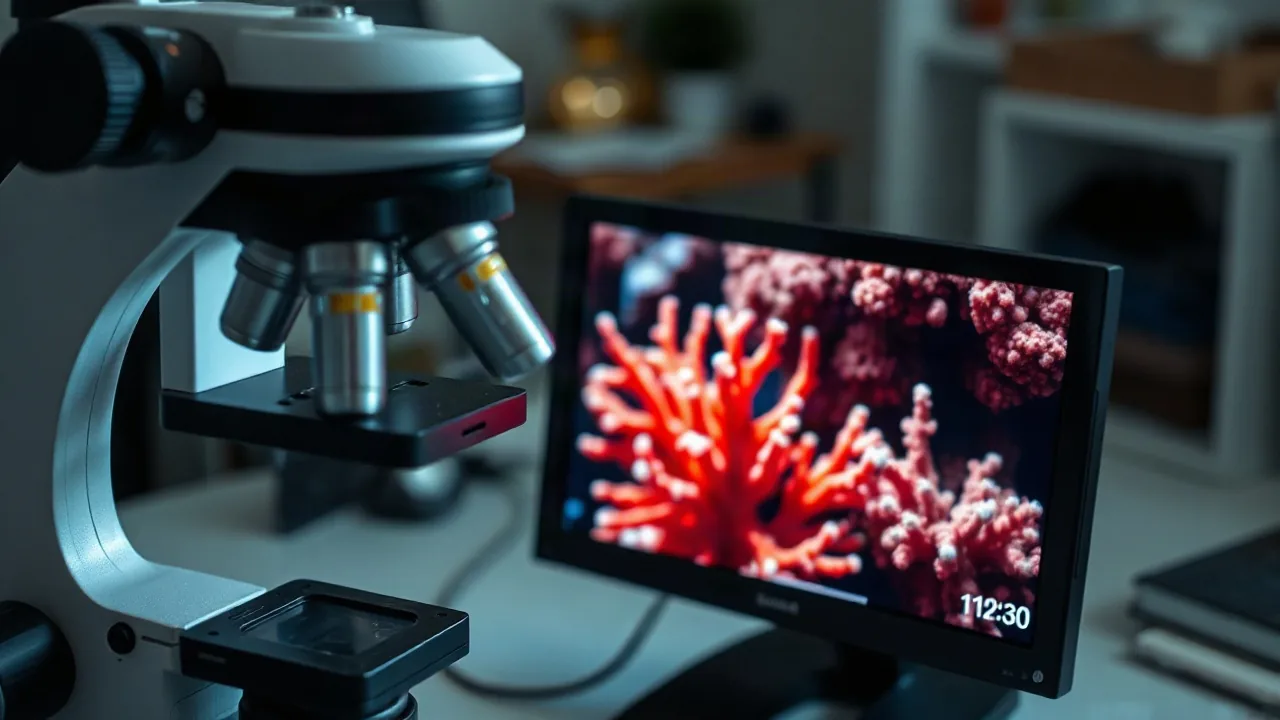
Following the disqualification, the first prize in the Nikon Small World in Motion competition was awarded to "The Dance of the Coral Reef," a time-lapse video by Dr. Anya Sharma of the Scripps Institution of Oceanography. Dr. Sharma's work captures the symbiotic relationship between coral polyps and zooxanthellae algae, showcasing the vibrant ecosystem of a coral reef over a 72-hour period. "I am honored and humbled to receive this award," Dr. Sharma said in a press release. "This project was a labor of love, and it’s incredibly rewarding to see the beauty of these delicate organisms recognized. It's a stark reminder of what we stand to lose if we don't protect these vital marine environments."
The competition also announced winners in several other categories, including still microscopy images that depicted everything from the crystalline structures of minerals to the intricate patterns of insect wings. The overall emphasis for 2026 remained on the power of microscopy to reveal hidden worlds and advance scientific understanding. Nikon plans to convene a special panel in early 2027 to discuss the evolving landscape of AI in scientific imaging and potentially update competition guidelines for future submissions.