
Pixel 11 Pro XL vs. iPhone 17 Pro Max: Key Differences for 2026 Flagships
Google's new Pixel 11 Pro XL faces off against Apple's iPhone 17 Pro Max. Explore their design, performance, camera, and AI capabilities to decide which flagship reigns supreme this year.

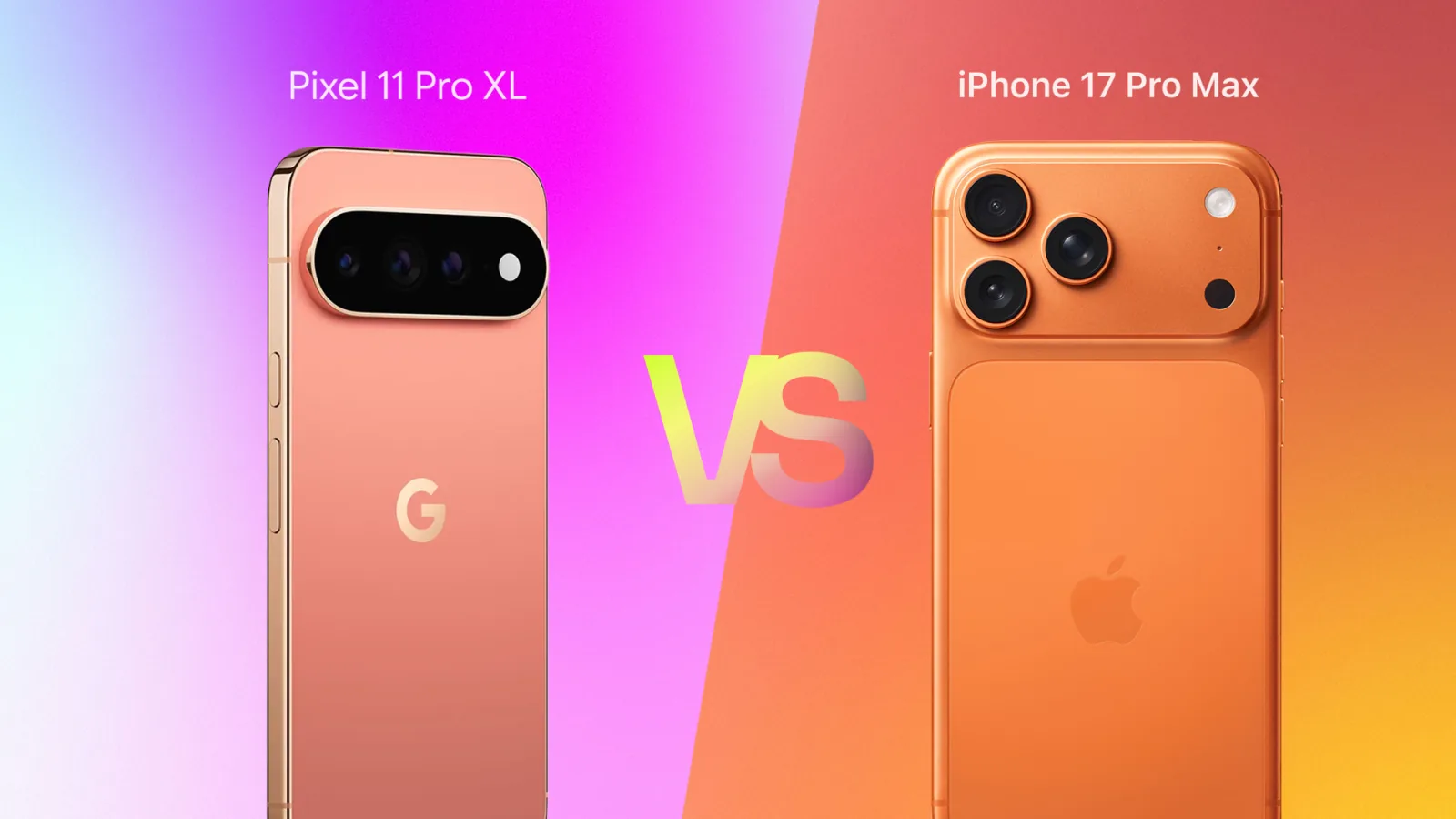
Google's latest flagship, the Pixel 11 Pro XL, has officially arrived, directly challenging Apple's premium offering, the iPhone 17 Pro Max. The Pixel 11 Pro XL, starting at $1,299 for the 256GB model, represents Google's commitment to larger screens and enhanced battery life, boasting its brightest display yet at 3,600 nits and a new AI-optimized Tensor G6 chipset. Meanwhile, the iPhone 17 Pro Max, priced at $1,199, continues to be a top contender in the premium smartphone market, with Apple expected to release its successor series later this year.
This head-to-head comparison focuses on how these two titans of the tech world stack up in critical areas. Both devices showcase similar construction, utilizing recycled materials in their builds. The iPhone 17 Pro Max features a slightly larger 6.9-inch OLED display compared to the Pixel 11 Pro XL's 6.8-inch screen, though the visual difference is marginal. Where the Pixel 11 Pro XL pulls ahead on paper is screen brightness, reaching up to 3,600 nits, surpassing the iPhone 17 Pro Max's 3,000 nits, a difference that could prove significant for outdoor visibility.
Beyond display technology, the camera designs diverge. The Pixel 11 Pro XL sports a discrete punch-hole camera for facial recognition and selfies, while the iPhone 17 Pro Max retains its signature pill-shaped Dynamic Island, serving as a dynamic status indicator for various apps and functions. Google has refined the Pixel's camera bump and introduced a new HiLight LED, which pulses with colors to signal incoming calls or interactions with Gemini, offering a modern twist on the classic notification light. While Apple’s iPhone lacks a direct equivalent, features like the Always-On Display and Accessibility Flash for Alerts provide alternative notification methods. The iPhone 17 Pro Max also includes customizable buttons, such as the Action Button and a Camera Control button, enhancing user interaction and quick access to specific features. Color options for the Pixel 11 Pro XL include Olive, Fog, Obsidian, and Canyon, while the iPhone 17 Pro Max is available in Deep Blue, Silver, and Cosmic Orange.
Performance and AI Prowess
Google asserts that its new Tensor G6 chipset in the Pixel 11 Pro XL will deliver 25% faster browsing and 3.5 times quicker on-device AI processing. While such figures are often marketing-driven, initial impressions suggest a fluid and responsive user experience on Android 17. Both the Tensor G6 and the iPhone 17 Pro Max's A19 chipset are built on a 3nm architecture, indicating comparable performance and power efficiency. The Pixel 11 Pro XL is equipped with a 5,115 mAh battery, slightly larger than the iPhone 17 Pro Max's 5,088 mAh. However, real-world battery life will depend on the efficiency of each device's cooling systems and software optimization. The iPhone 17 Pro Max has previously set a high standard for battery endurance, a benchmark the new Pixel must now contend with.
The battle between Google's Gemini and Apple's Siri for AI supremacy is a key differentiator. Gemini on the Pixel 11 Pro XL demonstrates advanced capabilities, including running background agentic tasks like ordering food delivery. Features like Rambler, which cleans up spoken dictation by removing filler words, showcase its technical sophistication. Siri, while functional for interacting with native apps and on-screen elements, is currently more limited, though iOS 27 is expected to bring significant AI enhancements to the iPhone. For users seeking the most advanced AI integration, Gemini currently holds an edge, but the upcoming iOS update may narrow the gap.
Regarding cameras, both flagships feature triple-lens systems with impressive capabilities that extend beyond raw specifications. Last year's comparison showed the Pixel 10 Pro XL and iPhone 17 Pro Max performing neck-and-neck in various lighting and subject conditions. Google has focused on improving the speed and ease of capturing photos and videos with the Pixel 11 Pro XL, notably enhancing Night Sight performance and introducing a Magic Capture Mode that automatically takes ideal shots during video recording. The new Camera Looks feature allows users to apply film-inspired color profiles before shooting, offering an alternative to post-capture computational adjustments. The iPhone 17 Pro Max counters with Photographic Styles, enabling similar customization of tone, shadow, and color temperature directly within the camera app. While hardware specifications are crucial, the software processing and user-centric features are increasingly defining mobile photography in 2026.
In terms of storage, charging, and other specifications, the two phones offer comparable solutions. The Pixel 11 Pro XL and iPhone 17 Pro Max are expected to provide similar charging speeds and options, reflecting the current industry standards. Ultimately, the choice between the Pixel 11 Pro XL and the iPhone 17 Pro Max will likely come down to user preference for operating system ecosystem, specific AI features, and design aesthetics.