
Samsung's New Foldable Strategy: Wide Design Ahead of Apple's iPhone Entry
Samsung is set to unveil new foldable phones, including a wider design, at its upcoming Galaxy Unpacked event. This move appears to be a strategic response to the anticipated launch of Apple's first foldable device.

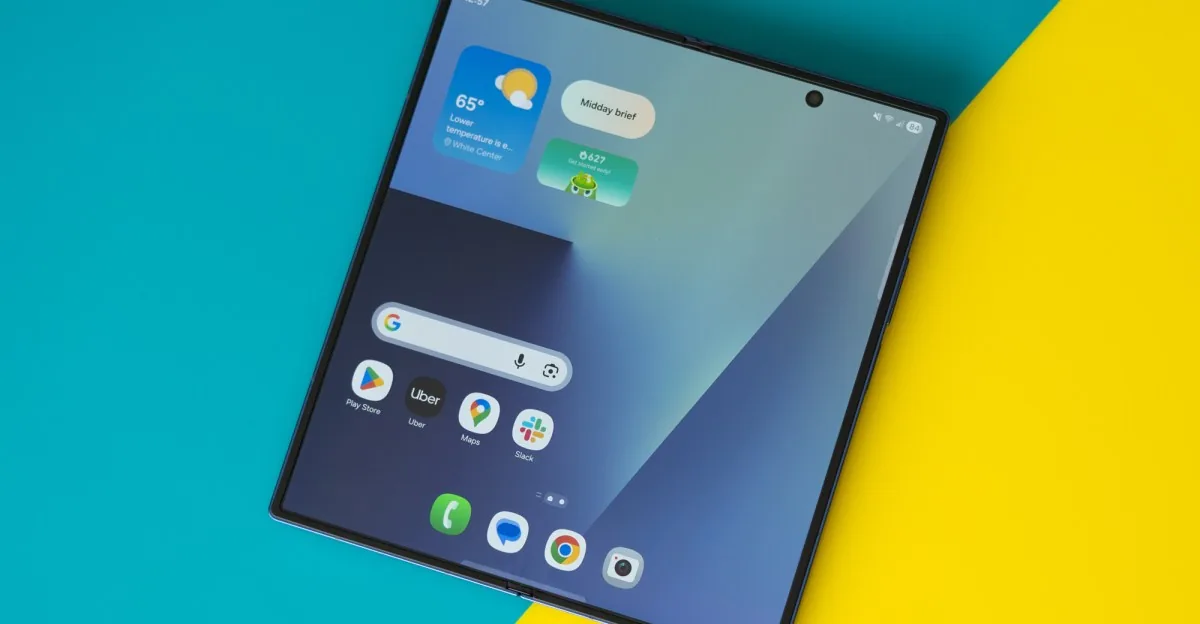
Samsung is poised to reveal a significant evolution in its foldable smartphone lineup tomorrow at the anticipated Galaxy Unpacked event. The company is expected to not only refresh its existing Galaxy Z Fold and Z Flip models but also introduce a radically new form factor: a wider, shorter foldable device. This strategic shift marks the second major overhaul of Samsung's foldable offerings in less than a year, following the brief appearance of the Galaxy Z TriFold. For years, the market was defined by the Z Flip and Z Fold, but the impending arrival of Apple's first foldable device is compelling Samsung to innovate aggressively.
Leaks and industry whispers have long suggested a wider foldable from Samsung, mirroring speculation surrounding Apple's own rumored device. Samsung has further hinted at this new design, teasing "a new shape" for its foldables, with event invitations subtly depicting a torn ticket stub, emphasizing a more compact, wider aspect ratio. While Huawei launched a passport-sized foldable, the Pura X Max, earlier this year, the concept of a wider foldable isn't entirely novel. Google's initial Pixel Fold and Oppo's Find N featured wider designs, and Microsoft's Surface Duo even adopted an ultra-wide dual-screen approach. Ironically, the waning popularity of these wider devices was partly attributed to Samsung's preference for slimmer outer screens and squarer inner displays on its own popular Fold models.
Market Dominance and Shifting Dynamics
Samsung's dominance in the foldable market has been built on a combination of first-mover advantage and sheer market power. For years, the company dictated the direction of the foldable industry, fending off competitors. However, recent years have seen rivals introduce significant hardware advancements, such as nearly invisible creases and robust dustproofing, prompting Samsung to play catch-up. Last year's Galaxy Z Fold 7 and Z Flip 7 represented a strong comeback, boasting impressively thin designs and edge-to-edge cover screens. Yet, the competitive landscape is about to be fundamentally altered by Apple's entry.
Industry analysts have long predicted that Apple's foray into the foldable market would be the catalyst needed to propel foldables from a niche curiosity into a mainstream consumer category. All indications point to September as the likely launch window for Apple's first foldable iPhone. "The launch of Apple’s first foldable iPhone will mark a turning point for the foldable segment," stated IDC analyst Francisco Jeronimo in a recent report, forecasting Apple to capture a substantial 34 percent of the foldable market value within its inaugural year. Samsung, while hoping for market expansion that benefits all players, faces the significant risk of Apple's entry cannibalizing its sales and eroding the market dominance it has cultivated over seven years.
Introducing a wider foldable design now serves as a calculated risk-mitigation strategy for Samsung. It preemptively addresses the possibility that Apple's foldable will adopt a similar form factor and be met with widespread acclaim, leaving Samsung without a comparable offering. Maintaining its existing Flip and Fold designs also provides a safety net, should those form factors continue to resonate most strongly with consumers. However, emulating Apple carries inherent risks, a lesson Samsung has learned from past product launches. The Galaxy S25 Edge, released shortly before Apple's iPhone Air, failed to gain traction, and even the iPhone Air itself underperformed. Similarly, Samsung's prior venture into a tri-fold design with the Galaxy Z TriFold had a short lifespan in the US market.
While the specifics of Samsung's new foldable will be fully revealed tomorrow, its ultimate success and novelty remain to be seen. Apple's response is expected in the coming months, followed by a longer period before its impact on the foldable phone market can be assessed. Regardless of the eventual outcomes, Samsung can no longer afford a passive approach. Expanding its product portfolio with a new design is a gamble, but the potential repercussions of stagnation appear far greater.