
Whisker's AI Litter Robot Struggles with Cat ID and Waste Tracking
Whisker's new Litter-Robot 5 Pro promises advanced AI features like cat facial recognition and waste analysis, but early testing reveals significant flaws in its ability to differentiate pets and track their health.

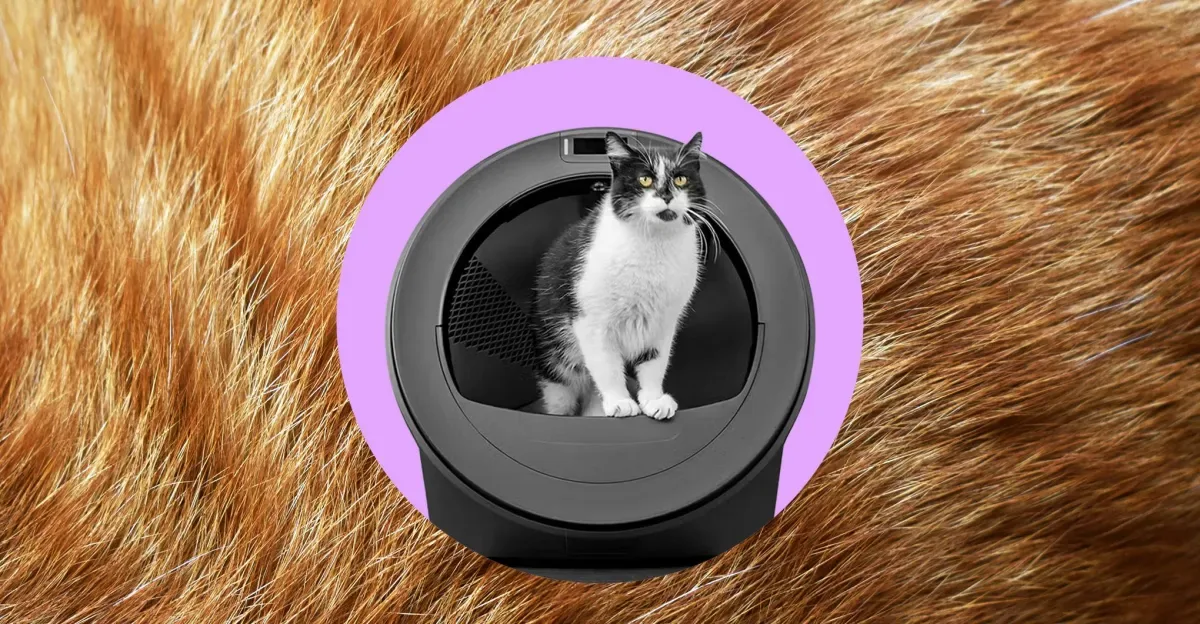
The Whisker Litter-Robot 5 Pro, launched late last year, aims to revolutionize pet care by using artificial intelligence to monitor feline health through their litter box habits. However, initial six-month testing of the $899 model, alongside its sibling the $599 Litter-Robot Evo, indicates that the advanced AI features, including its touted Cat ID facial recognition and WasteID system, frequently fail to perform as advertised, leading to confusion and a lack of actionable health insights for cat owners.
Robotic litter boxes have become a popular convenience for pet parents, automating the daily chore of scooping waste. Whisker's Litter-Robot series, a leading brand in the category, utilizes a rotating globe mechanism to sift waste into a sealed bin, reducing odor and the need for frequent manual cleaning. The latest iteration, the 5 Pro, was designed to go beyond basic waste management by integrating dual cameras, sensors, and AI algorithms to track individual cat usage, analyze waste composition, and even monitor weight changes – features that require a $8-per-month Whisker Plus subscription. Despite these ambitious promises, the system struggled significantly to distinguish between the reviewer's two cats, mistaking one for the other and misattributing usage data.
AI Fails to Distinguish Feline Friends
A core feature of the Litter-Robot 5 Pro is its ability to identify individual cats using its Cat ID facial recognition system, which is supposed to track up to five pets. This system aims to provide personalized health data for each cat, such as their weight and litter box frequency. During testing, the Cat ID feature consistently failed to differentiate between the reviewer's two cats, despite them having distinct appearances. The setup process, which involves the user selecting suitable images of their pets, yielded poor results, and the AI frequently merged the two cats into a single profile. This confusion extended to the onboard scale, where one cat's weight was misattributed to the other, a critical flaw that could lead to misleading health assessments. Whisker suggests that poor lighting or initial imaging can impact the system's accuracy, and while they offer an optional $29 RFID PetTag, the reviewer argues that an expensive machine with advertised facial recognition should not require additional hardware to identify distinct pets.
The WasteID system, another key AI component, is designed to differentiate between liquid and solid waste and automatically log the type and weight of deposits. This feature is intended to help owners identify potential health issues, such as changes in urinary habits. However, the WasteID system also proved unreliable, frequently failing to accurately identify waste types and often unable to provide accurate weight measurements for individual deposits. In one instance, the system's feces-sensing gas sensor was reported as faulty and required remote correction by Whisker. Further investigation revealed the unit's scale might also be inaccurate, potentially contributing to the failures in both WasteID and Cat ID functions. The reviewer noted that resetting incorrect data and manually correcting logs was a time-consuming process, negating the convenience the robot is meant to provide.
While the Litter-Robot 5 Pro excels at its primary function of automatic waste scooping, its advanced AI capabilities fell short of expectations. The reviewer highlighted that the dual-camera system, intended for monitoring, offered limited recording functionality, with only the front-facing camera capturing events. The ability to view actual waste deposits, a feature desired by many cat owners for health monitoring, was not readily available, though Whisker indicated it would be added in a future update. The app's new 'Patterns' feature, which summarizes daily activity, offers a step towards providing more digestible data, but its utility is limited by the inaccuracies in the underlying AI tracking and identification systems. For now, cat owners seeking advanced health insights from their litter box may find the premium features of the Litter-Robot 5 Pro do not justify the cost and subscription fee.