
Apple Watch AI Features Face Legal Scrutiny Over Eavesdropping Laws
Apple's new AI features for Apple Watch, Siri Recap and Live Rewind, are raising privacy concerns among legal experts who question if they violate state eavesdropping laws that require consent from all parties.

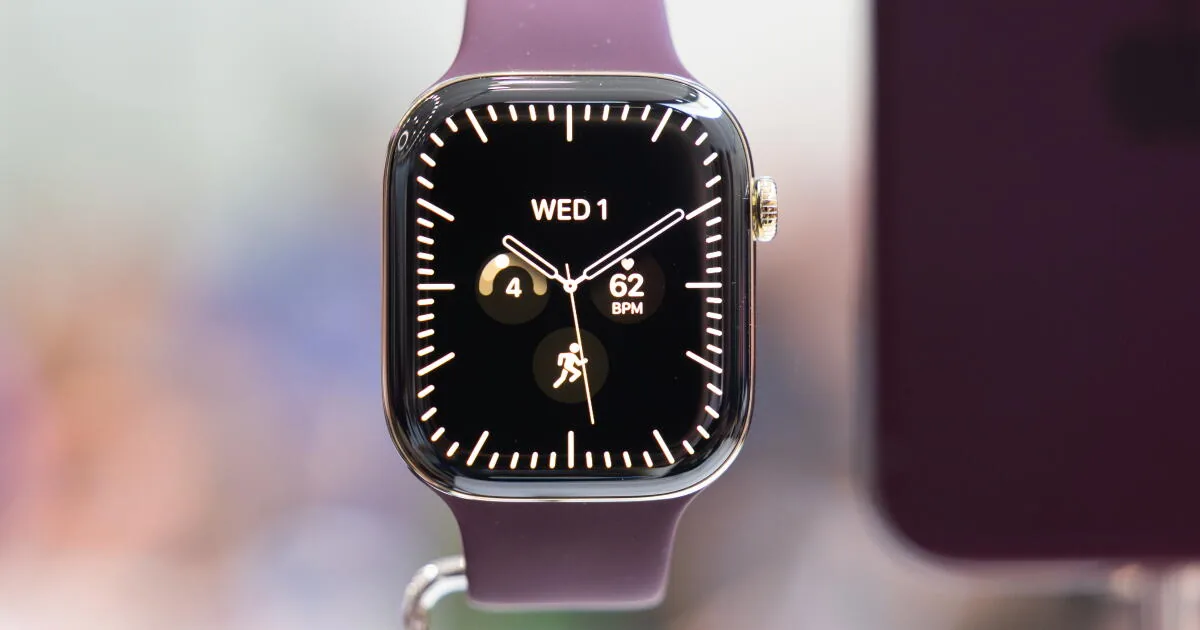
New artificial intelligence features introduced by Apple Inc. for its Apple Watch are poised to challenge existing eavesdropping laws, according to legal professionals. The company recently unveiled Siri Recap, designed to provide summaries of daily conversations, and Live Rewind, which transcribes the previous 15 seconds of audio and can be accessed by double-pressing the watch's crown. Apple announced these tools for the Apple Watch Series 12 and Ultra 4, emphasizing privacy safeguards such as an audible alert for Live Rewind requests, on-device audio processing, and assurances that audio is not stored. However, legal experts in states like California, Massachusetts, Pennsylvania, and Washington remain skeptical, noting that these states generally prohibit intercepting private conversations without the consent of all participants.
A central legal question is whether the continuous processing of speech, even without creating traditional audio files, could be considered an illegal interception under various state statutes. Apple frames Siri Recap and Live Rewind as memory aids rather than recording tools. The company states that the features do not attribute comments to specific individuals and may exclude sensitive data like financial information or personal identifiers. Despite these measures and Apple's assertion that no audio is permanently recorded, legal experts express significant reservations.
"I don’t think these nuances have been litigated before here," said Joe Simons, a criminal defense attorney based in Boston, predicting the situation could become a "case of first impression" in Massachusetts. Subodh Chandra, founding and managing partner at Chandra Law Firm, stated that the new feature set "raises serious concerns under California law and the laws of other states that require all-party consent." Phil Lauer, a defense attorney in Pennsylvania, noted that while the technology is "very close to being legal, because it’s not an individual who is actually receiving and using this data," the argument can still be made that it is unlawful because the device is capturing and interpreting audio. "Whether the courts will see it that way, given all the sort of privacy protection things that Apple has used, that’s an interesting question and it’s going to be coming up," Lauer added.
The Evolving Landscape of AI and Privacy
The concerns arise amid a broader trend of technology companies integrating AI-powered devices into daily life, designed to track activities and conversations. Meta's smart glasses, for example, have already faced criticism over potential covert recording capabilities. While dedicated AI audio gadgets like those from Plaud and Pocket require a manual button press to begin listening, Apple's new watch features operate with a different paradigm. This development also precedes Apple's planned launch of its own camera-equipped wearables, including AirPods and smart glasses, intended for release next year. The scrutiny these audio intelligence features are drawing highlights the growing tension between technological advancement and existing legal frameworks governing privacy.
Legal professionals advise caution. Colin Zick, a partner and chair of the privacy and data security practice at Foley Hoag, observed that "we see a lot of circumstances where the technology is getting ahead of the law." He recommends that users treat the features as potential wiretap violations and seek consent, drawing a parallel to Zoom's decision to disable automatically generated closed captions for meetings due to privacy concerns. "My advice would be, treat this as if it was going to be treated like an interception under the wiretapping statute, and therefore, ask permission," Zick said.
Even fleeting audio processing might fall under certain state laws. Mark Blair, principal at Seattle-based law firm Blair Kim Moeller, explained that the concept of intercepting audio extends beyond traditional recording. "If the recording was made without consent, the wearer of the Apple Watch could be charged with a crime," he warned, even if the content is ephemeral. "You have to announce, ‘I have an Apple Watch — this Apple Watch is recording.’ Absent that, it is a criminal violation." Apple maintains that its features do not constitute recording. The company advises users to "consider" those around them in private or sensitive conversations and emphasizes that audio processing occurs on secure hardware, inaccessible to Apple or third parties. The 15-second limit for Live Rewind and the automatic deletion of summaries after a short period are presented as further privacy measures. However, privacy advocates like Adam Schwartz, privacy litigation director at the Electronic Frontier Foundation, argue that users lack a practical way to consent or decline, and suggest disabling the features to respect conversational privacy. "While it remains to be seen how state eavesdropping laws will apply to this new technology, it is clear that always-on monitoring of our conversations is an unacceptable burden on our conversational privacy," Schwartz stated.