
Linux's 35th Anniversary: Torvalds' Hobby OS Becomes a Global Powerhouse
Thirty-five years ago, Linus Torvalds announced his 'hobby' operating system, Linux. Initially a personal project, Linux has grown to power much of the internet, cloud computing, and millions of devices.

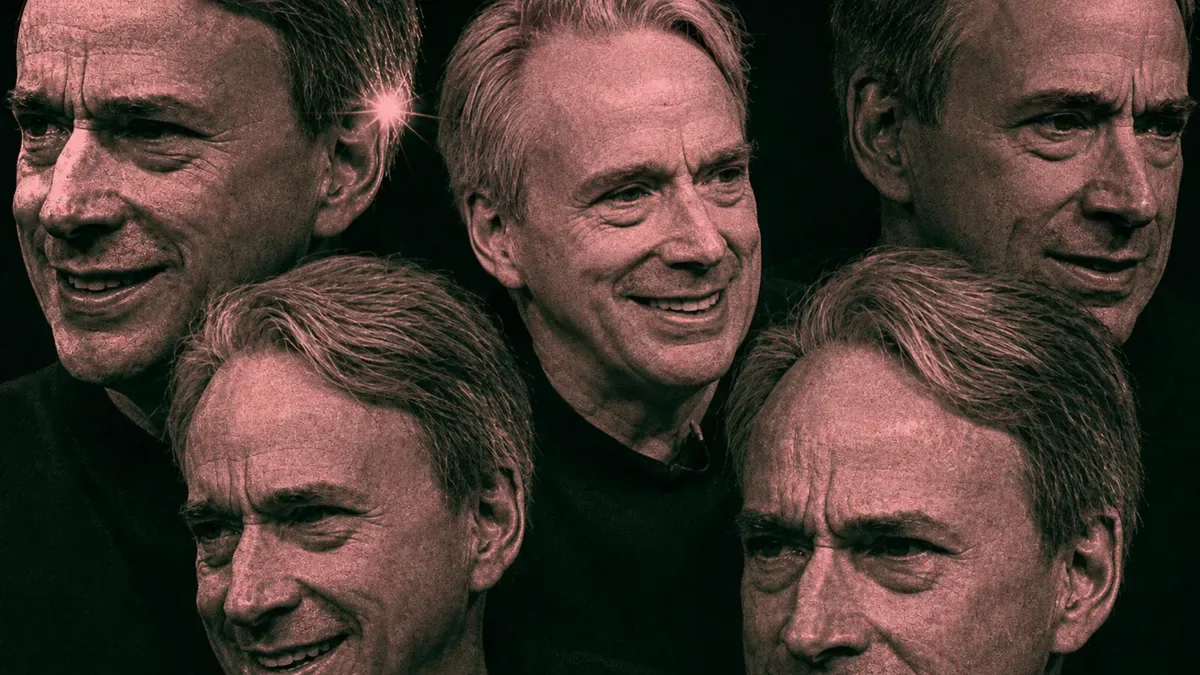
Thirty-five years ago, on August 25, 1991, a Finnish graduate student named Linus Benedict Torvalds posted to the Usenet group comp.os.minix. He announced he was working on a free operating system for AT clone computers, describing it as "just a hobby, won't be big and professional like gnu." Little did anyone know, including Torvalds himself, that this declaration would mark the genesis of a technology that would fundamentally reshape the digital world.
Today, Linux stands as a dominant force in the IT landscape. It underpins nearly every major website, including those operated by Google, Facebook, and Wikipedia. The vast majority of cloud infrastructure runs on Linux, and it is the leading operating system on Microsoft's Azure platform. Even the world's fastest 500 supercomputers are powered by Linux, and through Google's Android, it has become the most prevalent end-user operating system globally.
Torvalds has often expressed a mix of pleasure and bemusement at the immense growth of his initial project. The exact birthday of Linux can be a subject of debate, with Torvalds himself pointing to multiple significant dates. The public announcement on August 25, 1991, is widely recognized. However, the release of version 0.01, dated September 17, 1991, is determined by examining the file dates in the surviving tarball. Other potential milestones include an early July 3, 1991, post where Torvalds mentioned a project without naming it, and the first public announcement of a version, "version 0.02 (+1 (very small) patch already)," on October 5, 1991.
From Hobbyist Project to Open-Source Phenomenon
During its nascent stages, Torvalds received encouragement from his professors at the University of Helsinki. While Linux was not an official university project, the computer science department was supportive of unofficial activities. They even experimented with and adopted Linux machines running X Windows as thin clients, and utilized a DEC Alpha machine running Linux as a server. This environment fostered the growth of the project.
Initially, Torvalds considered naming his creation "Freax," a portmanteau of "free," "freak," and "x" to suggest a Unix-like system. However, when the code was uploaded to the FUNET FTP server, a friend named Ari Lemmke, who managed the initial servers, found "Freax" unappealing. Lemmke unilaterally decided to name the project's directory "Linux," and the name stuck.
The first individual to install this nascent operating system was Torvalds' friend, Lars Wirzenius. Wirzenius recalled the process, stating that he took a nap while Torvalds installed the system on his PC, as Torvalds' own machine had been used for development and had never undergone a formal installation. This collaborative spirit was evident from the outset.
As version 0.02 became available, a dedicated group of volunteers began downloading, testing, and submitting modifications via email and Usenet. Linux quickly evolved into a collaborative project, with Torvalds actively soliciting and integrating outside contributions. This open approach, treating the kernel as a shared resource, proved pivotal.
By the end of 1991, Linux was attracting more attention than competing projects like GNU Hurd and Andrew Tanenbaum's Minix. Torvalds noted significant technical advancements around Christmas 1991, such as the implementation of disk paging, which differentiated Linux from Minix and led to the rapid jump in version numbers. By the summer of 1992, with X Windows support, Linux had visibly transformed into something distinct from the Minix environment he was accustomed to.
Theodore "Ted" Ts'o, one of the earliest contributors and still a Linux maintainer, established the first Linux mirror in North America. Ts'o recounted the challenges of early downloads on a 64 Kbps link between Finland and the US, noting that Linux sources were significantly smaller then, with version 0.11's source code measuring just 93K. He set up an FTP server at MIT, leveraging the university's superior network infrastructure.
Dirk Hohndel, head of Ericsson Software Technology, recalled early presentations of Linux and XFree86 in the fall of 1993. He described a packed conference room where attendees preferred listening to Torvalds' talk over the other scheduled presentations, highlighting the growing enthusiasm for the burgeoning operating system.
The principles underlying Linux's development—collaboration, shared ownership, and community contribution—would later be formally recognized and named as "open source." This philosophy became a cornerstone of modern software development, profoundly influencing how software is created and distributed worldwide.