
Bright Star Spica Appears Near Moon Tonight May 26
Stargazers can look to the southern sky tonight, May 26, to see the moon near the bright blue-white star Spica. The celestial pairing offers a glimpse of distant stars and lunar features.

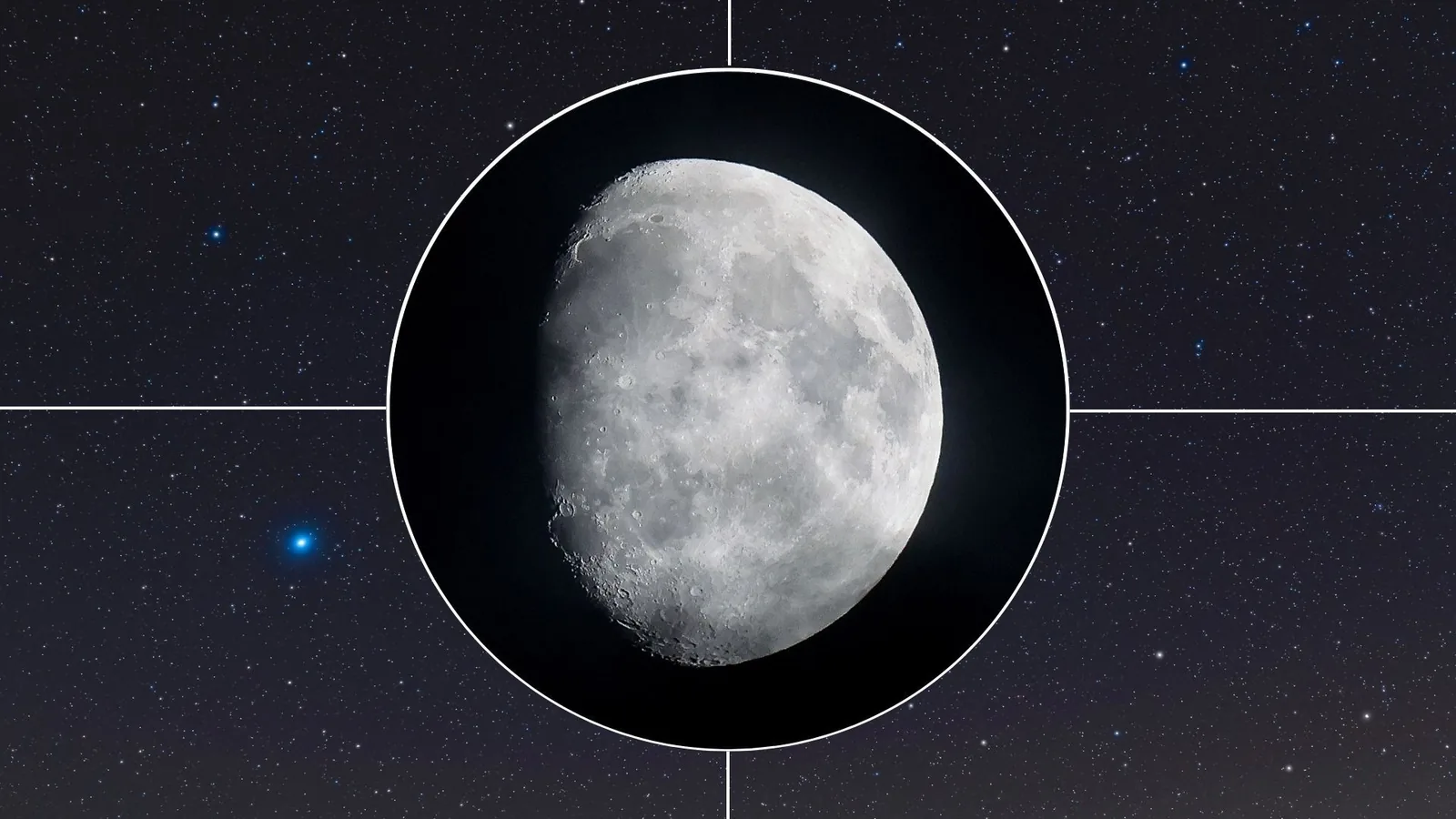
Look to the southern sky at sunset on May 26 to witness the waxing gibbous moon appearing close to the brilliant blue-white star known as Spica. This prominent star, located in the constellation Virgo, will be visible just ahead of the month's second full moon, often called a "Blue Moon." The moon, approximately 83% illuminated, will be positioned less than 40 degrees above the southern horizon, with Spica shining to its left. Binoculars or a small telescope will enhance the view, revealing details on the lunar surface and the star's dual nature.
Spica's light originates not from a single star, but from a pair of massive stars orbiting each other closely. Their combined luminosity is estimated to exceed that of 12,000 suns, according to astronomy resources. Observing the moon through optical aid will showcase an arc of light along the terminator, the line dividing lunar day and night. This illumination is sunlight catching the peaks of the Montes Jura mountain range near Mare Imbrium. Further celestial exploration towards the lunar equator reveals the 58-mile-wide Copernicus Crater, a testament to a violent impact event.
Lunar Exploration and Future Missions
As twilight deepens, direct your gaze downward along the shadowy night-day divide on the moon. There, near the approximate location of the south lunar pole, lies a potential future landing site. This region is under consideration for the planned Artemis 4 mission, scheduled for 2028, highlighting ongoing human interest in lunar exploration. Throughout the night, observers will notice the moon gradually drifting eastward relative to Spica, a movement dictated by its orbital path around Earth. Both celestial bodies will eventually set in the west during the early hours of May 27.
The lunar dance continues. By sunset on May 27, the moon will have shifted to a position lower left of Spica. This orbital progression is leading the moon toward another notable celestial neighbor, the red supergiant star Antares in the constellation Scorpio, which it is expected to meet on May 31. This encounter occurs as the second full moon of the month, the "Blue Moon," becomes visible in the night sky, offering another captivating astronomical event for skywatchers.