
Astronomers Spot Potential 'Dark Galaxy' Without Stars
Astronomers have identified a massive, starless cloud of gas that could be a 'dark galaxy,' a rare type of celestial object composed almost entirely of dark matter.

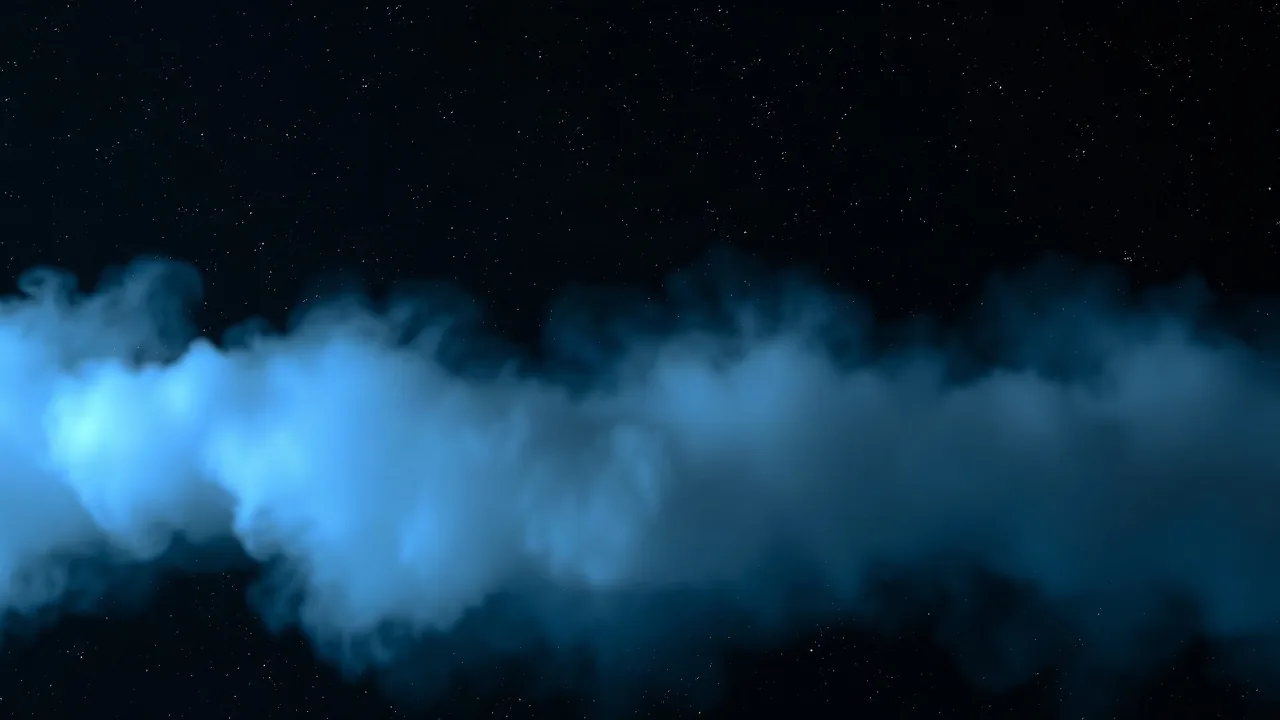
Astronomers have identified a massive, previously unknown cloud of gas in intergalactic space that appears to be devoid of stars. This enigmatic object, provisionally nicknamed 'Hydra I' by the research team, is hundreds of thousands of light-years across and could represent a 'dark galaxy'—a rare type of celestial body dominated by dark matter with very few, if any, visible stars.
The discovery was made using the Subaru Telescope in Hawaii, which detected a diffuse stream of hydrogen gas within the constellation Hydra. Initial observations suggest this cloud possesses an enormous mass, potentially billions of times the mass of our sun, with the vast majority of it being non-luminous dark matter. The absence of stellar populations is a key characteristic distinguishing it from typical galaxies.
"We were surprised to find such a large structure composed almost entirely of gas," said Dr. Masafumi Yagi, an astronomer at the National Astronomical Observatory of Japan and lead author of the study published in the journal Nature Astronomy. "Its sheer size and lack of stars point towards it being a dark galaxy, an object we have long theorized but rarely observed."
Cosmic Enigmas and the Hunt for Dark Matter
Dark galaxies are theorized to be the building blocks of larger galaxies, remnants of the early universe that failed to ignite star formation. They are composed primarily of dark matter, a mysterious substance that does not emit, absorb, or reflect light, making it invisible to conventional telescopes. Its presence is inferred only through its gravitational effects on visible matter.
The existence of Hydra I could provide invaluable insights into the nature of dark matter and the formation of galaxies in the early universe. If confirmed as a dark galaxy, it would be one of the largest such objects ever detected, offering an unprecedented laboratory to study the distribution and behavior of dark matter. Researchers are planning follow-up observations with more sensitive instruments, including the Hubble Space Telescope, to search for any faint stellar populations or other clues that could confirm its identity.
The team is particularly interested in studying the gravitational dynamics of the gas cloud. By observing how the gas moves within the cloud, astronomers can infer the distribution of mass, including the invisible dark matter. Understanding the mass and structure of dark galaxies is crucial for refining cosmological models that describe the evolution of the universe. The discovery highlights the ongoing quest to understand the universe's composition, where invisible components like dark matter play a dominant role.