
Dinosaur Extinction: Asteroid Strike Fueled by Sulfur-Rich Seabed?
New research suggests the asteroid that wiped out dinosaurs may have been particularly devastating due to striking a sulfur and hydrocarbon-rich shallow seabed, amplifying global cooling.

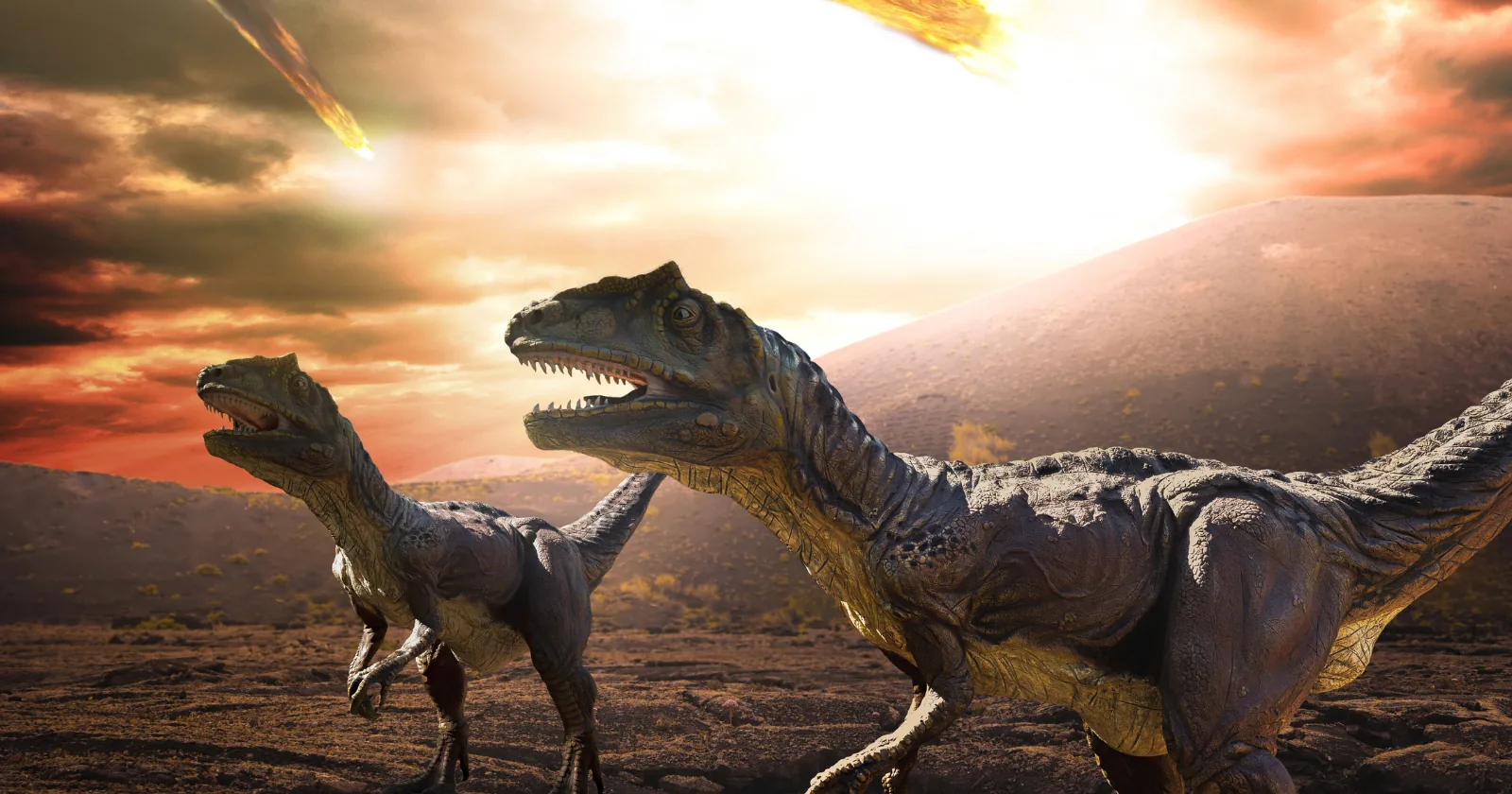
The catastrophic asteroid impact that occurred 66 million years ago near the Yucatán Peninsula, now known as the Chicxulub impact, may have been far more destructive due to the specific geological conditions of its landing site. Rather than a random geological event, the roughly 10-kilometer asteroid struck a shallow tropical seabed rich in sulfur-bearing rock and buried hydrocarbons. This unique composition is now argued by some researchers to be a critical factor in triggering the mass extinction event that ended the reign of the dinosaurs.
A 2017 study published in Scientific Reports by Kunio Kaiho of Tohoku University and Naga Oshima of Japan’s Meteorological Research Institute proposed that an asteroid of similar size striking a different part of the Earth might not have resulted in a mass extinction. Their modeling suggests that the impact's interaction with the sulfur and hydrocarbon-rich target rock released significant amounts of soot into the atmosphere. This soot then ascended into the stratosphere, where it absorbed sunlight, leading to prolonged global cooling.
The researchers estimated that this mechanism could have caused a global temperature drop of approximately 8 to 11 degrees Celsius, with even more drastic cooling experienced on land. This significant climate shock, coupled with a steep decline in rainfall, is posited as the primary driver behind the extinction of the dinosaurs and many other species. While the Chicxulub impact itself is a well-established scientific fact, supported by evidence like the Chicxulub crater and the Alvarez hypothesis, the precise role of the target geology remains a subject of ongoing research and modeling.
Examining the Impact's Trajectory and Ejecta
Adding another layer to the discussion of the impact's severity, research published in 2020 by a team led by Gareth Collins at Imperial College London explored the asteroid's trajectory. Their work, appearing in Nature Communications, suggested the asteroid approached Earth at a steep angle of around 60 degrees from the northeast. This specific angle, according to their simulations, would have ejected more vaporized rock and climate-altering gases into the atmosphere compared to a shallower or near-vertical impact. This argument, focusing on the geometry of the strike, complements the findings on the target rock's composition, both pointing towards the Chicxulub event being unusually destructive.
The combined arguments suggest that the Chicxulub impact was a confluence of factors: the asteroid's size, its angle of impact, and crucially, the geological makeup of the landing site. While alternative theories regarding the extinction event persist, such as the role of the massive Deccan Traps volcanic eruptions in present-day India that occurred around the same period, the specific geological context of the asteroid impact continues to be a focal point. Scientists are still working to precisely understand the chain of events that led from the impact to global cooling and mass extinction.
It is important to note that the contingency claim, positing that the dinosaurs might have survived had the asteroid struck elsewhere, is based on sophisticated climate models. These models rely on reconstructions of late Cretaceous geology, and the precise weighting given to soot versus other ejecta, like sulphate aerosols and silicate dust, is part of an ongoing scientific discussion. Nevertheless, the research highlights a compelling argument: the composition of a few kilometers of rock in a specific location on Earth may have played a decisive role in one of the planet's most significant extinction events. This perspective reframes the dinosaur extinction not solely as a consequence of an asteroid's power, but as a complex interplay between celestial mechanics and terrestrial geology.