
Europe Halts Ariane 6 Rocket Upgrades Amid Cost Concerns
Europe has shelved planned "Block 3" upgrades for its Ariane 6 rocket, including a key lightweight upper stage. The decision signals potential concerns over the program's high costs despite its successful early launches.

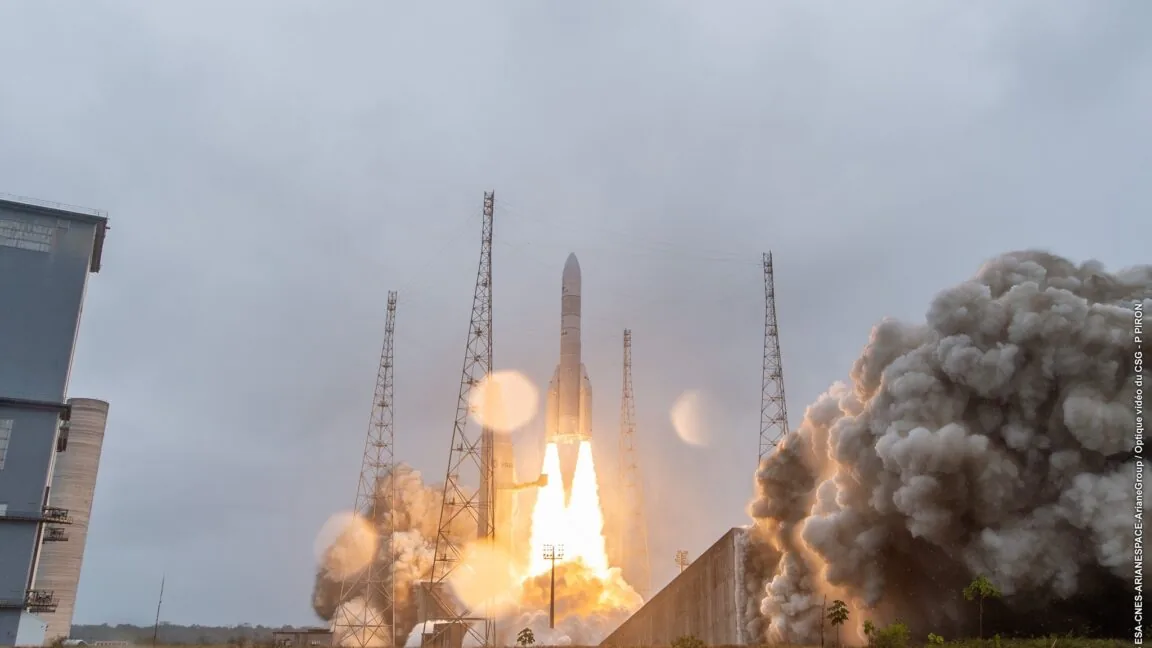
Europe's ambitious Ariane 6 rocket program has put planned "Block 3" upgrades on hold, potentially impacting future science missions and raising questions about the long-term economic viability of the launch vehicle. The European Space Agency (ESA) has reportedly shelved the development of these enhancements, which included the lightweight ICARUS upper stage featuring carbon-composite structures. The decision comes despite the Ariane 6's relatively smooth operational debut since its initial launch two years ago, having successfully completed eight missions to orbit.
The Ariane 6, designed as a large, expendable rocket with a capacity exceeding 20 metric tons to low-Earth orbit, has provided Europe with crucial independent access to space. This capability became especially vital after geopolitical events, including the war in Ukraine, necessitated an end to reliance on Russian Soyuz rockets and reduced the need for launches on commercial providers like SpaceX. However, the cancellation of the "Block 3" upgrades suggests that the high costs associated with the Ariane 6 program may be reaching a tipping point for European governments funding the initiative.
Financial Challenges Cloud Future Development
While Arianespace, the commercial arm of the European space program, has not publicly disclosed the exact cost per launch, estimates place it between 80 million and 100 million euros. The rocket serves European clients but also boasts a significant contract with Amazon for 18 launches to deploy its Project Kuiper constellation. Three of these Amazon Kuiper missions have already launched this year. Despite these commercial agreements, the program likely incurs financial losses on each private mission.
Europe invested approximately 3.6 billion euros in the development of the Ariane 6 and its launch facilities in French Guiana. Compounding these upfront costs, ESA's Director General Josef Aschbacher confirmed that European governments are still required to subsidize each launch by an estimated 32 million to 38 million euros, assuming nine flights annually. When amortizing development expenses and ongoing subsidies, the cost per launch effectively exceeds 100 million euros before customer payments are factored in.
The agency currently aims for 9 to 10 Ariane 6 launches per year. However, with increasing global demand and existing launch capacity constraints, discussions are underway to potentially expand the Ariane 6's flight rate. Aschbacher indicated in June that Europe is on track to achieve 10 launches in 2027, meeting initial targets. The agency is exploring scenarios to increase this cadence to 12, 15, or even 20 launches annually.
Scaling up production for an expendable rocket like the Ariane 6 requires significant investment in manufacturing all components, from solid rocket boosters and first-stage engines to upper stages and payload fairings. Aschbacher anticipates seeking clarity from funding ministers by the end of 2026 regarding any plans for production scaling. This decision will likely hinge on whether ministers deem increased investment in factories and logistics justifiable, especially if attracting demand necessitates further price subsidies. They may opt to redirect funds towards developing the next generation of Ariane rockets, potentially incorporating partial reusability to better compete with emerging reusable vehicles from the United States and China.
The forthcoming decisions from European ministers on production capacity will offer significant insight into their long-term strategic vision for the Ariane 6 program. The current trajectory suggests a complex balancing act between maintaining reliable access to space, managing substantial financial commitments, and investing in future technologies that can ensure Europe's competitiveness in the global launch market. The fate of future upgrades like the ICARUS stage and the overall production cadence will likely be determined by these crucial fiscal considerations.