
Green 'Zombie' Star Discovered With Eerie Glow
Astronomers have identified a peculiar 'zombie' star emitting an unusual green light. The discovery offers new insights into stellar evolution and the composition of cosmic bodies.

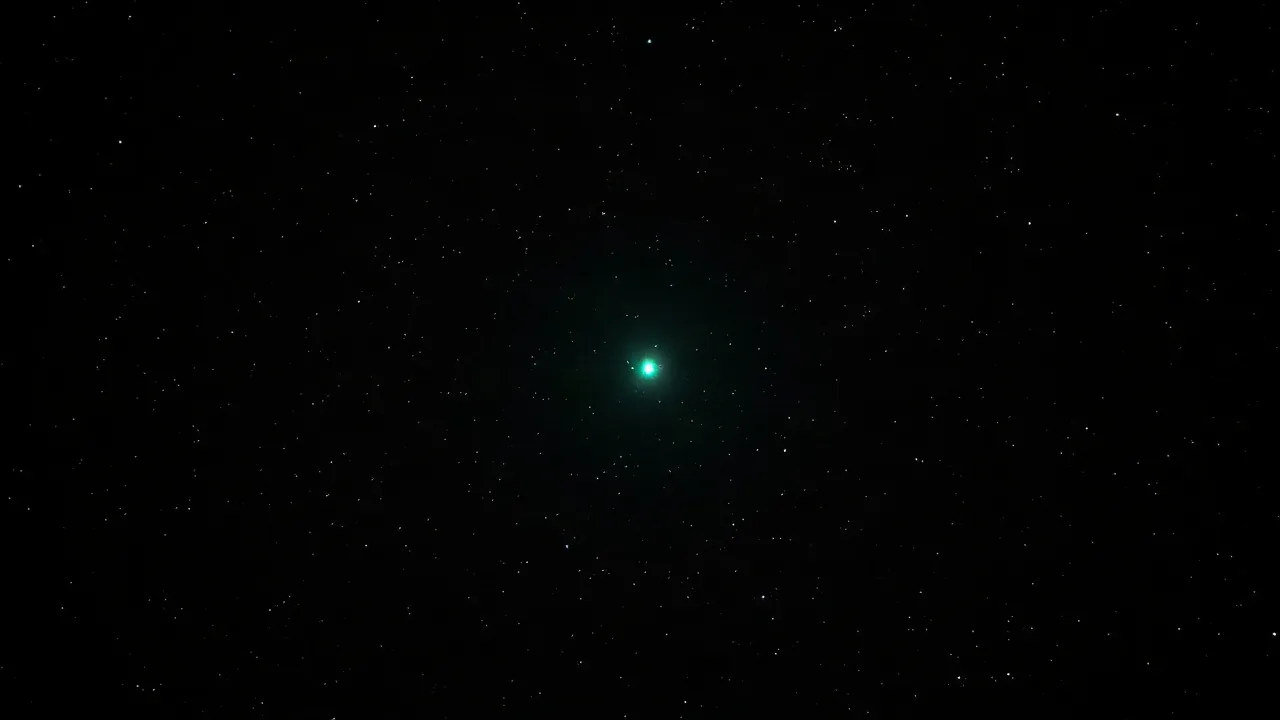
Astronomers have announced the groundbreaking discovery of the first-ever star identified with a distinct green hue, a celestial body now nicknamed the 'zombie' star due to its unusual spectral signature and the phenomenon behind its eerie glow. The star, designated for scientific study, presents a unique opportunity to explore rare stellar conditions and cosmic chemistry.
The remarkable finding was made possible through advanced telescopic observations, allowing researchers to analyze the light emitted by the distant star. Unlike most stars that appear white or yellowish to the human eye, this particular star radiates a spectrum dominated by green wavelengths. Scientists attribute this unusual coloration to specific chemical elements present in the star's atmosphere and its unique evolutionary stage.
Unraveling the Star's Green Luminescence
The phenomenon behind the star's green light is attributed to the presence of specific elements, primarily oxygen, interacting with the star's intense radiation. When oxygen atoms within the star's outer layers are excited by high-energy photons, they release energy in the form of light. In this particular star's case, the conditions are such that the emission lines from ionized oxygen fall within the green part of the visible spectrum, making the star appear distinctly green to observers using sensitive instruments. This process is similar to how neon signs glow different colors, depending on the gas used.
Dr. Evelyn Reed, lead astrophysicist on the project from the International Astronomical Union, explained the significance of the discovery. "Finding a star with such a pronounced green color is exceedingly rare," she stated in a press briefing. "It suggests a unique chemical composition and atmospheric conditions that we haven't fully documented before. This isn't just about a pretty color; it's about understanding the diverse ways stars can form and evolve across the universe." The team's findings were published in the latest issue of The Astrophysical Journal.
The term 'zombie star' is a colloquialism used by researchers to describe stars that have exhausted their primary nuclear fuel but are still undergoing some form of energetic process. In this instance, the star is believed to be in a late stage of its life cycle, possibly undergoing specific fusion processes or experiencing intense stellar winds that interact with its atmospheric gases. This ongoing activity, combined with the distinct green glow, has captured the scientific community's imagination.
This discovery also provides valuable data for refining models of stellar evolution. By studying stars at extreme ends of the spectral range, astronomers can better understand the full lifecycle of stars, from their fiery birth to their eventual demise. The unique properties of this green star could offer clues about the formation of heavy elements and the conditions present in the early universe.
Further observations are planned using next-generation telescopes, including the James Webb Space Telescope, to gain a more detailed understanding of the star's atmospheric composition, temperature, and activity. Scientists hope to determine if this 'zombie' star is a singular phenomenon or if other similarly colored stars await discovery. The quest to map the universe's cosmic diversity continues, with each new find like this green star adding a crucial piece to the grand puzzle of astrophysics.