
Hera Spacecraft Nears Asteroid Dimorphos for DART Impact Study
Europe's Hera mission is approaching the asteroid Dimorphos to assess the aftermath of NASA's DART impact. The spacecraft will conduct the most detailed survey ever of an asteroid system.

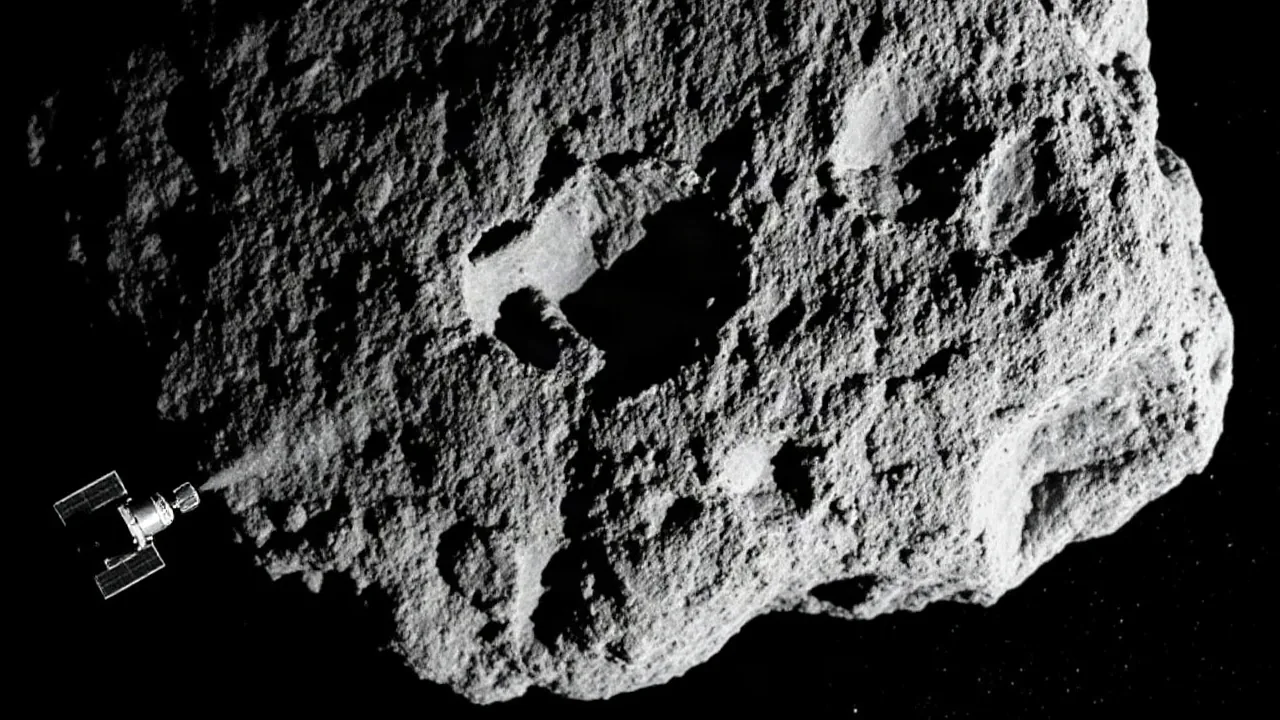
ESA's Hera spacecraft is on the cusp of reaching the Didymos asteroid system, specifically its moonlet Dimorphos, to conduct an unprecedented close-up study of the effects of NASA's Double Asteroid Redirection Test (DART). The mission is set to arrive in early December 2026, marking a significant milestone in planetary defense research. Hera will become the first spacecraft to perform a detailed, multi-component investigation of an asteroid system, analyzing the impact crater left by DART and the resulting changes to Dimorphos.
Four years ago, in September 2022, NASA's DART spacecraft successfully collided with Dimorphos, a 160-meter-wide asteroid orbiting the larger Didymos. This pioneering kinetic impactor mission aimed to demonstrate a viable strategy for deflecting an asteroid on a collision course with Earth. The DART mission conclusively proved that deliberately crashing a spacecraft into an asteroid could alter its trajectory, a crucial finding for future asteroid threat mitigation efforts. Hera's primary objective is to quantify the precise effects of that impact, providing scientists with invaluable data to refine asteroid deflection models.
Detailed Investigation of Impact Aftermath
Upon arrival, Hera will commence a comprehensive survey, deploying two small CubeSats: Juventas and Milani. Juventas will descend to gather close-up data on Dimorphos's surface composition and structure, while Milani will measure the asteroid's magnetic field and composition. The Hera spacecraft itself will conduct high-resolution imaging and laser altimetry to map the asteroid's topography and analyze the ejecta plume created by the DART impact. Scientists are particularly keen to understand the size and distribution of the debris ejected, as well as the exact shape and depth of the crater left by DART. This detailed examination will offer insights into the internal structure and porosity of Dimorphos, which are critical factors in predicting how it would respond to such an impact.
The data gathered by Hera is expected to significantly advance our understanding of asteroid physics and the effectiveness of kinetic impactors as a planetary defense tool. Dr. Ian Carnelli, Hera Mission Manager at ESA, stated, "Hera will achieve what no other mission has done before: observing a pristine asteroid system up close and then returning years later to study the consequences of a deliberate impact. It’s a unique opportunity to understand the complex physics of impact processes." This mission builds directly upon the success of the DART mission, turning a single experiment into a full scientific investigation.
The Didymos system is an ideal target because it is a near-Earth binary asteroid, meaning it consists of two asteroids orbiting each other. This configuration allows scientists to observe the effect of the impact on Dimorphos without the complication of its gravitational influence on Earth. The system's orbit also brings it relatively close to Earth, making it accessible for missions like DART and Hera. The information obtained from the Hera mission and its preceding DART impact will be vital for informing future asteroid deflection strategies and safeguarding our planet from potential cosmic threats.
The Hera mission, launched in October 2024, represents a major collaborative effort between the European Space Agency (ESA) and international partners. The success of this mission underscores the growing global commitment to developing robust planetary defense capabilities. By meticulously analyzing the aftermath of NASA's DART strike, Hera aims to provide the definitive scientific understanding of how effectively we can nudge an asteroid off course, a capability that could prove indispensable in the long term for humanity's survival.