
Japan Launches Mission to Collect Samples from Martian Moon Phobos
Japan's space agency, JAXA, has launched its MMX mission aboard an H3 rocket. The ambitious endeavor aims to collect samples from Phobos, one of Mars's moons, and return them to Earth for analysis.

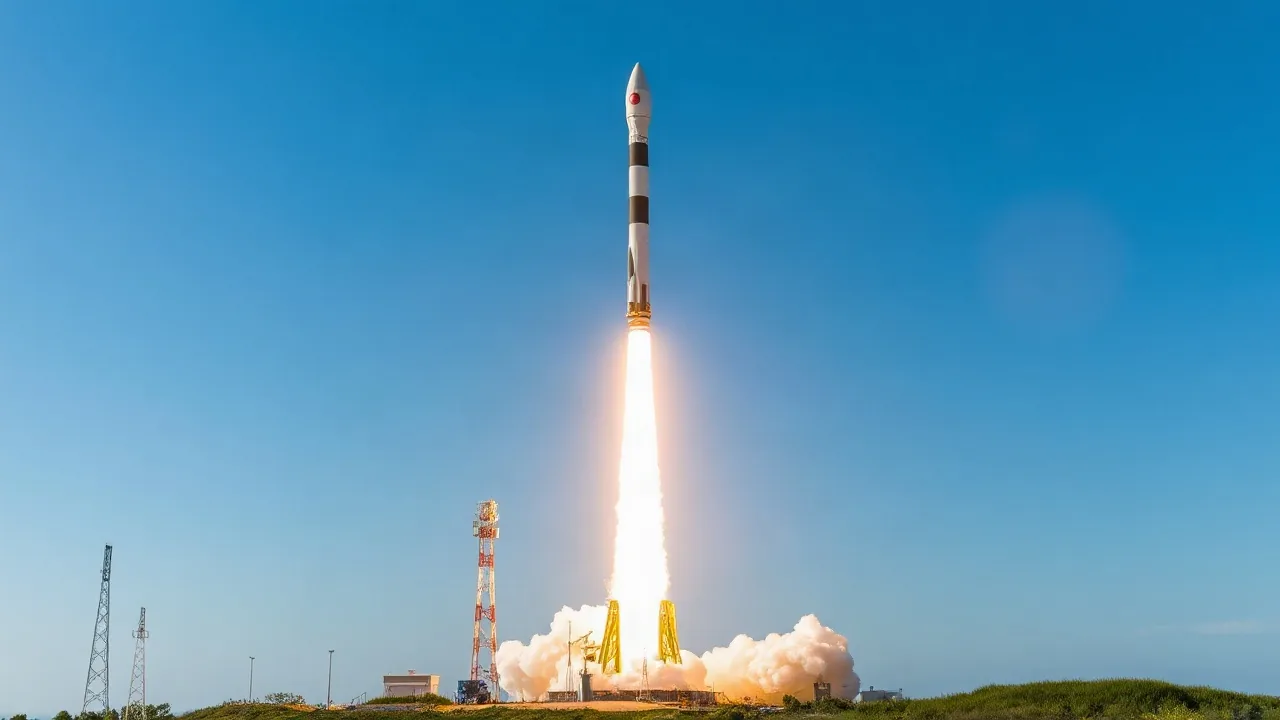
Japan successfully launched its Martian Moon Exploration (MMX) spacecraft on Monday, initiating an ambitious multi-year mission to gather samples from Phobos, one of Mars's two moons, and return them to Earth. The launch took place at the Tanegashima Space Center, marking a significant step in international space exploration efforts. The MMX mission, operated by the Japan Aerospace Exploration Agency (JAXA), is designed to study the Martian system, including its moons Phobos and Deimos, and to investigate the origins of these celestial bodies.
The MMX spacecraft will travel for approximately 3.5 years before reaching Mars orbit in 2028. Once in orbit, it will orbit the red planet for a year, during which it will conduct observation of both Phobos and Deimos. The primary objective is to land on Phobos, collect surface material, and then send the samples back to Earth via a return capsule. The spacecraft will also perform flybys of Deimos to gather data. This complex sample return mission represents a major technological undertaking for JAXA.
Investigating Martian Moon Origins
Scientists believe that Phobos and Deimos may be captured asteroids rather than moons formed with Mars. The samples collected by MMX could provide crucial clues to understanding their formation and the early history of the solar system. Dr. Takeshi Iwata, a lead scientist on the MMX mission, stated, "This mission offers an unprecedented opportunity to analyze extraterrestrial material up close. The geological and chemical composition of Phobos could tell us a great deal about the conditions in the Martian neighborhood billions of years ago." Understanding the origin of these moons could also shed light on planetary formation processes elsewhere in the universe.
The MMX mission is not just about collecting samples; it also includes the deployment of a small rover developed by the U.S. space agency NASA. The rover will be tasked with exploring the surface of Phobos and capturing images and data, further enhancing the scientific return of the mission. This collaboration between JAXA and NASA highlights the growing international cooperation in space exploration. The H3 rocket, Japan's most advanced rocket, provided the powerful boost needed to propel the MMX spacecraft on its long journey, demonstrating the nation's growing capabilities in space launch technology.
The MMX mission is expected to land its sample return capsule on Earth in 2029. The collected material will then be distributed to research institutions worldwide for detailed analysis, with the hope of answering fundamental questions about Mars, its moons, and the solar system's evolution. The success of this sample return mission will pave the way for future complex explorations of other celestial bodies.