
Japan's MMX Mission Aims for First Martian Moon Samples in 2026
Japan's Martian Moons Exploration (MMX) mission is poised to achieve a historic first by collecting samples from Phobos, one of Mars's moons. The ambitious probe is set to launch later this year and return its precious cargo to Earth in 2026.

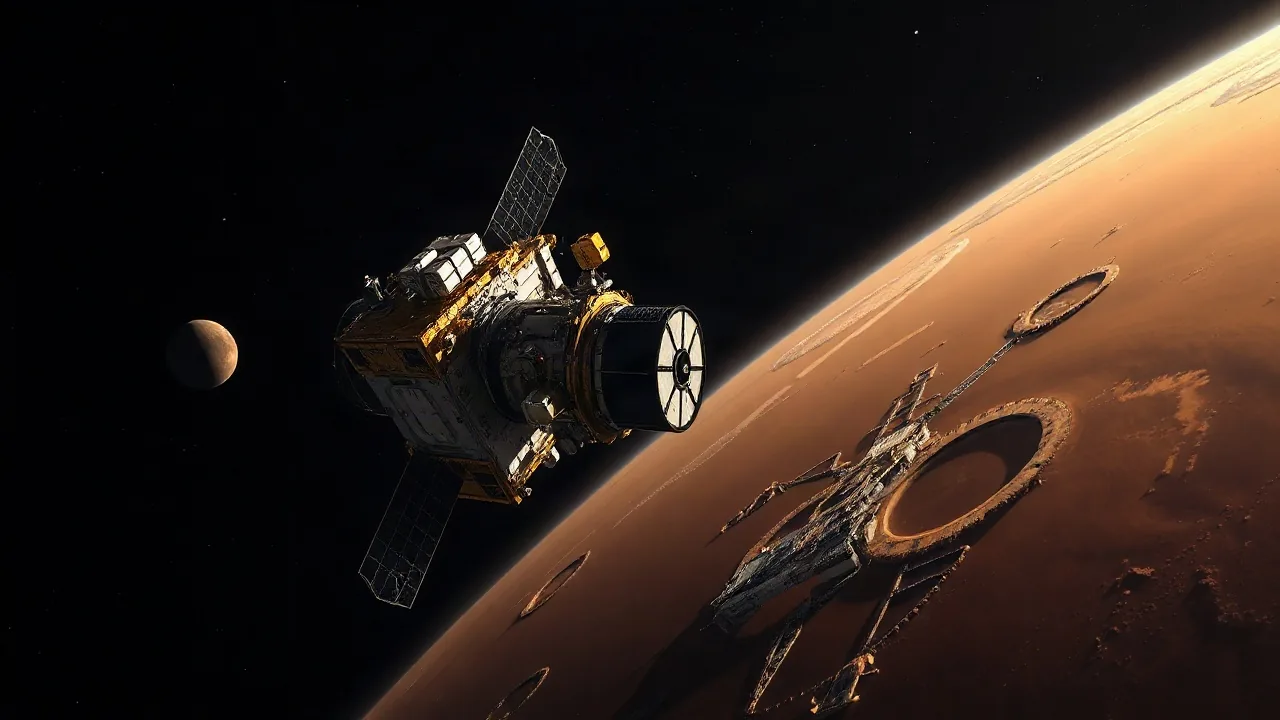
Japan's ambitious Martian Moons Exploration (MMX) mission is gearing up to achieve a groundbreaking feat: collecting the first-ever samples from a moon orbiting Mars. The Japan Aerospace Exploration Agency (JAXA) is preparing to launch the MMX spacecraft later in 2026, with the ultimate goal of bringing material from Phobos, one of Mars's two natural satellites, back to Earth for in-depth scientific analysis.
The MMX mission represents a significant leap in planetary science, offering an unprecedented opportunity to study the origins and evolution of Martian moons. Phobos, a small, irregularly shaped body, is thought to be a captured asteroid or debris from an ancient impact. Understanding its composition could unlock crucial clues about the early solar system and the geological history of the Red Planet itself. The spacecraft will target a landing site on Phobos, collect surface material, and then propel itself back towards Earth, releasing a sample return capsule in 2026.
Unveiling the Secrets of Phobos
The primary scientific objective of the MMX mission is to unravel the mysteries surrounding Phobos. Scientists are particularly interested in its surface composition and whether it contains water ice or organic molecules. The samples collected will be studied by researchers worldwide, providing a wealth of data that could reshape our understanding of Mars and its celestial neighbors. The mission also includes a secondary objective: to observe and photograph Deimos, Mars's other moon, from close proximity.
“This is a pivotal moment for space exploration,” said Dr. Hiroshi Yamakawa, President of JAXA, in a pre-launch briefing. “The MMX mission is not just about bringing back rocks; it’s about gathering knowledge that could fundamentally change our perception of planetary formation and the potential for life beyond Earth.”
The MMX spacecraft, equipped with advanced scientific instruments, will undertake a complex journey to Mars. Upon arrival, it will enter orbit around the Red Planet before initiating maneuvers to approach Phobos. The landing phase on Phobos is expected to be particularly challenging due to the moon’s low gravity and uneven terrain. JAXA has developed a sophisticated landing system designed to ensure a stable touchdown and the successful acquisition of samples. The mission will also deploy a small rover, weighing just 15 grams, onto the surface of Phobos to gather mobility data and conduct further observations.
The broader scientific community is eagerly anticipating the results from the MMX mission. It is hoped that the analysis of Phobos samples will shed light on the processes that led to the formation of the Martian system, potentially offering insights comparable to those gained from asteroid sample return missions like Japan's Hayabusa and NASA's OSIRIS-REx. The successful return of these samples will mark a significant milestone for Japan's space program and for international collaboration in space science.