
NASA Shares Moon Crater Images After SpaceX Rocket Impact
NASA's Lunar Reconnaissance Orbiter captured before-and-after images of a new crater on the Moon, measuring approximately 60 feet wide, created by the impact of a SpaceX Falcon 9 rocket.

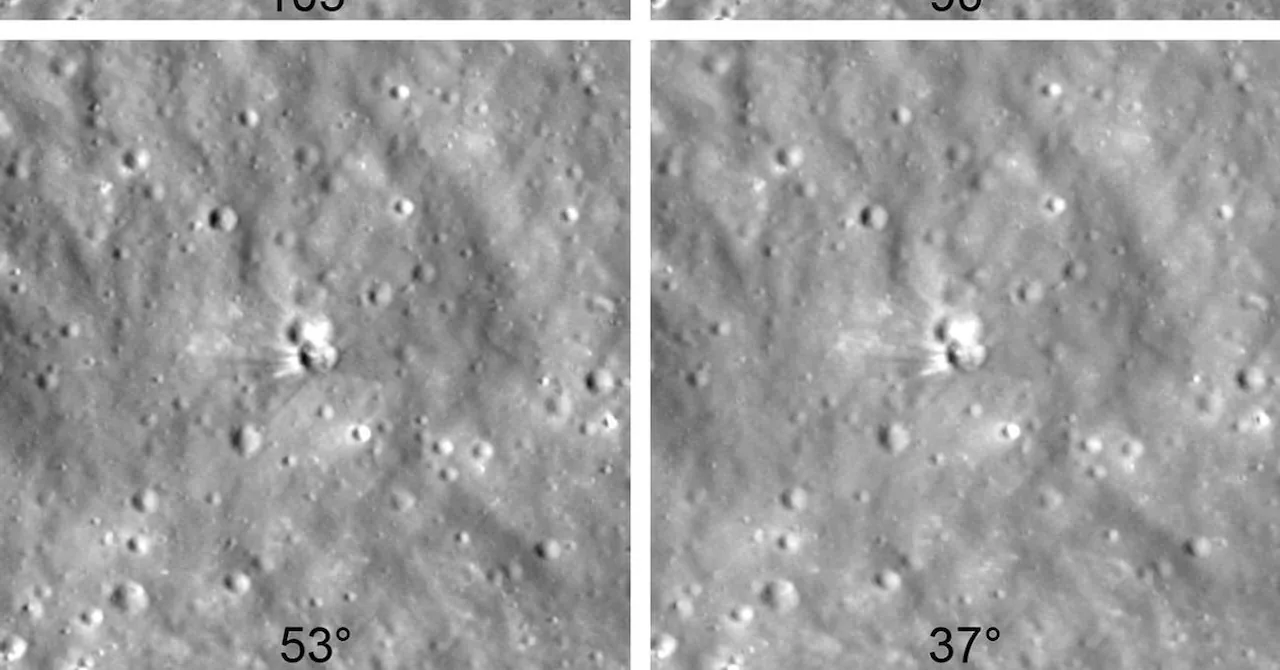
NASA has released striking before-and-after images revealing a newly formed crater on the Moon, a direct result of a SpaceX Falcon 9 rocket's impact on August 5, 2026. The images, captured by the agency's Lunar Reconnaissance Orbiter (LRO) between August 11-12, confirm the crater's dimensions: roughly 60 feet in diameter, comparable to the width of a basketball court, and less than 10 feet deep.
The discovery and identification of the impact site involved a significant global effort. "Finding the impact site took global coordination among experts and hobbyists," NASA stated in an August 20 announcement. Independent astronomers initially pinpointed the rocket's trajectory using publicly accessible data. This information was then utilized by NASA's Center for Near Earth Object Studies (CNEOS), which normally monitors natural celestial objects for potential Earth hazards, to refine and validate its impact prediction tools.
Space Debris and Lunar Impacts
The object that struck the lunar surface was a piece of a SpaceX rocket. This particular piece had been in orbit for over a year after being part of the launch that carried two commercial lunar landers. The debris weighed approximately 8,800 pounds and was traveling at an estimated speed of 5,400 miles per hour at the moment of impact, a velocity seven times the speed of sound. While the incident highlights the growing issue of space debris, it also provided NASA with a unique opportunity to test its capabilities in tracking and predicting such artificial impacts.
The event underscores a growing concern in the space industry regarding the long-term management of orbital debris. As more nations and private companies launch missions, the potential for accidental collisions or impacts on celestial bodies like the Moon increases. This recent event, while a controlled impact of a known object, offers valuable data for understanding the effects of such impacts on lunar geology and for improving tracking technologies. NASA's role in monitoring near-Earth objects, both natural and artificial, is crucial for planetary defense and the safety of future space exploration endeavors. The agency's collaboration with independent astronomers demonstrates the power of citizen science and open data in advancing scientific understanding.
The LRO has been instrumental in mapping the Moon's surface since its launch in 2009. Its high-resolution cameras provide invaluable data for scientific research, including the study of lunar geology, the search for water ice, and the characterization of potential landing sites for future human missions. This latest observation adds to the wealth of data collected by the orbiter, offering insights into the dynamic nature of our solar system and the increasing human footprint within it.