
Rare Blue Moon Rises This Week as Venus and Jupiter Converge
A rare 'Blue Moon,' the second full moon in May 2026, will rise this week. Stargazers can also witness Venus and Jupiter drawing closer in the evening sky.

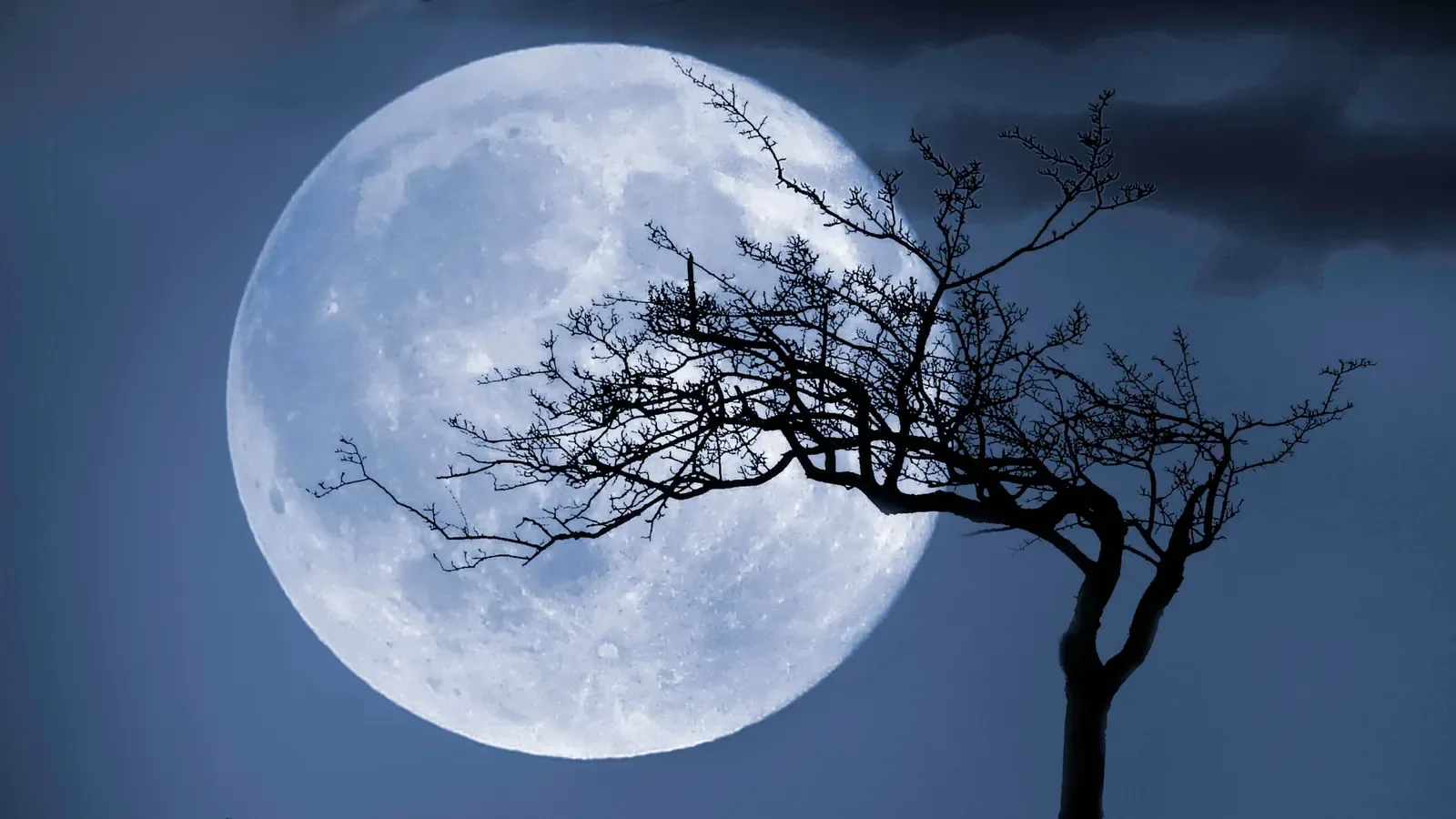
Stargazers have a rare celestial treat this week as May 2026 concludes with a 'Blue Moon,' the second full moon to occur within a single calendar month. The lunar event, which happens only about every 2.7 years, offers a unique viewing opportunity alongside the converging paths of Venus and Jupiter in the western sky after sunset. The period for observation runs from May 25 through May 31.
A full moon typically appears approximately every 29.5 days, aligning with the average length of a calendar month. However, the specific timing can occasionally result in two full moons within one month, an occurrence popularly dubbed a 'Blue Moon.' May 2026 is one such month, bookended by a full moon on May 1 and the second, or Blue Moon, on May 31. Despite its name, the Blue Moon does not possess a distinct blue hue; its significance lies purely in its rarity and the timing of its appearance within the calendar. For optimal viewing, experts suggest that moonrise on May 30 will offer the most spectacular display, as atmospheric conditions can make the moon appear larger and more colorful.
Planetary Convergence Amidst Lunar Rarity
While the Blue Moon takes center stage, the evening sky also presents a captivating planetary display. Venus and Jupiter are steadily drawing closer to one another in the western horizon after sundown. Venus, shining with exceptional brilliance, is visible low on the horizon, with Jupiter positioned above it. Each successive evening, the apparent distance between these two bright planets diminishes slightly. This gradual convergence is easily observable with the naked eye over multiple nights and is building towards a notable close pairing, or conjunction, scheduled for June 9. This celestial dance serves as a constant reminder of the dynamic nature of our solar system, with planets continuously shifting their positions against the backdrop of distant stars.
Adding to the week's astronomical interest is the constellation Leo, the Lion. Though it is now sinking lower in the west after sunset, Leo remains one of the most recognizable constellations for amateur astronomers. Its distinctive sickle-shaped pattern delineates the lion's head, with the bright star Regulus marking its most prominent point. A triangle of stars follows, forming the lion's hindquarters. Leo's clear and simple pattern makes it an excellent target for beginners. This week provides one of the last opportunities to observe Leo prominently before it becomes increasingly obscured by evening twilight in the coming weeks.
Looking ahead, the night sky will continue to offer notable events. In the early days of June (June 1-3), the waning moon will rise progressively later each evening, allowing for darker skies immediately after sunset. On June 5, Venus will reach its highest point in the evening sky for the year. The much-anticipated conjunction of Venus and Jupiter will occur between June 9-11, appearing exceptionally close low in the west after sunset. Later in the month, around June 14-16, a New Supermoon, which will be the largest of the year, will signal a brief but valuable period of dark skies. This will be followed by Mercury reaching its greatest eastern elongation on June 16, making it briefly visible after sunset.
These celestial timings are generally applicable to mid-northern latitudes. For precise viewing information tailored to specific geographic locations, consulting online planetarium software such as Stellarium is recommended. This rare Blue Moon and the ongoing planetary alignment highlight the dynamic and ever-changing spectacle of the cosmos, offering engaging opportunities for both novice and experienced skywatchers to connect with the universe.