
SpaceX Deploys 24 Starlink Satellites from California Launch
SpaceX successfully launched 24 Starlink satellites into orbit on August 8, 2026, from Vandenberg Space Force Base in California. The mission marked the 16th flight for the reusable Falcon 9 booster.

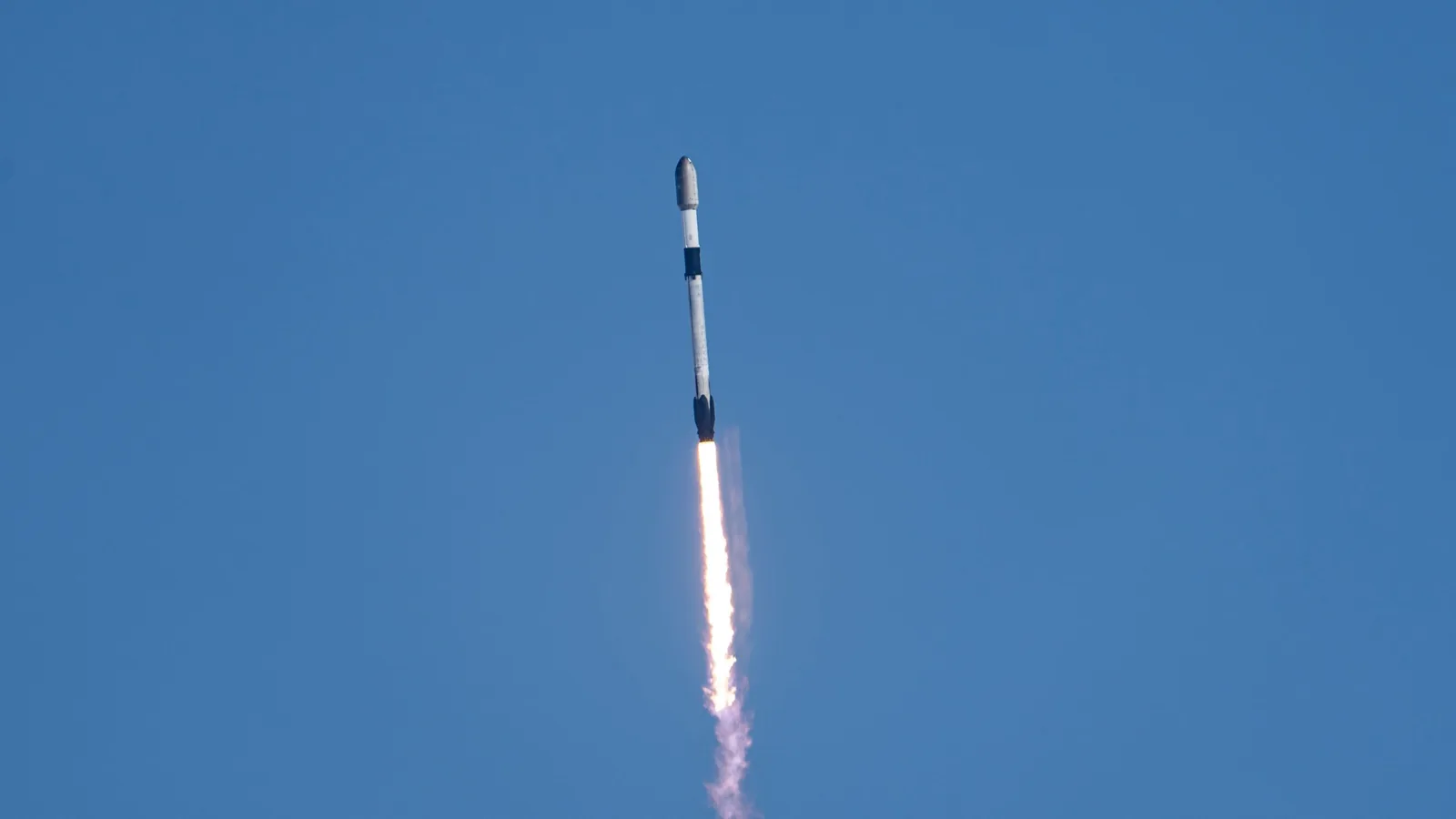
SpaceX continued its rapid expansion of the Starlink internet constellation with another successful satellite deployment on August 8, 2026. A Falcon 9 rocket carrying 24 Starlink spacecraft lifted off precisely at 12:35 p.m. EDT from Vandenberg Space Force Base, located on California's central coast. This mission, designated Starlink Group 17-38, aims to further bolster the global broadband network.
The reusable Falcon 9 rocket performed as expected, with its first stage completing a planned landing approximately 8.5 minutes after liftoff. The booster, identified as B1093, touched down on the SpaceX droneship named "Of Course I Still Love You" in the Pacific Ocean. This particular booster has now completed 16 successful flights, showcasing SpaceX's commitment to reusability and cost-efficiency in its launch operations. Its most recent mission prior to this deployment occurred on July 14, launching 27 Starlink satellites from the same California launch site.
Following the first stage's return, the Falcon 9's upper stage continued its journey, successfully deploying the 24 Starlink satellites into low Earth orbit (LEO) about 61 minutes after the initial liftoff. These satellites are designed to provide high-speed, low-latency internet access to users worldwide, with a particular focus on underserved and remote areas.
Expanding Global Internet Access
This launch represents the 92nd Falcon 9 liftoff of 2026 and the 71st mission specifically dedicated to constructing the Starlink megaconstellation. The sheer volume of these launches underscores the ambitious scale of SpaceX's project, which has rapidly become a significant player in the global telecommunications landscape. By deploying hundreds of satellites, SpaceX aims to create a robust and comprehensive internet network that can compete with traditional terrestrial broadband providers.
The Starlink project has faced scrutiny and praise regarding its impact on astronomical observations due to light pollution from the satellites. SpaceX has implemented measures to mitigate these effects, such as applying a sunshade to reduce reflectivity. Despite these challenges, the demand for Starlink services continues to grow, prompting frequent launch cadence to meet customer needs across the globe. The company, founded by Elon Musk, has consistently pushed the boundaries of space technology and launch capabilities, making routine access to orbit more common.