
SpaceX Stock Investment Outlook for 2026
SpaceX remains private but dominates aerospace contracting with NASA and the Defense Department. Analysts weigh the company's market position, upcoming Starship milestones, and valuation signals for potential future investors.

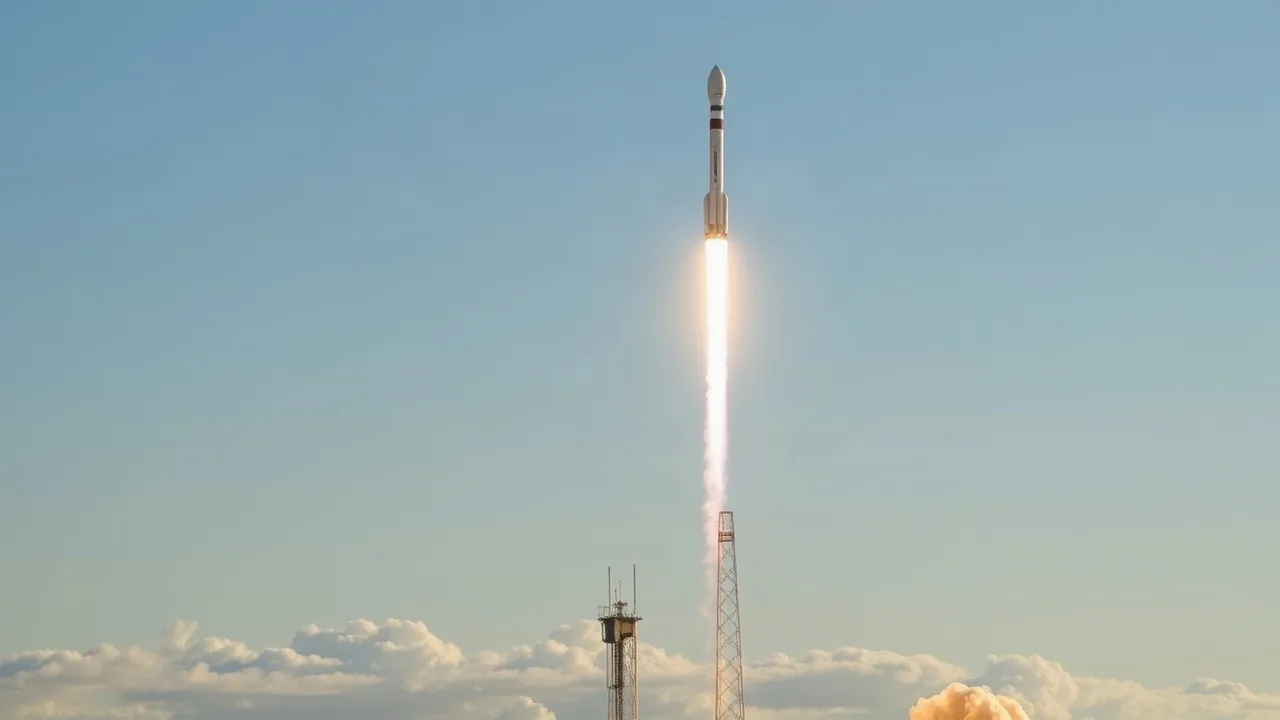
SpaceX has consolidated its position as the world's leading commercial spaceflight operator in 2026, securing over $8 billion in U.S. government contracts while the company's internal valuation climbed past $210 billion following secondary share transactions earlier this year. Private investors continue to bid aggressively for SpaceX equity, signaling confidence in Elon Musk's long-term vision despite the company remaining unlisted on public exchanges.
The aerospace sector has undergone dramatic consolidation since SpaceX launched its first resupply mission to the International Space Station in 2012. Today, SpaceX controls roughly 60 percent of global orbital launch capacity, a lead competitors including United Launch Alliance, Rocket Lab, and Axiom Space have struggled to narrow.
"SpaceX's competitive moat is nearly unassailable at this point," said Morgan Stanley aerospace analyst Adam Jonas in an August 2026 report. "Their cost structure, launch cadence, and government relationships create barriers to entry that will persist for at least a decade." Jonas assigned SpaceX an internal fair-value estimate of $250 billion, reflecting potential revenue growth tied to national security and space infrastructure expansion.
Government Contracts Fuel Near-Term Revenue
The U.S. Department of Defense awarded SpaceX $3.2 billion in new contracts across three fiscal years (2026-2028) for national security launch services, cementing the company's role in America's space defense architecture. NASA simultaneously extended its Commercial Crew Program partnership with SpaceX through 2030, guaranteeing regular crew transport missions to the orbiting laboratory at roughly $90 million per seat.
These government relationships shield SpaceX from commercial market volatility. Unlike traditional aerospace contractors, SpaceX does not depend solely on aerospace market trends or satellite operator purchasing patterns. Long-term government procurement agreements provide cash flow predictability that private investors value highly.
SpaceX's Falcon Heavy rocket completed eight missions in 2025 and early 2026, launching national reconnaissance satellites, military payloads, and commercial communications constellations. The company's Falcon 9 vehicle flew 66 times in 2025 alone, breaking its previous annual record by 12 missions.
Starship Development and Valuation Questions
SpaceX's Starship super-heavy lift vehicle remains the defining bet for long-term investor thesis. The company conducted seven integrated flight tests through September 2026, achieving progressive milestones including booster catch operations and steady-state thermal tile testing.
Starship's eventual operational status could unlock entirely new business lines. Military payload deployment, lunar cargo transport under NASA contracts, and point-to-point hypersonic travel represent theoretical revenue pools worth hundreds of billions annually. Yet the program remains in active development, with full operational capability likely 18-24 months away.
This timeline creates valuation tension. Secondary market transactions in June 2026 valued SpaceX at $210 billion based on current revenue streams and contract visibility through 2028. That figure assumes modest Starship contributions. If full operationalization extends beyond 2028, or if the vehicle fails to achieve promised payload capacity and reusability targets, the valuation could contract sharply.
Conversely, if SpaceX executes Starship deployment on schedule and captures lunar logistics or Department of Defense rapid-deployment contracts, some investment banks estimate valuation could approach $400 billion within five years.
Private Markets and Future Public Path
SpaceX remains the largest private company in the space industry by valuation, eclipsing established NASA contractors like Lockheed Martin's space division and Boeing's defense unit when measured by growth metrics. The company has never disclosed an intention to pursue a public offering, though founder Elon Musk has hinted that a future IPO remains possible once Starship deployment achieves recurring revenue status.
Secondary share markets have become the primary venue for SpaceX investment outside early-stage venture rounds. Platforms including Forge Global, EquityZen, and Nasdaq Private Market facilitate transactions at valuations that reflect institutional sentiment. Bid-ask spreads on SpaceX shares narrowed substantially during 2025-2026, suggesting growing confidence in valuation consensus.
For traditional equity investors locked out of secondary markets, exposure to SpaceX's success comes primarily through supplier stocks and publicly traded aerospace contractors that benefit from SpaceX's launch ecosystem. Loral Space and Communications, RTX Corporation, and Northrop Grumman all derive measurable revenue from SpaceX supply chain relationships or government contracts influenced by SpaceX's capabilities.
Regulatory tailwinds support SpaceX's growth trajectory. The Federal Aviation Administration streamlined commercial launch licensing in 2024-2025, reducing approval cycles from 12-18 months to 4-6 months for routine missions. This acceleration favors SpaceX's high-cadence model and creates structural disadvantages for competitors with slower manufacturing and integration timelines.
Political consensus around SpaceX's strategic importance to U.S. space dominance appears durable across both parties, reducing policy risk that traditionally plagues aerospace investments. The 2026 National Defense Authorization Act allocated record funding for space infrastructure and explicitly prioritized commercial launch capacity, language that directly benefits SpaceX's growth projections.
For investors monitoring SpaceX's trajectory, the next 12-18 months represent a critical inflection. Starship operational milestones, new government contract awards, and satellite constellation expansion will generate data points that either validate 2026 valuations or suggest significant re-rating is warranted. Until SpaceX goes public or pursues a liquidity event, private wealth platforms remain the only mechanism for individual investors to establish direct equity positions.