
Voyager 1 Team Member Reflects on Space Exploration Shift
An original member of the Voyager 1 mission team notes the shift from pure exploration to the commercial exploitation of space. The probe continues its journey, now nearly one light-day from Earth.

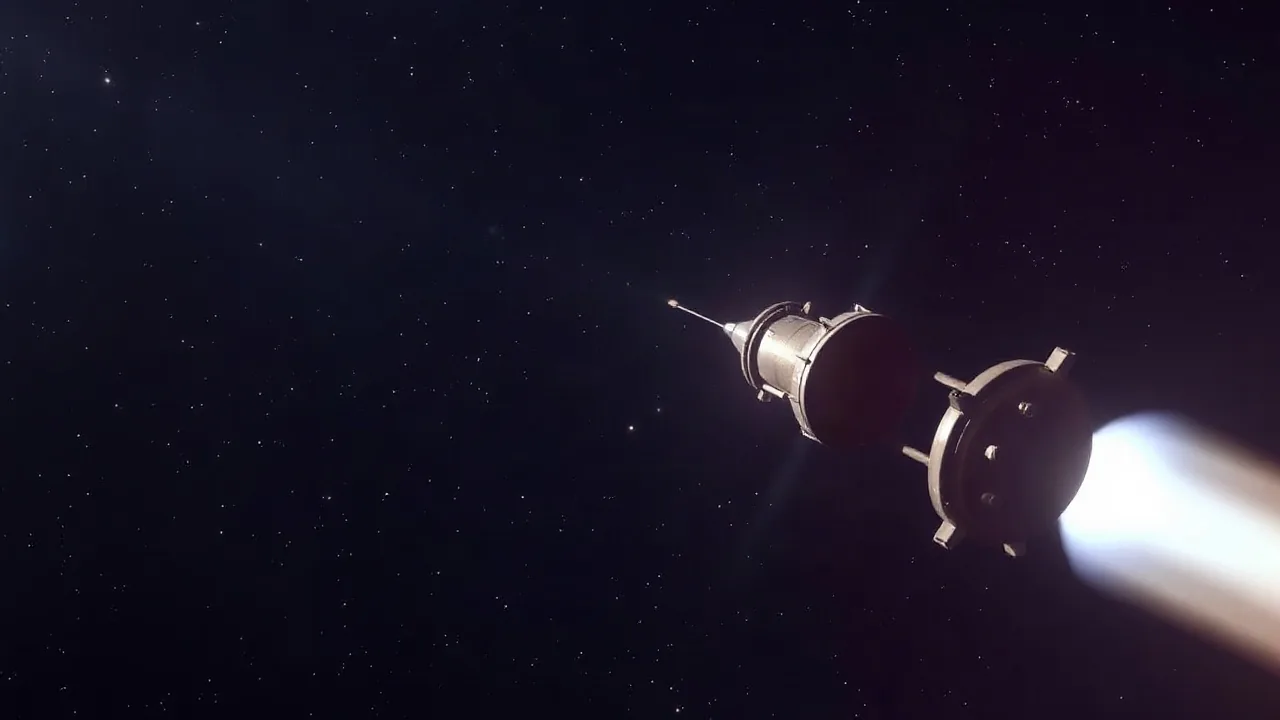
As NASA's legendary Voyager 1 spacecraft continues its unprecedented journey into interstellar space, one of its original team members, Suzanne Immel, has reflected on a significant evolution in humanity's relationship with the cosmos. Speaking to The Register, Immel observed a fundamental shift in how humans are interacting with space, moving from a phase of pure scientific discovery to one increasingly characterized by commercial interests and resource utilization.
Voyager 1, launched in 1977, has been traveling for nearly five decades and is now approximately one light-day away from Earth. Its mission was initially to study the outer planets of our solar system. However, its extended lifespan and continued operation have propelled it into a realm previously unreached by any human-made object, providing invaluable data about the heliosphere and the interstellar medium.
Immel, who was part of the original mission team, stated, "We've gone from exploration to exploitation." This sentiment encapsulates a broader trend observed in the space sector over the past few years. While scientific exploration remains a key driver, there is a growing emphasis on commercial activities, including satellite constellations for communication and internet services, space tourism, and the potential for asteroid mining and lunar resource extraction.
The Changing Landscape of Space
The transition Immel describes is not without its complexities. The early era of space exploration, marked by the Space Race between the United States and the Soviet Union, was primarily driven by geopolitical ambition and scientific curiosity. Programs like Apollo and the initial Voyager missions were monumental feats of scientific endeavor, pushing the boundaries of human knowledge with limited commercial considerations.
Today, the landscape is dramatically different. Private companies like SpaceX, Blue Origin, and others are playing an increasingly significant role, developing reusable rockets, planning crewed missions to the Moon and Mars, and deploying vast numbers of satellites. This commercialization has lowered the cost of access to space and accelerated innovation, but it also raises questions about space governance, debris, and the equitable distribution of potential future space-based resources.
Voyager 1's current position, a staggering distance from its home planet, serves as a stark reminder of the vastness of space and the enduring human drive to explore. The probe's continued data transmission, despite its age and distance, is a testament to the engineering prowess of its creators and the dedication of scientists and engineers who continue to monitor its progress. The data it sends back offers a unique, albeit distant, perspective on the universe beyond our solar system.
The ongoing mission of Voyager 1, alongside its twin Voyager 2, represents a critical chapter in our understanding of the cosmos. As Immel suggests, the narrative is evolving. The spirit of exploration that launched these probes is now being interwoven with a burgeoning space economy. Understanding this shift is crucial for shaping the future of humanity's presence beyond Earth, ensuring that both scientific discovery and commercial endeavors can coexist and potentially benefit humankind.