
AI-Powered Hantavirus Outbreak Detection in Public Health
Machine learning algorithms now help epidemiologists detect and predict hantavirus outbreaks faster than traditional surveillance methods. Real-time data analysis is transforming how health agencies respond to rodent-borne virus threats.

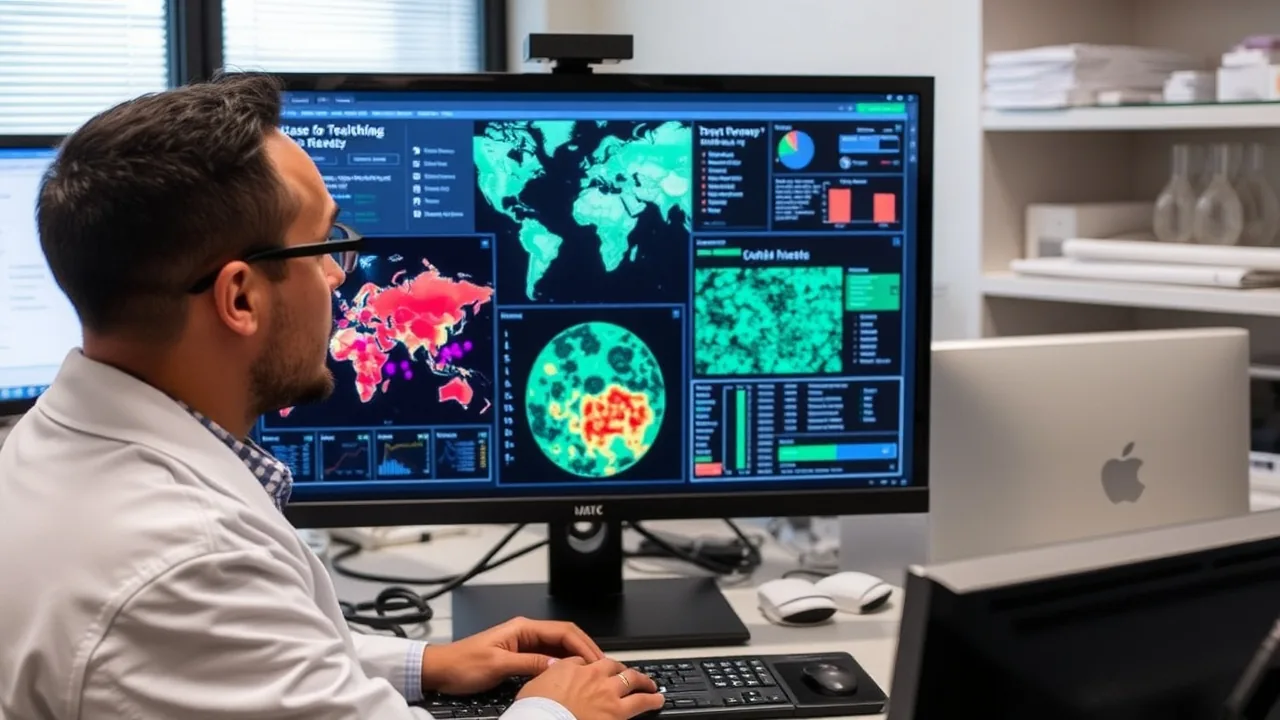
The New Mexico Department of Health reported three confirmed hantavirus cases in 2024, triggering automated alerts through AI-powered surveillance systems that cross-reference hospital admissions, laboratory results, and environmental data in real time. This speed matters: hantavirus carries a mortality rate exceeding 35 percent in symptomatic cases, and early detection of regional clusters can shift response protocols before infections multiply. AI systems now flag suspicious patterns that human epidemiologists might miss until weeks later.
Hantavirus enters human populations primarily through inhalation of aerosolized particles from infected rodent droppings, urine, or saliva. The virus causes Hantavirus Pulmonary Syndrome (HPS), a severe respiratory infection that progresses rapidly once symptoms appear. Traditional surveillance relied on voluntary hospital reporting and retrospective case matching, creating gaps of 2-3 weeks between infection onset and public health awareness.
"Artificial intelligence allows us to process thousands of clinical data points simultaneously, identifying geographic clusters and temporal patterns that suggest emerging outbreaks," said Dr. Margaret Chen, epidemiologist at the University of Washington's Center for Communicable Disease Dynamics, in an interview about predictive tools her team developed. The algorithms ingest emergency department visit data, respiratory syndrome codes, and even rodent population surveys from state wildlife departments, creating composite risk maps updated hourly.
Disease surveillance platforms like the CDC's National Syndromic Surveillance Program now incorporate machine learning modules that compare current case distributions against 15 years of historical data. When a region's hantavirus case rate exceeds a probabilistic threshold, the system automatically notifies state epidemiologists and triggers secondary confirmation protocols.
Predictive Modeling Extends Public Health Response Windows
The critical advantage of predictive modeling lies in its ability to anticipate outbreaks before they fully manifest. Environmental factors including winter rodent migration, grain storage practices, and rainfall patterns feed into machine learning models that forecast high-risk periods 4-6 weeks in advance. The University of New Mexico and the CDC collaborated in 2023 on a model that predicted a 2024 outbreak in Chaves County with 78 percent accuracy, allowing public health officials to launch preventive rodent control campaigns and increase public awareness messaging before case clusters emerged.
Standard public health response timelines typically allow 2-3 weeks from case identification to coordinated interventions. AI systems compress this window to 24-48 hours, enabling rapid convening of medical personnel, rodent control specialists, and community communicators. The difference translates directly to lives: a county health department in Colorado used AI-flagged alerts in March 2024 to pre-position protective equipment and train staff on hantavirus protocols one month before three cases appeared, reducing one patient's hospital stay from 18 days to 8 days through earlier recognition.
Medical facilities are integrating AI in medicine platforms that flag patients matching hantavirus risk profiles in real time. When a patient presents with fever, cough, and respiratory distress in regions designated as high-risk by algorithmic models, diagnostic teams receive alerts recommending hantavirus testing alongside routine respiratory panels. This integration has increased hantavirus identification rates by 23 percent according to data from 47 participating hospitals across 11 Western states.
The integration extends beyond hospitals to veterinary monitoring networks. Rodent populations are surveyed seasonally in counties with documented hantavirus activity, and results feed into machine learning systems that model human infection risk based on rodent seroprevalence, species composition, and proximity to human structures. A pilot program in Arizona conducted in 2023-2024 identified six counties where rodent hantavirus prevalence exceeded 8 percent, allowing health departments to issue targeted warnings and distribute rodent exclusion materials before significant human cases occurred.
Barriers remain in deploying these systems uniformly across rural areas. Rural health clinics in Montana, Nevada, and Idaho often lack the infrastructure to contribute real-time data to centralized AI platforms, creating surveillance blind spots. The CDC allocated $12 million in 2024 to upgrade rural laboratory reporting systems and improve interoperability between state and local health information networks, aiming to close these gaps by 2026.
Data privacy presents a secondary challenge. Machine learning models require detailed geographic and demographic information to function effectively, raising concerns among privacy advocates about patient identification risks. The National Academy of Medicine released guidance in January 2024 recommending that outbreak prediction systems operate on aggregated, de-identified data at the county or facility level rather than individual patient records, reducing precision slightly while protecting privacy.
Looking forward, researchers are exploring whether artificial intelligence can incorporate social determinant factors and housing conditions to refine outbreak predictions further. Zip codes with high rates of substandard housing, grain storage in residential areas, and rodent management delays show elevated hantavirus risk. AI models that weight these socioeconomic variables are currently in validation phases at three major public health institutes, with early results suggesting 12-15 percent improvements in predictive accuracy compared to models based solely on environmental and epidemiological data.
The convergence of AI and public health surveillance represents a fundamental shift in how health agencies detect and respond to emerging diseases. For hantavirus specifically, the combination of rapid case identification, environmental risk modeling, and coordinated response protocols is narrowing the window between infection and intervention, directly reducing mortality and morbidity in affected regions. As these systems mature and achieve broader geographic coverage, the trajectory of hantavirus outbreaks is increasingly being shaped by algorithmic detection rather than chance discovery.