
Next-Gen Hardware: Advanced Chips Reshape Consumer Electronics
Leading chip designers reveal breakthroughs in processor architecture and manufacturing efficiency that promise faster, more power-efficient devices within 18 months.

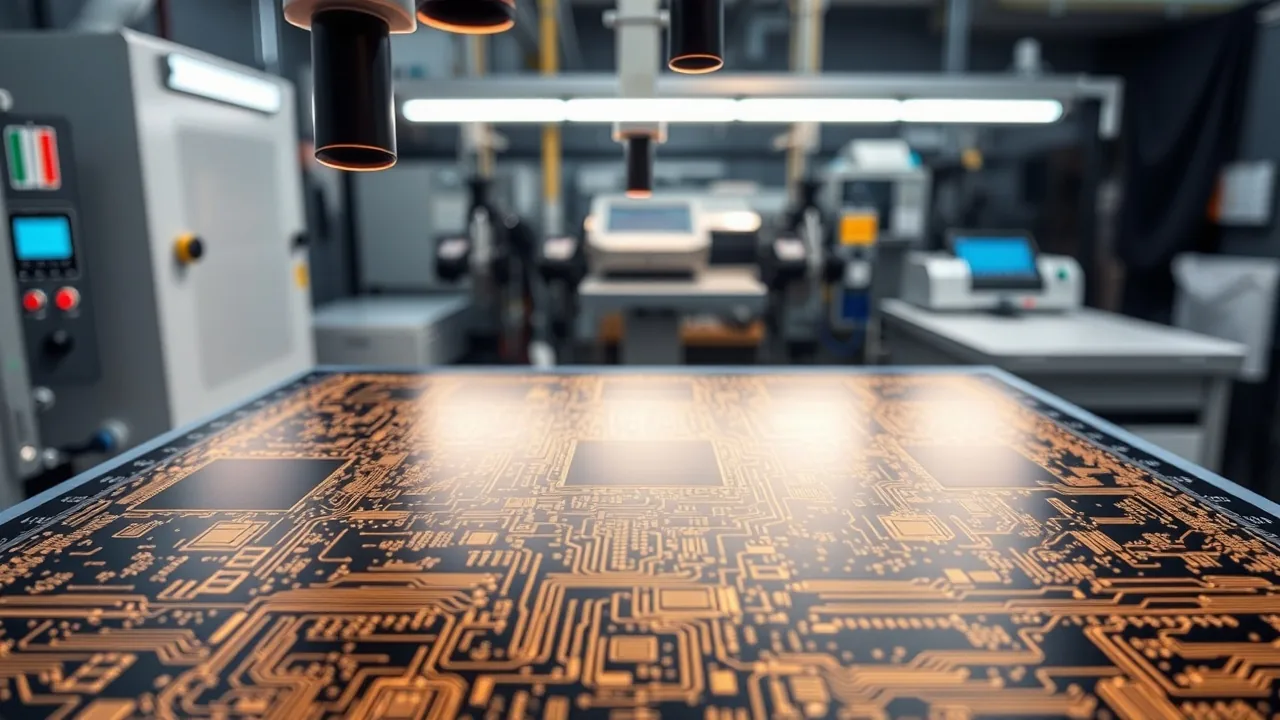
Kyle Loftis, a veteran semiconductor engineer at a major tier-one fab, outlined the current state of chip innovation during a closed-door industry roundtable last week. The consensus among attendees: manufacturers are hitting critical density limits with traditional methods, forcing a pivot toward novel materials and design paradigms that could redefine consumer hardware by 2026.
The semiconductor industry faces mounting pressure to sustain Moore's Law gains. Traditional silicon-based scaling has slowed, and heat dissipation challenges plague every major foundry. At the same time, demand for AI-capable devices, edge computing, and power-efficient mobile platforms continues to accelerate.
"We're not just shrinking transistors anymore," Loftis said in a recent technical briefing. "The real innovation is in how we architect memory hierarchies, power delivery networks, and thermal pathways. Those engineering decisions matter as much as the node size."
Material Science and Exotic Substrates
Three major approaches are now in advanced prototyping stages across the industry. Chipmakers are experimenting with gallium nitride (GaN) for high-frequency, low-loss switching; silicon carbide (SiC) for power management; and heterogeneous integration of chiplets using advanced interconnect standards like UCIe (Universal Chiplet Interconnect Express).
TSMC and Samsung have both announced multi-billion dollar investments in next-generation semiconductor technology fabs. Intel's foundry services division is racing to close the gap with a 20-billion-dollar commitment through 2024. These facilities will handle production of 1.4-nanometer and below nodes, though actual physical feature sizes remain closely guarded trade secrets.
Beyond traditional planar transistors, vertical gate-all-around (GAA) and nanowire architectures are moving from research into volume production. Samsung's latest 3GAE process node features fully depleted GAA transistors, reducing leakage and improving switching speed by up to 15 percent compared to prior generations.
The shift toward chiplet-based design is particularly significant for consumer products. Instead of manufacturing a monolithic processor, designers now combine specialized compute cores, memory controllers, and I/O engines from different suppliers into a single package. This approach reduces cost, improves yield, and accelerates time-to-market.
Power Efficiency and Thermal Management
Mobile and edge device manufacturers face a hard constraint: battery capacity cannot increase indefinitely. Processors must deliver more performance per watt while managing thermals in ever-thinner form factors.
Recent announcements from Qualcomm, Apple, and MediaTek highlight dramatic efficiency wins. Qualcomm's Snapdragon X Elite delivers up to 75 percent better power efficiency than prior-generation Snapdragon 8 Gen 2 chips in identical workloads. Apple's M3 Max, launched in November 2023, reduced energy per instruction by 20 percent while increasing clock speed.
These gains stem from several complementary techniques:
- Dynamic voltage and frequency scaling (DVFS) with finer granularity, adjusting power on a per-core or per-cluster basis every microsecond
- Heterogeneous CPU designs pairing high-performance and efficiency cores, borrowed from mobile and now appearing in mainstream workstations
- Advanced power gating to eliminate leakage in unused logic blocks
- On-die power delivery and integrated voltage regulators to reduce parasitic losses
Thermal management improvements equally important. Package-on-package (PoP) stacking and advanced underfill materials help spread heat more evenly. Die-to-substrate thermal interfaces using graphene or copper vias reduce thermal resistance. Vapor chambers and active cooling loops are becoming standard in gaming laptops and professional workstations.
Real-World Impact on Tech Gadgets
Consumer-facing products hitting shelves in 2024 and 2025 will showcase these advances. Laptops powered by next-gen processors promise 20+ hour battery life without sacrificing gaming or content creation performance. Smartphones with new flagship chips are expected to handle local AI inference tasks without draining the battery in minutes.
Server and data center workloads benefit equally. Custom silicon designed for specific inference tasks (tensor operations, recommendation engines, natural language processing) reduces power consumption by 40 to 60 percent compared to general-purpose CPUs. Companies like Cerebras, Graphcore, and custom accelerators from Google (TPU) and Amazon (Trainium, Inferentia) are already shipping production units.
Gaming hardware is particularly visible. The RTX 50 series from Nvidia, expected in Q1 2025, will incorporate TSMC's cutting-edge process node alongside refined memory architecture. Frame rates, ray-tracing quality, and power envelope improvements should set new performance benchmarks for high-end gaming.
Automotive applications are accelerating adoption of advanced chips. Level 3 and Level 4 autonomous driving systems demand real-time processing of gigabytes of sensor data every second. Next-generation SoCs (system-on-chips) from Tesla, Nvidia, Qualcomm, and others integrate multiple cores, specialized neural accelerators, and dedicated safety processors on a single die to meet latency and reliability requirements.
The convergence of these technologies points toward a computing ecosystem where power efficiency, thermal density, and performance-per-watt are no longer trade-offs but synchronized improvements. End users will see faster devices, longer battery life, and quieter thermal profiles. For manufacturers, the challenge is navigating escalating design complexity, rising mask costs at advanced nodes, and competition from geopolitically motivated fab expansion.