
AI in Legal Tech Reshapes How Judges Make Rulings
Judge Alvin Hellerstein's recent hush money decision underscores how artificial intelligence now assists judges in analyzing evidence and crafting complex rulings. Legal tech is transforming courtroom proceedings.

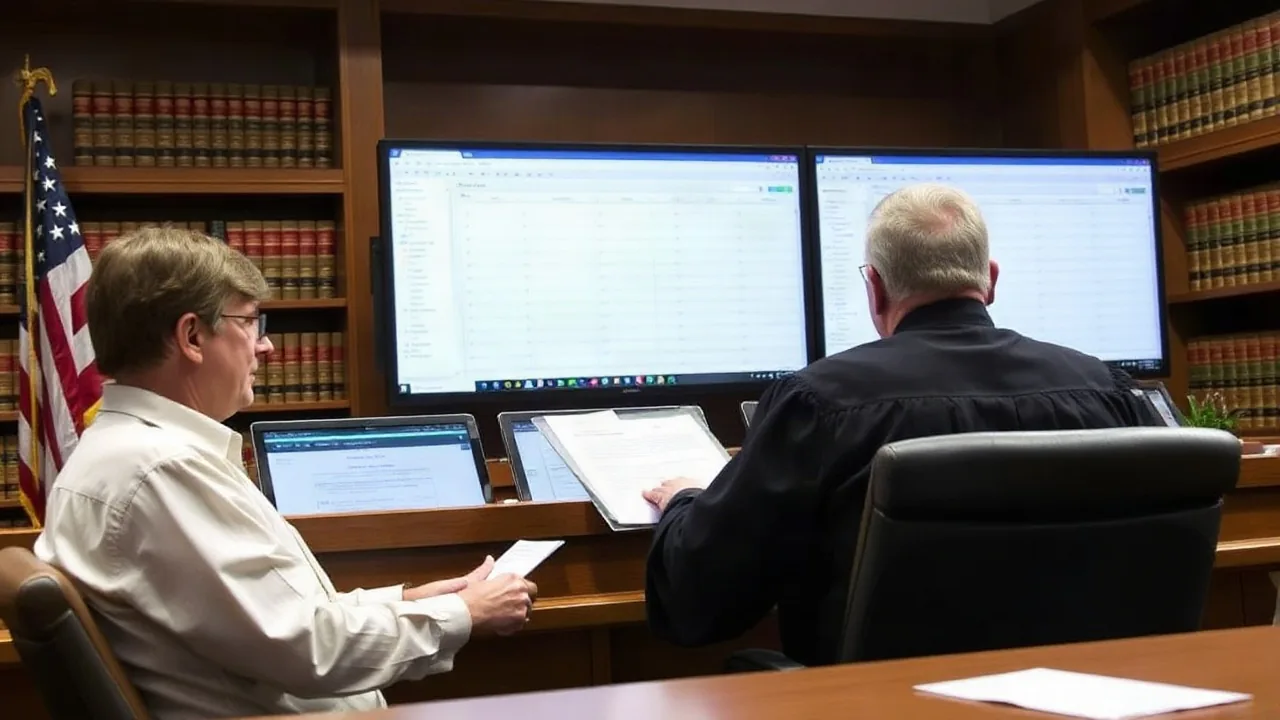
Judge Alvin Hellerstein of the Manhattan federal court has become a visible figure in discussions about how artificial intelligence shapes modern legal proceedings. His involvement in high-profile cases involving detailed financial records and procedural complexity reflects a broader shift: artificial intelligence is now a routine tool in the judicial system, helping judges parse mountains of evidence and draft nuanced decisions.
The hush money case that drew Hellerstein's attention required weighing testimony, documentary evidence, and complex legal standards. In August 2026, the role of legal tech in such decisions has become less remarkable and more ordinary. AI-powered platforms now assist judges by flagging inconsistencies in testimony, cross-referencing statutes, and even drafting preliminary findings of fact.
"The use of AI tools in judicial decision-making is no longer a futuristic concept," said Dr. Rachel Carmody, a legal technology researcher at Yale Law School, in a recent interview. "Judges now routinely rely on AI systems to organize case materials, identify relevant precedent, and catch potential errors in their reasoning before they finalize opinions."
How AI Assists the Bench
Judicial AI applications fall into several distinct categories. First, AI in law helps organize discovery materials. A typical corporate or financial case can generate hundreds of thousands of emails, documents, and financial records. AI platforms use natural language processing to categorize, summarize, and flag documents relevant to specific legal questions.
Second, AI assists in legal research. Modern judicial research tools use machine learning to search case law databases faster than manual review. When Hellerstein needed to examine precedent around financial disclosures and procedural requirements, AI systems could identify analogous cases within seconds.
Third, some courts experiment with AI-assisted drafting. After a judge reaches a decision, the reasoning must be memorialized in a written opinion. AI writing assistants can help structure arguments, ensure consistency, and flag gaps in reasoning.
The technology does not replace judicial decision-making. Instead, it amplifies human judgment by handling routine cognitive tasks. A judge still interprets facts, applies law, and makes the final call. AI simply handles the administrative and analytical groundwork faster and more reliably than paper-based methods.
The Hush Money Case and Public Scrutiny
The hush money case before Hellerstein drew public and media attention partly because of its complexity and high stakes. Financial transactions across multiple jurisdictions, shell companies, and testimony about motivations all required careful evidentiary analysis. Court observers have noted that without modern case management tools, tracking all relevant facts would be nearly impossible under traditional discovery methods.
In 2026, disclosure of AI use in judicial decisions has become more routine. Judges now routinely cite their use of case management software and AI-assisted legal research in their opinions. This transparency matters because it helps attorneys and appellate courts understand the reasoning process and ensures decisions remain subject to traditional appellate review.
Public concern still exists about bias in AI systems. A machine learning model trained on historical case data might perpetuate patterns from past judicial decisions that were themselves biased. However, when AI tools are used only to assist organization and research (not to make decisions), the risk is lower. Hellerstein and his peers make the actual judgment; AI simply handles logistics.
Where Legal Tech Is Headed
The Federal Judicial Center, which advises the federal court system, has begun evaluating AI tools for wider adoption. As of mid-2026, more than half of federal district courts report using some form of AI-assisted case management. Chief Justice John Roberts noted in his 2026 year-end report that the judiciary must embrace technology to serve the public efficiently while maintaining due process.
Future applications under development include:
- Predictive analytics that forecast litigation timelines and settlement likelihoods
- AI-assisted scheduling that optimizes court calendars and reduces delays
- Automated document review for pro bono and public defender offices, which face severe resource constraints
- Real-time transcript analysis that flags inconsistencies in witness testimony
The legal profession is simultaneously training a new generation of attorneys who view AI as a standard tool. Law schools now include AI ethics and legal technology courses in their curriculum. Firms integrate AI into practice management, billing, and case strategy.
Despite these advances, judicial decisions remain fundamentally human. The judge reads the law, weighs the facts, and exercises discretion. AI augments that process but does not replace it. Hellerstein's work on complex cases demonstrates how modern judges blend human wisdom with technological capability to deliver fair outcomes in an increasingly complicated legal landscape.