
AI music generation tools transform composition and production in 2026
Professional musicians and producers are adopting AI-powered tools to accelerate songwriting, arrangement, and sound design. The technology now handles everything from beat generation to vocal harmonization, reshaping how music gets made.

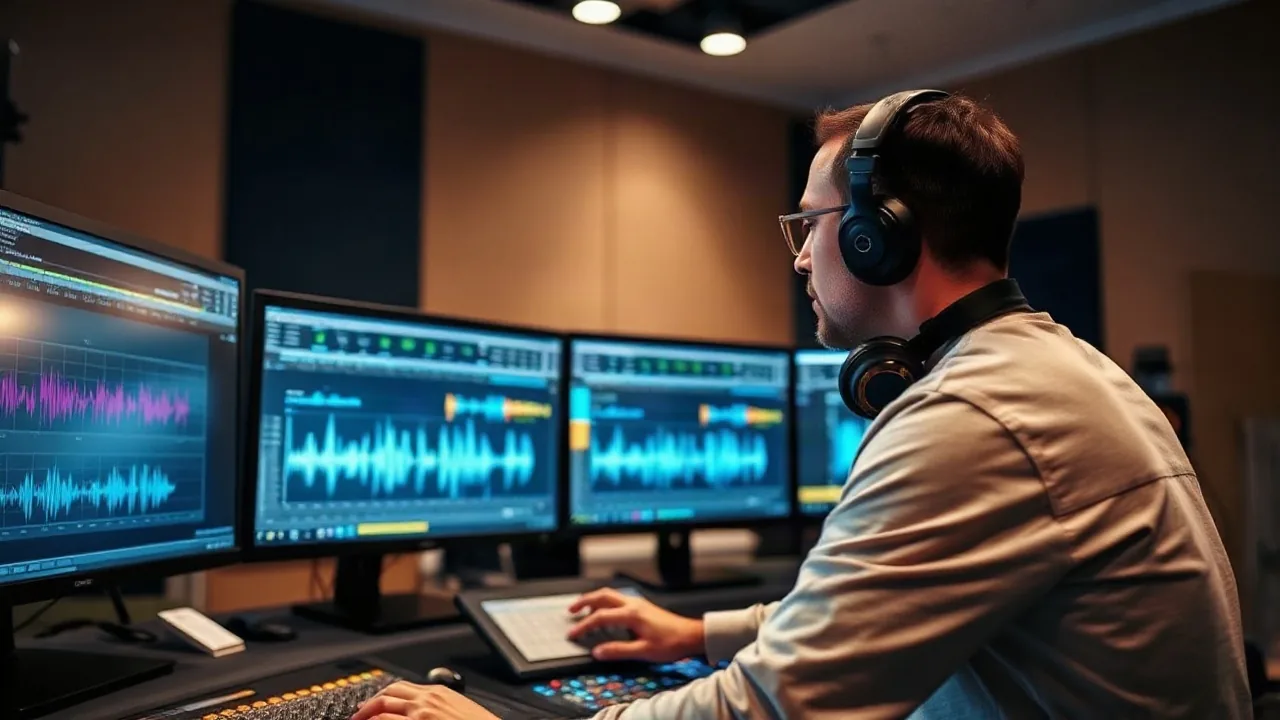
Inside a Los Angeles studio this week, a session musician used an AI composition assistant to generate three chord progressions in the style of classic soul music within seconds, then spent an hour refining the best one into a demo. This workflow represents the new normal for 2026 music production: AI music generation has moved from novelty to essential toolkit.
The shift started in earnest during 2024-2025, but September 2026 marks a watershed moment. Major labels now actively integrate music production AI into contract negotiations. Independent artists report that AI-assisted workflows cut production timelines by 30 to 50 percent, allowing them to release more frequently. The technology no longer aims to replace human creators; instead, it handles the repetitive groundwork.
"We're seeing a two-tier adoption curve," says Marcus Chen, music technology analyst at Berklee Institute of Contemporary Music. "Established producers use AI for rapid prototyping and variation generation. Emerging artists use it as a creative sparring partner when they lack access to expensive studio time and session musicians."
Core capabilities reshaping workflows
Modern AI music tools now handle discrete production tasks with professional-grade output:
- Stem separation: isolating vocals, drums, bass, and melody from any existing recording
- Melody and chord generation: creating harmonic progressions in specified genres or moods
- Drum programming: generating realistic percussion patterns across multiple styles
- Vocal processing: harmonization, pitch correction, and timbre manipulation without artifacts
- Mixing assistance: automatic level balancing, EQ suggestions, and spatial positioning
- Mastering presets: genre-specific loudness and frequency optimization
The most widely used platform, LANDR Pro (expanded in early 2026), now includes collaborative composition modes. Another player, Soundraw, introduced real-time MIDI editing in July, allowing producers to tweak AI-generated patterns note-by-note while the model adapts contextually. Splice released an AI composition beta in August that learns user preferences across projects and begins suggesting sounds before the producer asks.
What distinguishes 2026 versions from earlier releases is latency reduction and coherence at scale. Previous iterations could generate 8-bar loops; current models handle 2-3 minute full arrangements without repetitive breakdowns or harmonic drift.
Why adoption accelerated this year
Three factors converged in 2026 to legitimize AI in mainstream production. First, liability clarity arrived when the Recording Industry Association of America and producer unions signed a joint guidance document in May outlining fair use for AI-assisted (not AI-generated) works. Creators who use AI as a tool in human-authored compositions can now clearly credit and compensate contributors.
Second, major artists openly discussed their workflows. In an August interview, Grammy-winning producer Jack Antonoff revealed he uses Suno v4 to rapidly iterate on production ideas before bringing them to human session musicians. Similarly, vocalist Grimes posted a detailed breakdown of how she employed AI vocal synthesis to prototype harmonies for her next album, saving two weeks of studio booking.
Third, accessibility improved dramatically. Subscription costs for professional-grade tools dropped 40 percent on average across the industry. Cloud-based collaboration means a producer in Nashville can send a work-in-progress to a mixing engineer in Berlin, and both can access the same AI-enhanced assets without file management overhead.
The future of music technology now includes ethical guardrails. Most platforms implemented mandatory watermarking for AI-generated elements by June 2026, allowing rights holders to track usage and ensure proper licensing.
Cost remains a differentiator. Industry-standard tools like Ableton Live now bundle basic AI features free with new purchases. Professional extensions run $15 to $50 per month. High-end custom training (for labels or studios wanting proprietary models) ranges from $10,000 to $100,000 annually.
Session musicians and audio engineers express measured concern rather than panic. The Musicians Union Local 47 (Los Angeles) published a report in July stating that AI advancements in music are shifting work toward arrangement, mixing, and creative direction rather than eliminating roles. Actual union-scale session work remains steady because human performers still command premium rates for authentic feel and improvisation.
Looking at the broader landscape, AI-generated content now represents about 8 percent of new music uploaded to Spotify and Apple Music monthly. That's up from 2 percent in early 2025, but plateauing growth suggests the market found its initial enthusiasm level. Most working musicians treat AI as a productivity tool, not a career threat or creative partner replacement.
For 2026 and beyond, the convergence of lower costs, legal clarity, and proven workflows makes AI music tools as routine as auto-tune or compression once became. The question no longer centers on whether to use the technology, but rather how to use it responsibly and credit it transparently.