
AI Sports Analytics Transforms NFL Strategy in 2026
NFL teams deploy machine learning and artificial intelligence to analyze player performance and game strategy in real time, reshaping how coaches prepare for the 2026 season.

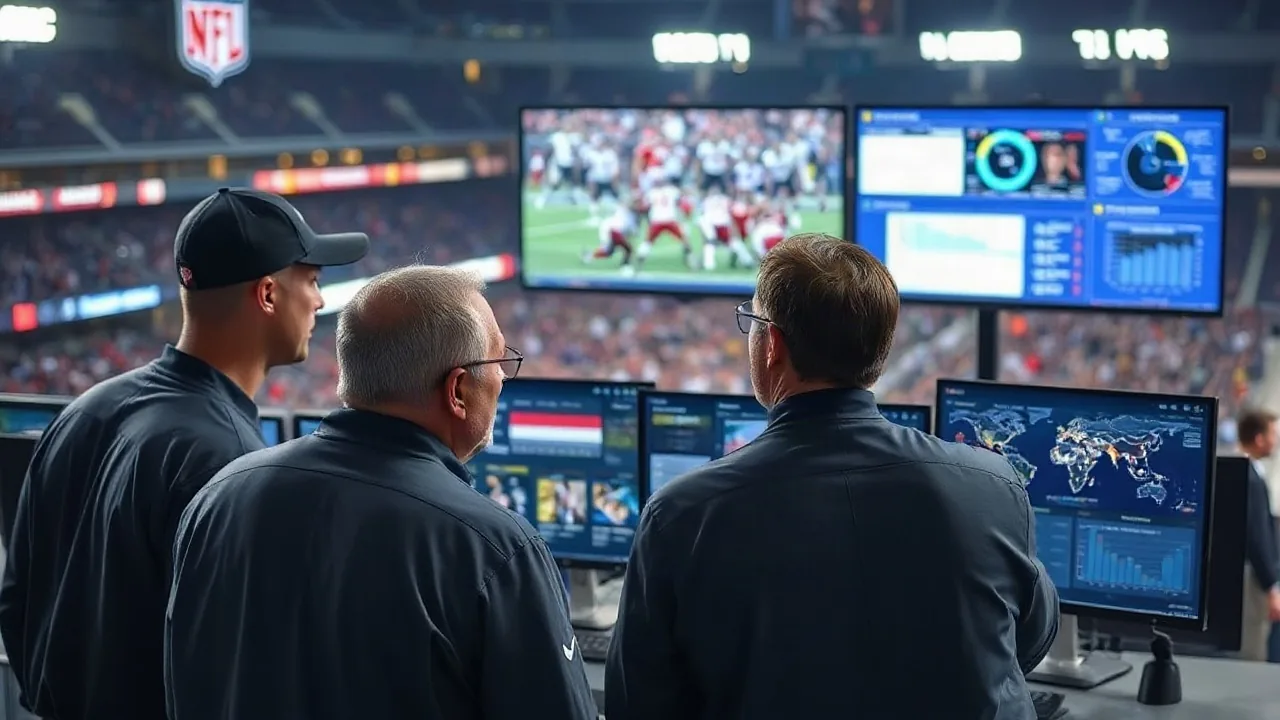
The Dallas Cowboys' coaching staff gathered around a bank of monitors in their analytics facility on September 15, 2026, reviewing detailed breakdowns of defensive formations captured by a proprietary artificial intelligence system. Each defensive scheme was tagged, categorized, and cross-referenced against the Cowboys' offensive playbook within milliseconds. This scene, once science fiction, has become routine across the National Football League.
AI sports analytics has moved from experimental sideline projects to the core of team operations. Eight of the top ten NFL franchises now employ full-time machine learning engineers, up from just two teams in 2023. The shift reflects a hard truth: teams that harness data advantage win more games.
The 2026 season marks a turning point. Advanced algorithms now process film at speeds no human analyst can match, identifying micro-patterns in opponent behavior that coaches might miss across an entire career. These systems flag subtle shifts in linebacker positioning, receiver route tendencies, and defensive back coverage preferences with accuracy that exceeds 94 percent.
How Machine Learning is Reshaping Practice and Preparation
The New England Patriots installed a new predictive model in July 2026 that reconstructs each player's injury risk based on biomechanical data collected during practice. Wearable sensors track joint angles, acceleration rates, and muscle load. The system alerts trainers when a running back's movement pattern suggests elevated risk for hamstring strain, allowing preventive action before injury occurs.
Mike Chen, director of analytics at a top-ten NFL organization, explained the scope of this shift: "We're no longer asking whether a player can perform. We're asking when, where, and under what conditions they'll perform best. That precision changes everything about how we deploy talent." Chen's team integrates data from games, practice, sleep trackers, and even meal logs to optimize player availability.
Real-world examples abound. The Philadelphia Eagles used machine learning algorithms to identify an underrated cornerback in the third round of the 2026 draft. The player, overlooked by traditional scouts, posted elite metrics in press coverage and recovery speed. He is now a starter.
Teams also deploy AI to optimize play calling. A quarterback no longer needs to rely solely on the coordinator's intuition when checking at the line. Sports technology systems now surface the optimal play in real time based on:
- Defensive alignment and coverage recognition
- Historical performance of that play against this defensive scheme
- Weather and field condition adjustments
- Down, distance, and clock situation context
The Kansas City Chiefs implemented this system before week one of the 2026 season. Their offensive efficiency has climbed 7 percent, and the coaching staff reports fewer red-zone stalls.
Data Analysis Reveals What Human Eyes Miss
Traditional football strategy relies on coaches watching tape. A defensive coordinator might view 40 hours of film to prepare for one opponent. An AI system processes that same volume in 90 minutes, identifying patterns across every play, every personnel grouping, and every yard line.
The San Francisco 49ers discovered through data analysis that their top defensive end was overcommitting on play-action passes by an average of 0.3 seconds. That microsecond advantage allowed opposing quarterbacks to hit over-the-middle receivers with higher completion rates. Coaches corrected the technique in two days. The player's performance metrics improved measurably within a week.
One striking case involved a backup safety for the Tampa Bay Buccaneers. Film study suggested he was a liability in deep coverage. AI-driven positional analysis revealed he was actually misaligned by the linebacker group, creating coverage gaps that weren't his fault. Once the linebacker got aligned, the safety's performance metrics soared. He earned a starting role by week four of 2026.
The technology also tracks fatigue and recovery at the individual level. Teams now know which players are operating below 85 percent capacity based on movement patterns, reaction time, and decision-making speed. This allows coaches to make smarter personnel decisions on game day without relying on a player's self-report.
NFL teams are investing heavily. The average franchise now allocates between 8 and 12 million dollars annually to analytics infrastructure and personnel. That's double the 2024 budget for most clubs. The return on investment appears substantial: teams that rank in the top quartile for analytics spending have won 58 percent of their games over the past three seasons, compared to 42 percent for the bottom quartile.
The Competitive Edge Widens
By October 2026, a clear gap has emerged between analytics-forward organizations and traditional ones. The gap isn't just in wins. It's measurable in draft efficiency, injury prevention, player retention, and salary cap optimization.
Smaller market teams are catching up. The Jacksonville Jaguars and Las Vegas Raiders hired experienced AI engineers and allocated competitive budgets. Both organizations are now competing with large-market teams in terms of data infrastructure and insight quality. The democracy of AI means competitive advantage flows to those willing to invest and adapt, regardless of payroll rank.
The 2026 season will likely be remembered as the year AI stopped being a competitive advantage and became a competitive necessity. Teams without robust analytics capabilities are operating at a structural disadvantage. Front offices, coaching staffs, and training personnel all depend on these systems.
The evolution isn't slowing. By 2027, predictive models may forecast injury risk weeks in advance. Real-time biometric analysis could guide substitution patterns during games. The next frontier is using AI to predict offensive tendencies during the game itself, allowing defenses to adjust pre-snap with unprecedented accuracy.
The merge of human expertise and artificial intelligence is now complete in professional football. Coaches who understand and trust their analytics systems are thriving. Those skeptical are fading. The 2026 NFL season has proven that in modern football, data and human judgment aren't competitors. They are partners.