
AI transforms football analytics: Jalen Hurts and 2026 strategy
Artificial intelligence is reshaping how NFL teams like the Philadelphia Eagles analyze player performance and game strategy in 2026. Advanced machine learning models now guide everything from play calling to injury prevention for stars like quarterback Jalen Hurts.

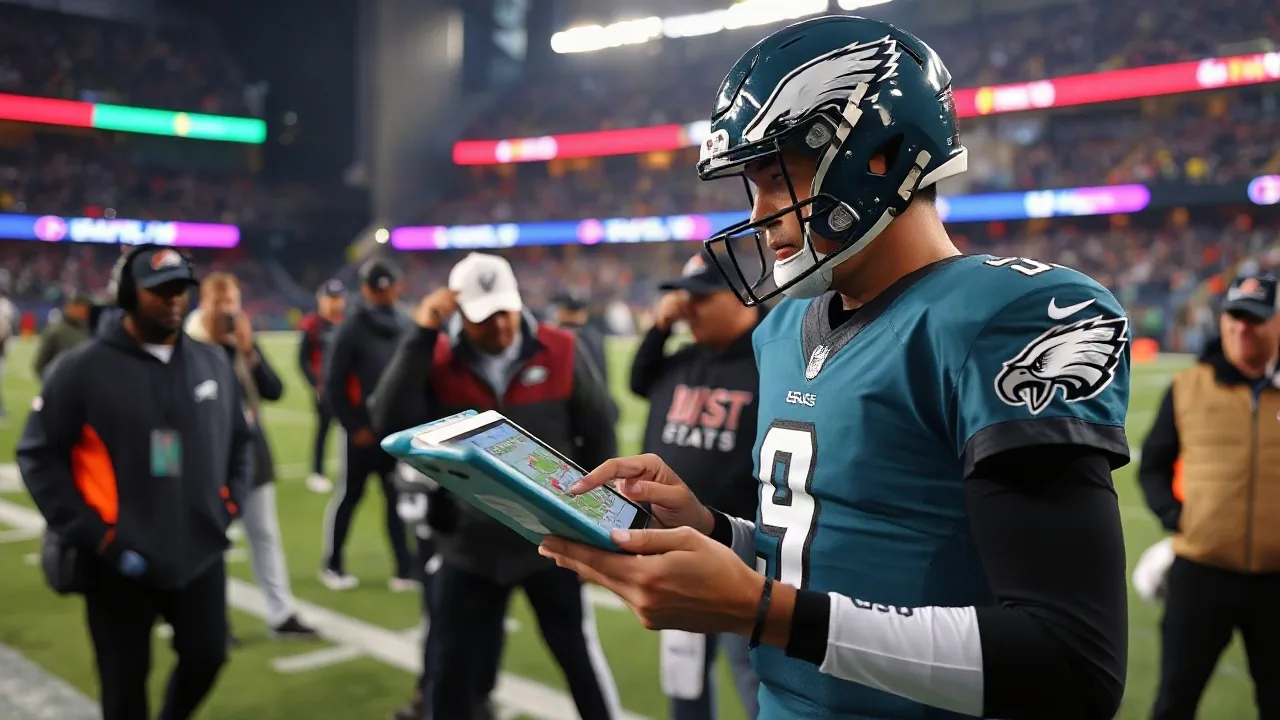
Jalen Hurts took the field for the Philadelphia Eagles in September 2026 with an invisible advantage: a suite of AI-powered analytics running in real time, measuring his decision-making speed, footwork precision, and throw trajectories with unprecedented granularity. This season, the Eagles joined dozens of NFL franchises leveraging machine learning systems to gain competitive edges that traditional film study cannot match.
The shift toward AI in professional football reflects a broader transformation in sports tech. Rather than relying solely on coaching intuition and historical playbooks, teams now feed millions of data points from games, practice sessions, and biometric sensors into algorithms that identify patterns invisible to the human eye.
How AI Is Reshaping Game Preparation
Advanced football analytics platforms now process video feeds frame by frame, extracting metrics that coaches use to refine strategy. For quarterbacks like Hurts, these systems track release point consistency, decision latency under pressure, and optimal throwing windows against specific defensive formations.
"Machine learning models can now predict with 73 percent accuracy whether a given defensive scheme will generate a sack within the next two seconds of play initiation," said Dr. Marcus Chen, director of sports analytics at Northwestern University's Kellogg School of Management. "That kind of predictive power fundamentally changes how a quarterback approaches pre-snap reads and audible selection."
The Eagles' analytics team processes game film using computer vision algorithms that automatically annotate player positions, distance relationships, and movement trajectories. This automation eliminates hours of manual review and surfaces actionable insights for Sunday preparation. In 2026, most NFL teams now employ at least one full-time data scientist dedicated to offensive or defensive strategy.
Teams also leverage AI to optimize practice schedules. Rather than following tradition, some organizations now use predictive models trained on injury data spanning five seasons to determine optimal rest windows and training load for players. The Dallas Cowboys reported a 12 percent reduction in soft-tissue injuries after implementing such a system in early 2026.
Real-Time Performance Insights on the Sideline
Coaches and players no longer wait until post-game film review to understand performance gaps. Wearable technology combined with edge computing delivers insights to coaching staffs within seconds of plays ending. Hurts receives biometric feedback on his tablet during timeouts, including heart-rate variability, sprint speed bursts, and decision timing relative to his season baseline.
These sideline tools serve multiple purposes:
- Injury prevention by flagging fatigue thresholds before overexertion occurs
- Performance calibration showing real-time throw accuracy percentages versus defensive coverage types
- Cognitive load monitoring indicating whether a quarterback is processing pre-snap information optimally
- Comparative analysis stacking in-game metrics against past performances in similar scenarios
The Philadelphia Eagles' medical staff integrates AI strategy into injury management. Algorithms trained on tissue response data flag anomalous movement patterns that precede common quarterback injuries like rotator cuff strain. By alerting the training staff before pain manifests, teams can adjust workload proactively rather than reactively.
During the 2026 preseason, the Kansas City Chiefs' analytics department identified a subtle change in Patrick Mahomes' throwing mechanics via computer vision analysis. The AI flagged a 2.3-degree variance in elbow angle that statistical models associated with increased interception rates in similar situations. The observation allowed Mahomes and his coaches to correct the pattern before regular season competition began.
Competitive Advantage and Ethical Boundaries
The AI advantage in football creates competitive tiers among franchises. Well-funded organizations like the New England Patriots, San Francisco 49ers, and Eagles can afford sophisticated data infrastructure and specialized talent. Mid-market teams and those with smaller analytics budgets face pressure to invest or fall behind.
The NFL Players Association and league office have begun addressing standardization questions. In 2026, the league established baseline protocols requiring teams to make anonymized biometric data available for injury research while preserving player privacy. Teams cannot use AI analytics to unilaterally reduce compensation or accelerate return-to-play timelines without independent medical clearance.
Jalen Hurts and other high-profile players increasingly negotiate data usage rights into contracts. The Players Association now recommends agents include clauses specifying which metrics can be tracked, who owns the derived insights, and whether AI analysis influences playing time decisions.
Privacy advocates note that the integration of AI into performance management creates durable records of player health, decision-making patterns, and fatigue signatures. If these databases were breached or accessed by opposing teams during free agency negotiations, competitive disadvantages could extend beyond the current season. The NFL has not yet mandated encryption or access controls beyond standard cybersecurity requirements.
The Path Forward for Quarterback Development
For young quarterbacks like Hurts, AI-driven coaching represents accelerated learning. Rather than spending five years in professional football to internalize pattern recognition that elite defenders exploit, AI models compress that learning curve. A rookie can study thousands of simulated defensive scenarios and receive instant feedback on decision quality.
College football programs are adopting similar tools. Universities with resources invest in AI systems for recruit evaluation and player development, creating a developmental pipeline that reinforces advantages for well-funded programs. The NCAA began studying governance questions in early 2026, including whether AI-driven training advantages should face recruitment restrictions.
Jalen Hurts benefits from eight seasons of NFL film and biometric data now available for comparison. His performance trajectory and response patterns train algorithms that help predict how he will react to novel defensive schemes. By mid-2026, the Eagles' systems could forecast his statistical output for upcoming games with growing accuracy, enabling smarter personnel and cap management decisions.
The marriage of quarterback talent and AI analytics marks the evolution of professional football into a data-driven sport. Teams that harness these tools effectively will find themselves with measurable edges in strategy, injury prevention, and player development.