
AI in Music: How Virtual Concerts Are Reshaping Live Performance
Artificial intelligence is enabling virtual concert experiences that could transform how fans engage with artists like Freddie Jackson. Technology companies are now developing AI-powered performances that recreate live shows digitally.

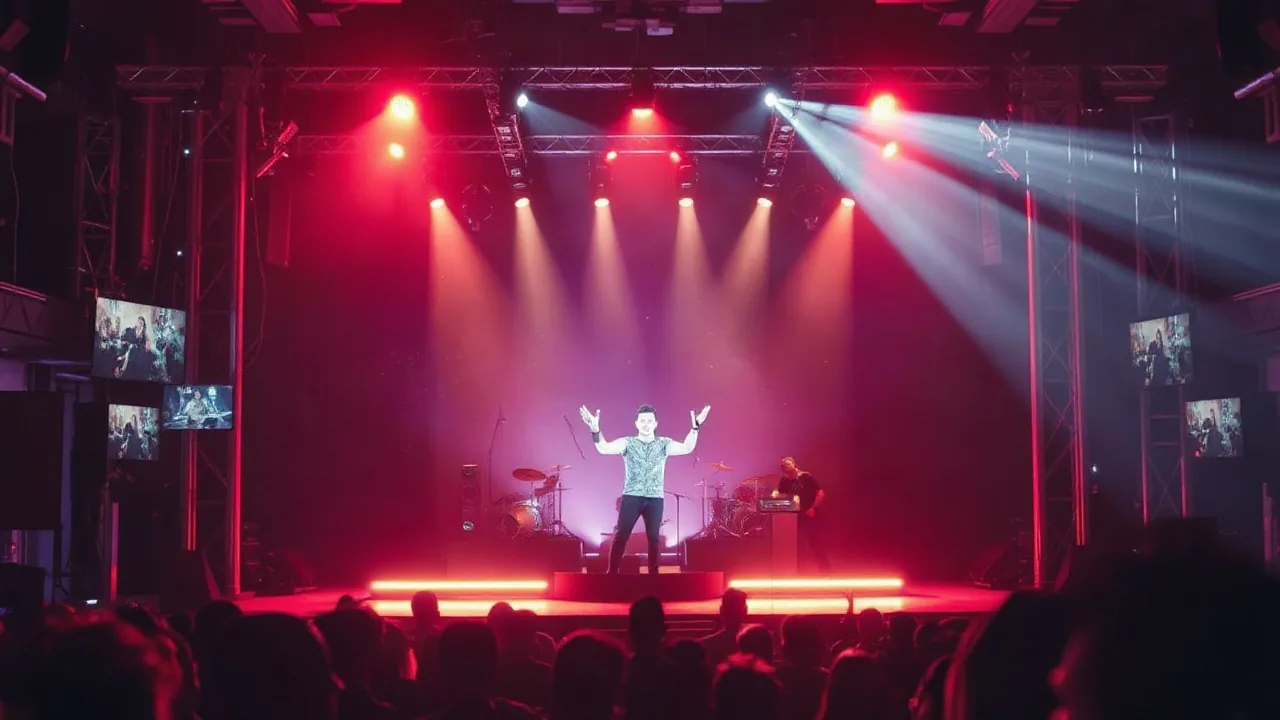
In late September 2026, a startup announced plans to create a holographic performance experience featuring the voice and likeness of Freddie Jackson, the R&B legend known for hits like "Rock Me Tonight." The project represents a significant milestone in how AI in music is reshaping the entertainment landscape, moving beyond simple voice synthesis into full-scale immersive performances.
The technology behind these virtual concerts relies on machine learning models trained on hours of an artist's recorded performances, vocal patterns, and stage presence. Companies are using generative AI to reconstruct not just sound quality but the emotional nuance and physicality that define a live show.
"We're at an inflection point where the technology can now capture the essence of a performer," said Dr. James Mitchell, director of music technology at Stanford's Center for Computer Research in Music and Acoustics. "Five years ago, this would have sounded like science fiction. Today, we have the computational power to do it credibly."
The Current State of Virtual Performance Technology
Several distinct approaches are currently in development. Holographic projection, powered by AI-generated content, can display a performer on stage in real-time. Voice synthesis systems can generate vocals that match an artist's original recordings while adapting to new compositions. Motion capture combined with deepfake technology can recreate stage movements and gestures with increasing fidelity.
As of October 2026, major music venues in Los Angeles, New York, and Nashville have begun pilot programs testing virtual concerts with AI-generated performers. Early audience feedback shows mixed results: fans appreciate the novelty and accessibility, but some report a sense of disconnection from the authenticity of live performance.
The technical requirements are substantial. A single two-hour concert performance requires processing power equivalent to training a large language model. Latency must remain under 50 milliseconds for the experience to feel real-time, a challenge when distributing content globally.
Rights, Revenue, and the Artist's Voice
The business model surrounding AI-generated performances remains contentious. If Freddie Jackson's estate or representatives approve a virtual concert, they could earn licensing revenue without the artist performing. However, this raises questions about consent, artistic integrity, and compensation for the original creators whose work trained the AI systems.
Several major record labels have begun negotiating contracts that specify how AI can be used with their artists' likenesses and voices. Universal Music Group and Sony Music have both published guidelines requiring explicit written permission before any AI generated music or performance is released. Copyright holders now routinely demand royalty splits when their material is used to train generative models.
The Musicians Union local chapters are pushing for mandatory disclosure when audiences attend a virtual versus a live performance. "Fans deserve to know whether they're watching a real artist or an AI recreation," stated Maria Gonzalez, spokesperson for the American Federation of Musicians, during a Congressional hearing on AI and labor in September 2026.
Pricing varies significantly. Virtual concerts produced by established production companies cost $15 to $40 per ticket, compared to $75 to $200 for traditional live shows. This price differential creates incentive for promoters to shift toward AI-generated content, potentially reducing income for working musicians.
What This Means for the Music Industry's Future
The emergence of AI-powered music technology is forcing the industry to confront fundamental questions about what constitutes a live performance and who owns the digital representation of an artist. Streaming platforms are already exploring how AI concerts could complement their existing catalogs.
Three key scenarios are emerging:
- Legacy artists who have retired or passed away could perform "new" shows using AI trained on their archives, generating revenue for estates.
- Independent musicians could use AI to simulate touring without the financial burden of travel, equipment, and crew.
- Tribute acts and cover artists could be partially or entirely replaced by AI systems, reducing employment in the live music sector.
Industry analysts project that by 2029, virtual concerts will represent 12 to 15 percent of the live event market by revenue. The projection assumes continued improvement in AI quality and audience acceptance of the technology. Some venues are preparing separate "AI performance" sections within their schedules.
The Freddie Jackson case is not unique. Similar projects are underway for Whitney Houston, Prince, and other iconic performers whose estates control their intellectual property. These experiments will likely set precedents for how the broader entertainment industry manages AI-generated performances over the next decade.
For now, virtual concerts remain a supplementary offering rather than a replacement for traditional live music. But the trajectory is clear: as technology improves and costs decline, the balance between human and artificial performers will shift significantly.