
Deep-Sea Metal Nodules Harbor Unique Microscopic Ecosystems
Scientists discovered that deep-sea polymetallic nodules harbor unique microbial communities and tiny animals, raising concerns about commercial mining.

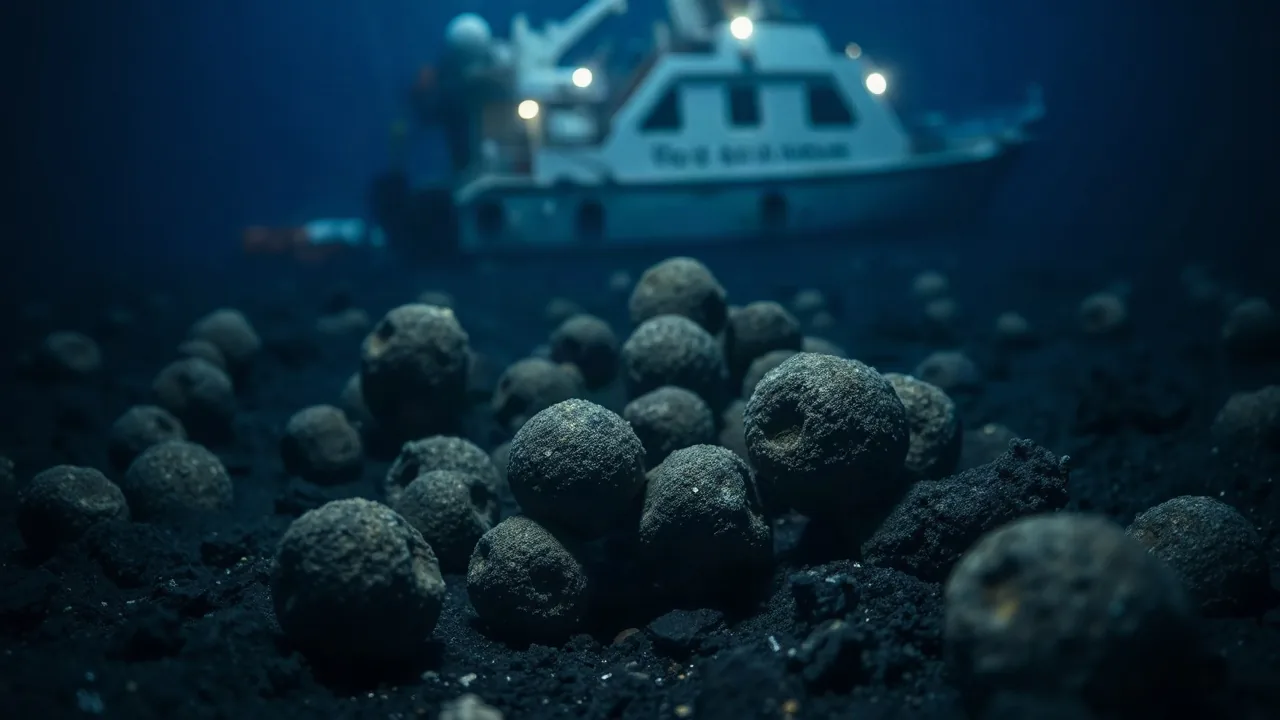
Deep-sea polymetallic nodules scattered across the Clarion-Clipperton Zone contain unique microscopic ecosystems that are entirely distinct from surrounding sediment communities, according to a recent study published in Scientific Reports. As society's reliance on critical minerals grows, researchers are racing to understand these hidden habitats before commercial extraction begins.
These metal-rich formations are loaded with valuable resources like nickel, cobalt, copper, iron, and manganese, drawing commercial interest as the United States considers potential deep-sea mining permits. However, forming these nodules takes millions of years, making them a non-renewable resource.
Discovering Life Inside the Nodules
During a 2019 expedition aboard the German research vessel RV Sonne as part of the JPI Oceans Mining Impact II project, scientists collected nodules from depths of 4 to 6 kilometers. By examining 244 individual nodules, researchers found bustling miniature ecosystems hidden within their cracks and pores.
“What surprised us most was how different the communities living inside nodules were from those in nearby sediments,” marine genomicist Coral Diaz-Recio Lorenzo told ScienceAlert.
Roundworms and crustaceans proved to be the most common residents, while an armored amoeba species called Thurammina dominated its group. The team also documented bristleworms, mud dragons, tardigrades, and other organisms living within the rock cavities.
Furthermore, researchers discovered fossils of diatoms, radiolarians, and sea sponges embedded in the ancient layers, suggesting these nodules may have provided habitats on the seabed for millions of years.
Scientists warn that removing these structures en masse could lead to permanent ecological damage. “Our findings point out that commercial mining may result in an irreversible loss of undescribed and unique biodiversity associated to nodules,” said deep-sea biologist Sabine Gollner of the Royal Netherlands Institute for Sea Research.