
Green Hydrogen Production: Industrial Decarbonization Solutions
Industrial facilities worldwide are adopting green hydrogen production technologies to slash carbon emissions. New electrolyzer innovations in 2026 are making clean hydrogen cost-competitive with fossil fuels.

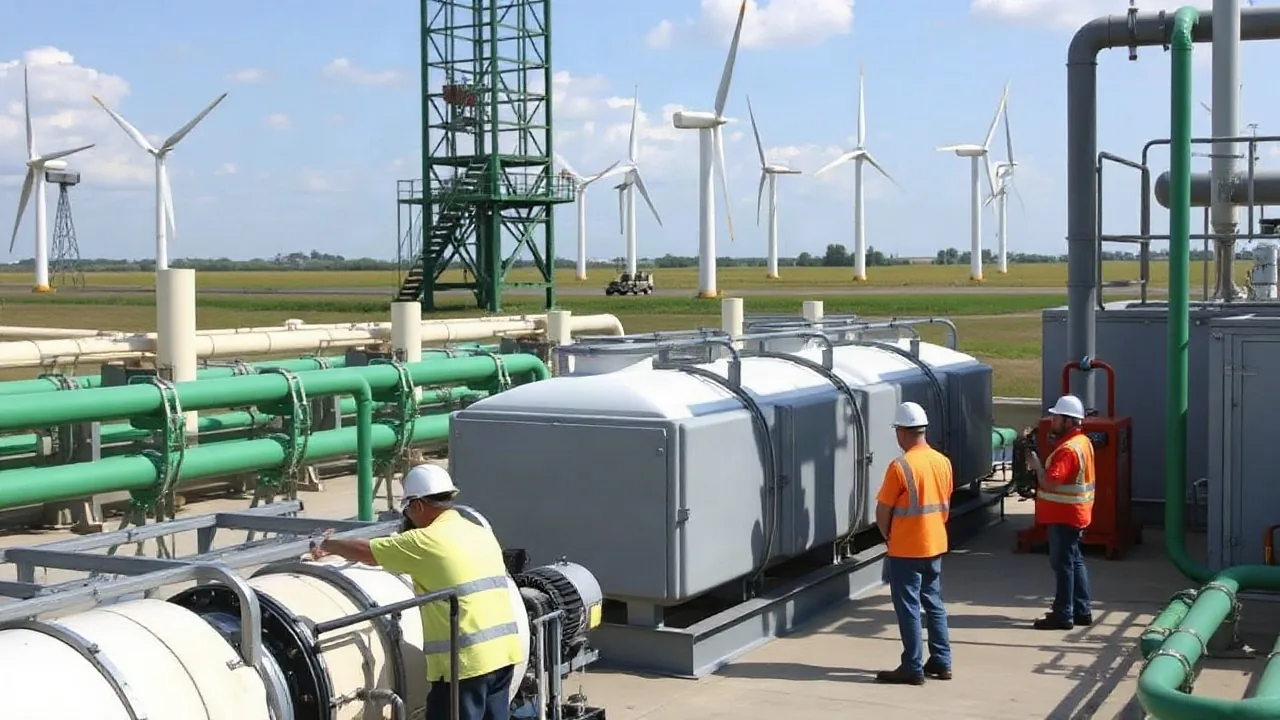
Inside a manufacturing complex outside Houston, operators are running the first utility-scale green hydrogen electrolyzer installed by a major petrochemical producer this year. The facility splits water molecules using renewable electricity, producing hydrogen without carbon emissions. This shift marks a turning point: industrial decarbonization is moving from policy goal to operational reality across North America.
Green hydrogen production has emerged as a critical pathway for heavy industry to meet climate commitments. Unlike gray hydrogen, which relies on natural gas and generates 10 tons of CO2 per ton of hydrogen produced, the green alternative produces zero direct emissions when powered by wind or solar electricity. Major steelmakers, refineries, and ammonia manufacturers are now racing to deploy this technology before regulatory carbon pricing tightens further.
"We're seeing a fundamental shift in project economics," says Dr. Michael Chen, senior analyst at the Industrial Energy Transition Council, a Boston-based research nonprofit. "Green hydrogen production costs have fallen 35 percent since 2023, and we expect another 30 percent decline by 2028 as electrolyzer manufacturing scales up." The cost reductions stem from higher-efficiency PEM and alkaline electrolyzer designs, falling renewable electricity prices, and increased supply chain competition from manufacturers in Europe and Asia.
Key Innovations Driving Deployment
Three technology breakthroughs are accelerating adoption of green hydrogen production in industrial settings:
- Proton exchange membrane (PEM) electrolyzers now achieve 70 percent electrical efficiency, up from 65 percent in 2024, reducing electricity input per kilogram of hydrogen.
- Alkaline electrolyzer stacks have improved durability to 90,000 operating hours, compared to 60,000 hours five years ago, lowering capital cost per unit of output.
- Modular electrolyzer systems allow plants to add production capacity incrementally without full facility redesigns, matching renewable generation availability.
Siemens Energy and Nel Hydrogen, two leading electrolyzer manufacturers, shipped 680 megawatts of global electrolyzer capacity in the first nine months of 2026, a 48 percent increase year-over-year. Smaller competitors like Plug Power and Bloom Energy are also ramping production to meet corporate orders from refineries, steel mills, and chemical plants across North America.
The economics now favor adoption. A typical 100-megawatt green hydrogen facility in a region with low-cost renewable electricity costs approximately 800 million dollars to build and operates at hydrogen production costs of 1.50 to 2.00 dollars per kilogram, compared to 1.00 dollars per kilogram for gray hydrogen at current natural gas prices. However, industrial buyers now see green hydrogen as an investment in future-proofing their operations against carbon regulations and securing renewable energy supply.
Industrial Decarbonization at Scale
Industrial decarbonization accounts for roughly 30 percent of US greenhouse gas emissions. Steel production, oil refining, ammonia manufacturing, and methanol synthesis consume vast quantities of hydrogen or high-temperature heat, both traditionally supplied by fossil fuels. Green hydrogen addresses both: it replaces gray hydrogen as a feedstock and can power electrified heating processes.
ArcelorMittal, the world's largest steelmaker, announced in September 2026 that it will install 500 megawatts of electrolyzer capacity across four US and European mills by 2028. Each electrolyzer will produce green hydrogen for direct reduction iron (DRI) furnaces, a production method that reduces emissions per ton of steel by up to 65 percent compared to traditional blast furnaces. Other steel producers, including Nucor and US Steel, are following with pilot projects and full-scale commitments.
Oil refineries represent another major market. US refineries consume approximately 10 million tons of hydrogen annually for hydrotreating and desulfurization. Replacing even 20 percent of that volume with clean energy derived hydrogen would eliminate roughly 20 million tons of CO2 annually. Valero Energy and Phillips 66 both announced electrolyzer procurement agreements in 2026 to supply major refineries with green hydrogen starting in 2027.
Ammonia production, essential for fertilizers and explosives, consumes 2 percent of global natural gas. The fertilizer industry, facing regulatory pressure and volatile feedstock costs, is actively evaluating green hydrogen conversion. CF Industries announced a feasibility study in June 2026 for a 250-megawatt electrolyzer to power ammonia synthesis at its Louisiana complex.
Challenges and Path Forward
Deployment remains constrained by three factors: renewable electricity availability near industrial clusters, capital requirements exceeding 500 million dollars per facility, and lack of dedicated pipeline infrastructure for hydrogen transport. Most electrolyzers today are sited directly at industrial plants or near hydroelectric dams in the Pacific Northwest.
Government policy is addressing these barriers. The Inflation Reduction Act, expanded in 2024, offers production tax credits of up to 3 dollars per kilogram for green hydrogen meeting prevailing wage and domestic content requirements. This subsidy brings green hydrogen cost to parity with gray hydrogen in many applications, even without carbon pricing. The Biden administration's Hydrogen and Fuel Cell Partnership program also funds hydrogen pipeline pilot projects in Texas, California, and the Great Lakes region.
Regulatory momentum is shifting. The EPA's recent draft rule would classify gray hydrogen as an industrial pollutant by 2030 for new facilities, accelerating capital investment in sustainable industry alternatives. California's Low Carbon Fuel Standard already credits green hydrogen with lower carbon intensity than gray hydrogen, making it cheaper for end users.
Analyst forecasts suggest US green hydrogen production capacity will reach 2.5 gigawatts by 2030, up from 160 megawatts today. This expansion would support industrial decarbonization of roughly 50 major manufacturing complexes and prevent approximately 40 million metric tons of annual CO2 emissions. For industrial buyers, the investment is no longer optional. It is a competitive necessity aligned with energy innovation and regulatory reality.