
Daylight Savings and Energy Consumption: 2026 Data
New 2026 research reveals daylight saving time's modest but measurable impact on electricity use across US grids. Smart meter data shows how time shifts reshape peak demand patterns.

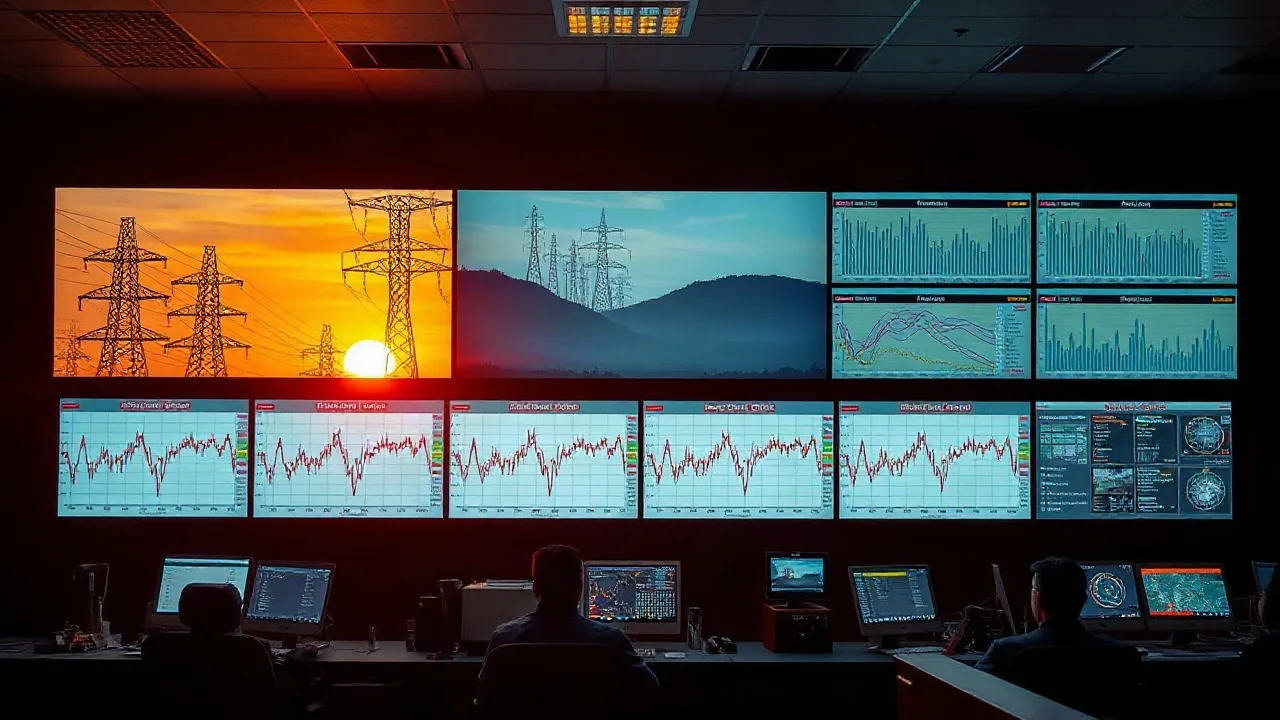
On November 1, 2026, millions of Americans set their clocks back one hour, marking the latest twice-yearly ritual that utilities and grid operators have been measuring with unprecedented precision. The actual energy savings from this seasonal shift remain far smaller than the historical mythology suggests, but new data from smart grid operators across the country confirms that the time change still creates measurable disruptions to electricity demand patterns.
The US has observed daylight saving time for most of the past century, justified partly on the claim that shifting daylight hours reduces energy consumption. Modern utility analysis tells a more nuanced story. According to grid data from the Edison Electric Institute, electricity savings from daylight saving time average between 0.03 and 0.1 percent nationally, a fraction of what advocates once predicted.
Tammy Johnson, director of smart grid analytics at the American Council for an Energy-Efficient Economy, explained the current reality: "Daylight saving time no longer delivers the energy savings it promised in the 1970s. Lighting loads have dropped due to LED adoption, and air conditioning now drives peak demand in ways that don't always align with extended evening daylight." The shift in consumption drivers has fundamentally altered how time changes affect the grid.
How 2026 Smart Grids Track the Impact
The November 1 and March 2026 time changes provided utilities with real-world experiments in demand management. Advanced metering infrastructure, deployed across 70 million US households by 2026, allowed grid operators to observe consumption patterns with 15-minute granularity rather than estimates.
What utilities found was telling. On the morning clocks spring forward in March, peak electricity demand typically rises by 1 to 3 percent in the hour following the shift. Evening peaks flatten slightly as sunset occurs an hour later on the calendar. These shifts ripple through smart grids that must balance supply and demand in real time, occasionally requiring brief grid stress management in regions with tight reserve margins.
California's grid operator reported that the March 2026 transition created minor but observable stress between 4 and 6 PM, when afternoon solar output declined while heating and cooling loads persisted. The state's renewable energy portfolio, now supplying 65 percent of peak-hour electricity, added complexity to the adjustment. Batteries and demand-response programs absorbed most of the imbalance within minutes.
Energy Consumption Patterns in the Modern Grid
The relationship between clock time and energy use has weakened since the 1970s when daylight saving time was reimposed. Several factors drive this shift. First, LED lighting now consumes 80 percent less electricity than incandescent bulbs, so gaining or losing an hour of daylight provides minimal lighting benefit. Second, energy consumption patterns have shifted toward air conditioning and computing, which run on demand schedules largely independent of sunset.
Heating, ventilation, and air conditioning systems now account for roughly 40 percent of commercial electricity use during peak hours. These loads respond to temperature, not clock time. A March morning with cool temperatures will trigger heating loads regardless of whether the sun rises at 6 or 7 AM on the wall calendar.
Three-quarters of electricity now flows to commercial and industrial operations that run 24/7, unaffected by daylight saving schedules. Data centers, manufacturing plants, and hospital networks hum constantly. Residential lighting, once the primary beneficiary of extended evening daylight, now represents only 10 percent of household electricity use.
The November 2026 time change provided another measurement point. As clocks fell back and evening sunset arrived an hour earlier on the calendar, utilities observed a 2 to 4 percent uptick in evening electricity demand across the Eastern and Central time zones. Winter heating loads, not lighting, dominated the response.
What This Means for Grid Operations
Despite minimal overall energy savings, daylight saving time still affects grid stability and operational planning. The sudden one-hour shift creates a 90-minute window where demand forecasts diverge from reality. Automated demand-response systems and battery storage now absorb most of this mismatch. In 2026, grid operators treated the twice-yearly time changes as routine operational events rather than crisis points.
Forward-looking utilities are testing how sustainable practices and dynamic pricing could replace static daylight saving time. Some pilots allow residential rates to shift in real time based on grid conditions rather than the calendar. A small utility in Vermont tested continuous time adjustment in 2025 and 2026, modulating rates every 15 minutes to match renewable output. Results showed users reduced peak consumption by 6 percent when prices fluctuated with actual grid stress.
Federal legislation introduced in Congress during 2026 proposed making daylight saving time permanent, eliminating the twice-yearly shift entirely. Proponents argue the constant evening daylight would support evening activity without the operational disruption of the clock change. Opponents, including some grid operators, note that permanent daylight saving time would shift peak electricity demand to later evening hours when solar generation has ceased, requiring more fossil fuel generation or battery discharge.
The debate reflects a larger truth about 2026 energy use: simple policy levers no longer suffice to balance the modern grid. Supply, demand, and time have become decoupled from one another in ways the framers of daylight saving time never anticipated. Clock shifts matter to utilities now mainly as operational signals, not as reliable energy-saving mechanisms.
As renewable energy penetration continues climbing toward 80 percent by 2030, grid flexibility and real-time optimization will drive energy policy far more than daylight saving time schedules. The twice-yearly ritual persists, but its energy justification has quietly faded into history.