
Green Hydrogen: Production Innovations Driving Industrial Decarbonization
Major breakthroughs in green hydrogen production are accelerating adoption across steel, cement, and chemicals manufacturing in 2026, with electrolyzer efficiency and cost reductions hitting critical thresholds.

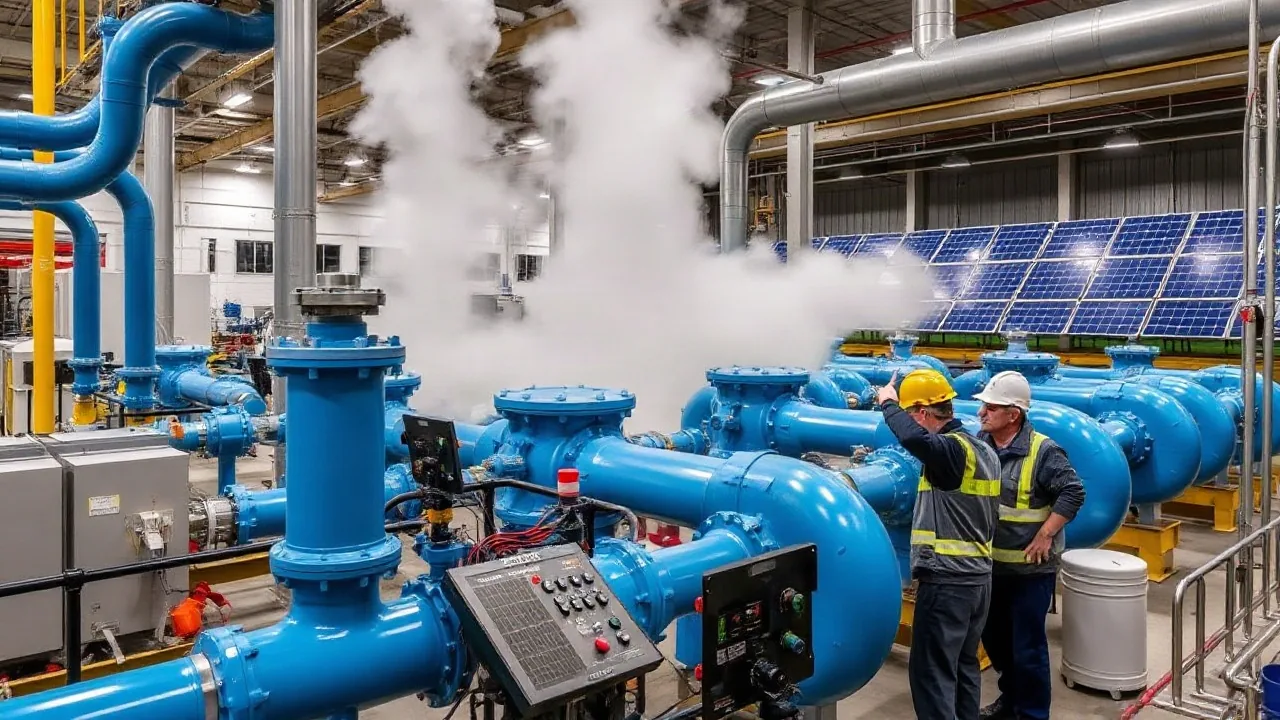
At the Düsseldorf Industrial Solutions Summit in September 2026, ThyssenKrupp unveiled a 10-megawatt alkaline electrolyzer designed specifically for steelmaking decarbonization, marking the largest pilot deployment of its kind in Europe. The company estimates the system will reduce hydrogen production costs by 35 percent compared to 2024 models, a milestone that reflects the accelerating pace of green hydrogen innovation reshaping heavy industry this year.
Green hydrogen, produced by splitting water using renewable electricity rather than fossil fuels, has long faced economic headwinds. Scaling production while cutting costs remained the central engineering challenge. Recent breakthrough electrolyzer designs and pilot facilities across North America, Europe, and Asia are now demonstrating that the gap between green and conventional hydrogen is narrowing faster than most industrial planners expected.
"We're seeing electrolyzer efficiency improvements of 2 to 3 percent annually, and capital costs per megawatt are dropping 15 to 20 percent every two years," said Dr. Maria Chen, director of the International Energy Agency's Clean Hydrogen Division, in an October 2026 interview. "The question is no longer whether green hydrogen will work. It's when industries will have no economical reason to delay the switch."
Technology Gains and Cost Reductions in 2026
Three competing electrolyzer technologies are advancing in parallel. Alkaline systems, which use caustic solutions, dominate current deployments but face durability constraints. Proton exchange membrane (PEM) electrolyzers operate at higher current densities and respond faster to variable renewable power, critical for pairing with wind and solar farms. Solid oxide electrolyzers, operating at high temperatures, promise superior efficiency but require longer development timelines.
Concrete progress is visible in manufacturing capacity. Plug Power completed a 500-ton-per-day green hydrogen facility near Buffalo, New York, in April 2026, serving regional logistics and chemical producers. Nel ASA commissioned two 30-megawatt electrolysis plants in Denmark and Norway simultaneously in June 2026, bringing total European electrolyzer capacity to over 8 gigawatts by Q3 2026.
Cost-per-kilogram figures underscore the shift. Green hydrogen fell to $3.50 to $4.20 per kilogram in favorable markets with abundant cheap renewable power by mid-2026, narrowing the gap with gray hydrogen produced from natural gas at $1.50 to $2.00 per kilogram at the same period. Policy support remains crucial: the U.S. Inflation Reduction Act's production tax credit of up to $3 per kilogram accelerated five major electrolyzer projects through permitting.
Industrial Decarbonization Gains Real Momentum
Steel, cement, and chemicals manufacturing account for roughly 30 percent of global industrial emissions. These sectors are now committing to sustainable energy transitions using green hydrogen as a direct replacement for fossil fuel-based heat and as a feedstock.
ArcelorMittal, the world's largest steelmaker, announced in January 2026 that it will convert three blast furnaces to direct reduced iron (DRI) hydrogen-based systems by 2030, beginning with its Ghent facility in Belgium. The retrofit uses green hydrogen instead of coke, the traditional carbon-intensive reductant. Estimated emissions reduction: 2.5 million metric tons of CO2 annually from that site alone once full transition completes.
In chemicals production, Solvay initiated trials at its Antwerp polyol facility in March 2026, substituting gray hydrogen feedstock with green hydrogen for part of its output. Preliminary results indicate no loss in product quality while cutting scope 1 emissions by 22 percent for that production line.
Cement producers face a different challenge. Holcim is piloting a climate tech hydrogen burner in Austria that burns pure green hydrogen instead of natural gas to heat limestone kilns. The test commenced in July 2026 and is projected to cut kiln emissions by up to 60 percent if scaled.
Challenges and the Road Ahead
Widespread adoption still faces real obstacles. Electrolyzer raw material constraints, particularly for platinum group metals used in PEM catalysts, could limit supply if demand accelerates beyond current forecasts. A 50-gigawatt global electrolyzer capacity target by 2030 would require roughly 40 percent more platinum availability than current mining production, according to metals analyst reports published in October 2026.
Transportation and storage of green hydrogen remains underdeveloped. Unlike natural gas pipelines, hydrogen infrastructure is sparse outside refineries and industrial clusters. New projects in the U.S., Europe, and Australia aim to convert existing gas pipelines to carry hydrogen, but repurposing requires materials testing and regulatory approval on a case-by-case basis. Liquid hydrogen trucking and ammonia-as-carrier pathways are competing for market share but neither approach is yet cost-competitive at scale.
Regional variability in renewable power availability strongly shapes green hydrogen economics. Iceland, with abundant hydroelectric capacity, can produce green hydrogen at under $3 per kilogram. The U.S. Midwest and Texas, with expanding wind farms, approach similar costs. Water-scarce regions, particularly the Middle East and parts of Australia, face trade-offs between hydrogen production and agricultural water needs.
Policy certainty remains essential. The European Union's Green Hydrogen Partnership targets 10 million metric tons annual production by 2030, backed by 8 billion euros in direct subsidies. Japan's hydrogen strategy prioritizes import agreements with hydrogen-exporting countries. The U.S. lacks a unified national hydrogen roadmap, though regional initiatives and IRA incentives are catalyzing private investment.
Despite headwinds, renewable energy cost declines are creating structural economic advantages for green hydrogen. Solar and wind electricity prices fell another 12 to 18 percent globally during 2026, directly lowering electrolyzer operating costs. This price trajectory, sustained over the next five years, could make green hydrogen economically competitive without subsidies in leading markets by 2028 or 2029.
The transition to industrial innovation powered by hydrogen is no longer speculative. Thousands of metric tons of green hydrogen produced in 2026 are already replacing fossil fuel-derived hydrogen in commercial operations. The question now is speed and scale: whether electrolyzer manufacturing capacity, infrastructure investment, and industrial retooling can keep pace with the economic opportunity materializing in real time.