
Humans Halted Ancient Ice Age's Start 2,000 Years Ago
New research suggests Earth was on the cusp of a new ice age beginning 2,000 years ago. However, human industrial activity, specifically burning fossil fuels, appears to have significantly intervened and halted this natural progression.

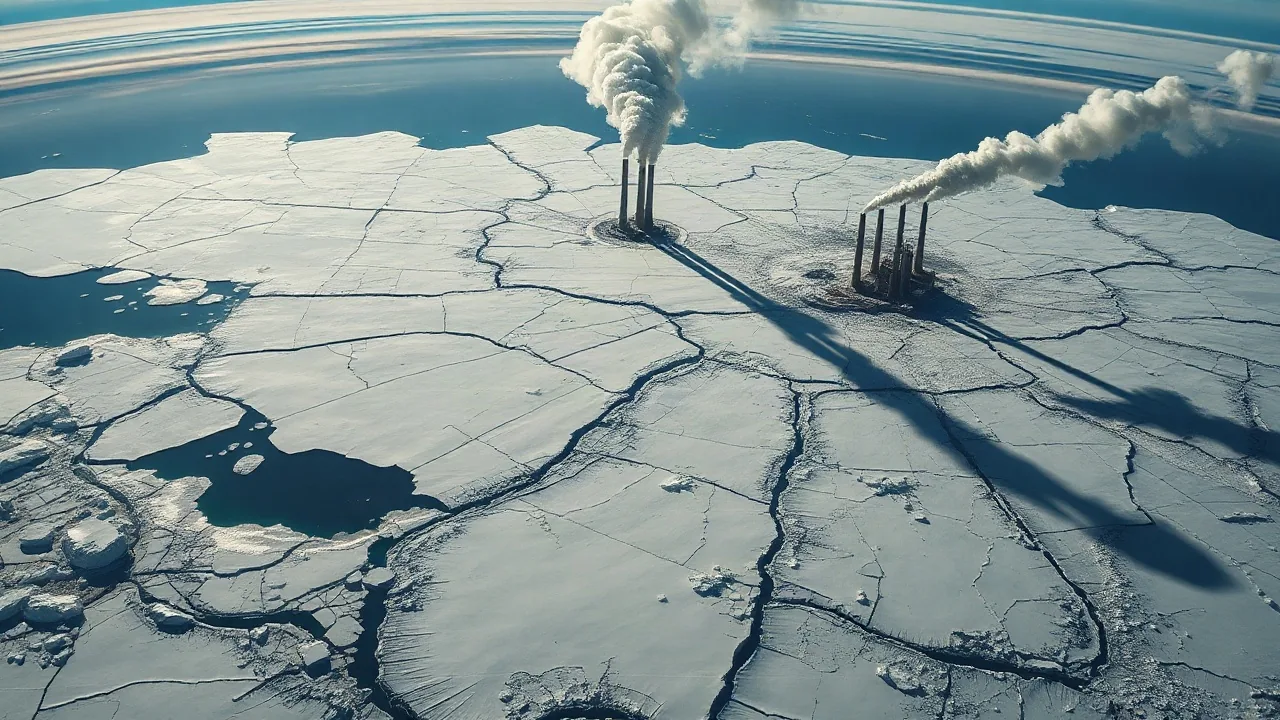
Scientists have determined that Earth was entering a new ice age approximately 2,000 years ago, a natural cooling trend that could have drastically reshaped the planet. However, this anticipated glacial period was evidently curtailed by the burgeoning impact of human industrialization, particularly the widespread burning of fossil fuels.
This finding, drawing from multiple scientific analyses, suggests that the planet's climate system, which had been cooling for centuries, was significantly altered by human activities. The research indicates that the expansion of ice sheets, a hallmark of ice age onset, was already underway and poised to continue, potentially leading to widespread glaciation across Northern Hemisphere continents.
The Role of Greenhouse Gases
The crucial intervention point appears to have been the rise in atmospheric greenhouse gases, primarily carbon dioxide, released through the combustion of coal and other fossil fuels. While early industrialization was nascent compared to today's scale, the study posits that even these early emissions were sufficient to counteract the natural cooling forces driving the planet toward an ice age. The warming effect of these gases evidently overwhelmed the cyclical cooling patterns that typically govern Earth's glacial periods.
Dr. Bridgette O'Connor, a paleoclimatologist not directly involved in the latest synthesis but familiar with the research, commented, "The data compellingly suggests that human influence on the climate system predates our modern industrial era more significantly than previously understood. The geological record shows a clear divergence from expected cooling trends around the time early industrial activities began to scale up."
The implications of this discovery are profound. It underscores the long-term and pervasive influence of human activity on global climate patterns. For millennia, natural cycles would have dictated periods of glaciation and warming. This research indicates that, starting around 2,000 years ago, humanity began to exert its own force, effectively canceling out a significant natural climate event. This historical intervention serves as a powerful precursor to the more dramatic climate shifts observed in the 20th and 21st centuries.
Further analysis of ice core samples and sediment layers is expected to provide more granular detail on the precise timing and magnitude of this climate turnaround. Understanding this past human intervention offers critical context for contemporary debates on climate change and the long-term trajectory of Earth's climate under continued anthropogenic influence. The study highlights that the global warming observed today is not an unprecedented phenomenon in terms of human impact, but rather a continuation and acceleration of a trend that began millennia ago.