
SpaceX Launches Starfall Reentry Capsule on Bandwagon-5 Mission
SpaceX successfully launched its Starfall reentry capsule and 31 customer payloads aboard a Falcon 9 rocket on the Bandwagon-5 rideshare mission. The reusable capsule is designed for rapid turnaround.

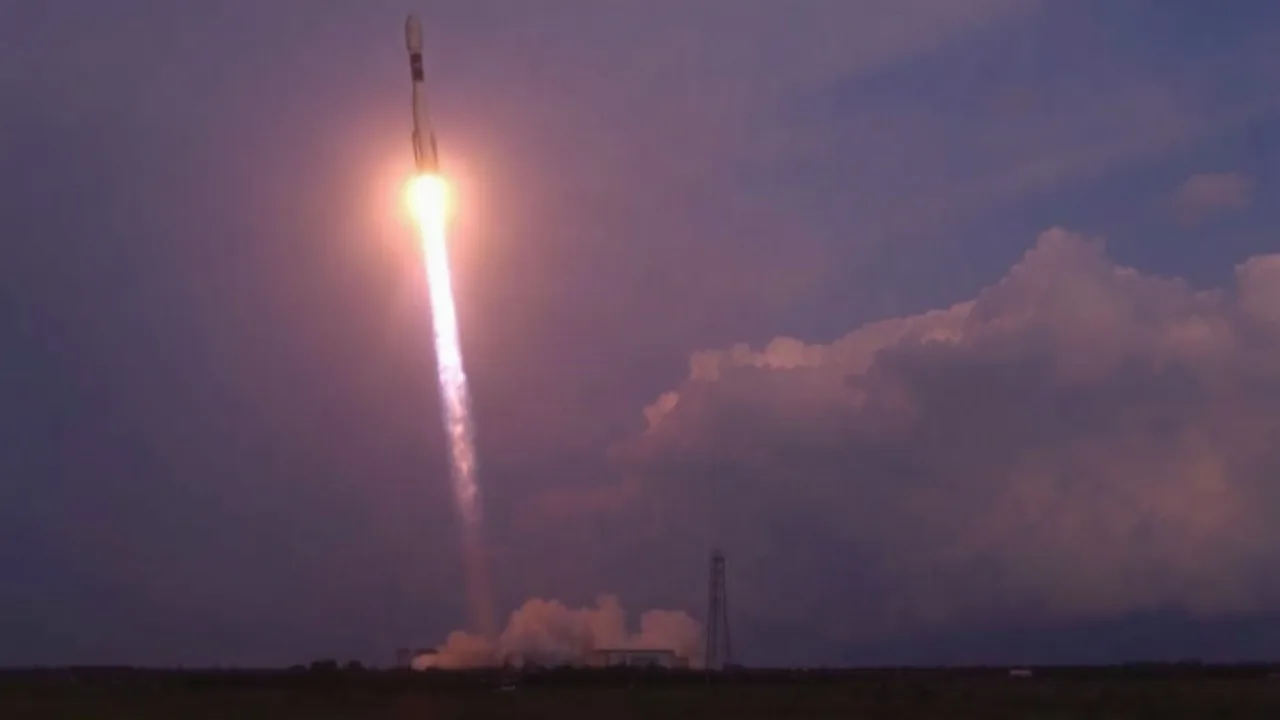
SpaceX launched its reusable Starfall reentry capsule, along with 31 customer payloads, into orbit on the Bandwagon-5 rideshare mission from Kennedy Space Center in Florida on October 16, 2026. The Falcon 9 rocket carried the diverse set of satellites, which included payloads from commercial, government, and research organizations. The Starfall capsule itself is a key component of SpaceX's strategy for reducing the cost and turnaround time for returning payloads from orbit, particularly for scientific and research missions.
The Bandwagon-5 mission highlights SpaceX's continued dominance in the commercial launch market and its commitment to providing frequent access to space. The company has been rapidly increasing its launch cadence throughout 2026, utilizing its fleet of Falcon 9 and Falcon Heavy rockets to deploy satellites for a wide range of clients. This mission's success further solidifies SpaceX's position as a leading provider of launch services for small satellite constellations and specialized payloads.
Starfall's Role in Future Space Operations
The Starfall reentry capsule represents an innovative approach to payload recovery. Unlike traditional capsules designed for large human-crewed missions, Starfall is optimized for smaller, more frequent science and research payloads. Its design emphasizes rapid turnaround, allowing for quicker processing and redeployment. This capability is crucial for missions that require timely data return or operate on tight schedules. By enabling swift recovery and refurbishment, SpaceX aims to make space-based research more accessible and cost-effective for a broader range of institutions.
The development of Starfall is part of SpaceX's larger vision for reusable space technology. The company has pioneered reusable rocket boosters, significantly driving down launch costs. Extending this reusability to reentry capsules further enhances the economic efficiency of space operations. This focus on reusability is a cornerstone of SpaceX's ambition to enable more frequent and affordable access to space, paving the way for future endeavors like lunar missions and eventual Mars colonization.
This latest launch also demonstrated the Falcon 9 rocket's reliability, completing its 94th mission in orbit. The booster successfully returned to land on the drone ship 'Just Read the Instructions' in the Atlantic Ocean, a testament to SpaceX's advanced landing technology. The recovery of the booster ensures its swift return to land for refurbishment and future flights, contributing to the company's overall launch capacity.
The successful deployment of the 31 customer payloads on the Bandwagon-5 mission represents a significant contribution to the growing space economy. These satellites will contribute to various applications, including Earth observation, telecommunications, and scientific research. The ability to integrate diverse payloads onto a single launch vehicle like the Falcon 9 is a key advantage offered by rideshare missions, making space access more feasible for smaller organizations and researchers who may not require a dedicated launch.