
Japan's MMX Mission Targets Mars Moon Phobos for Soil Samples
Japan's MMX mission has successfully launched a spacecraft to orbit Mars's moon Phobos. The ambitious project aims to collect soil samples and return them to Earth by 2029.

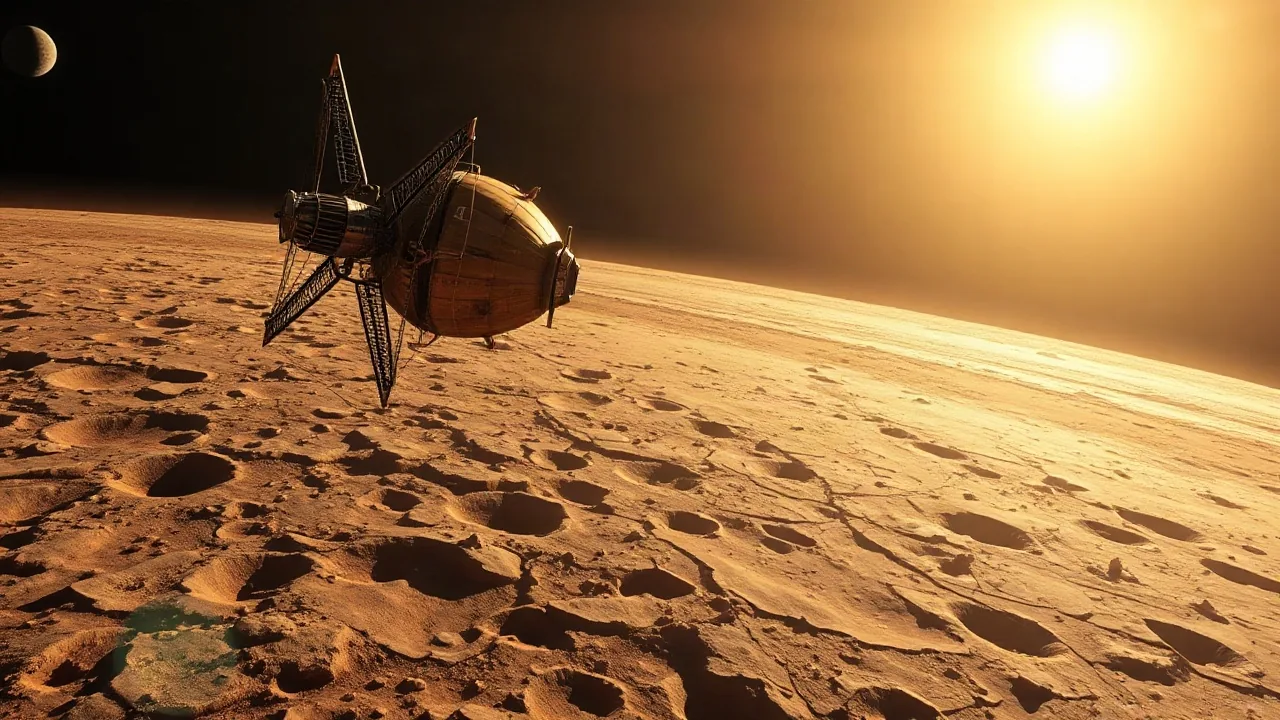
Japan's Martian Moons eXploration (MMX) spacecraft successfully launched aboard an H3 rocket from the Tanegashima Space Center on October 21, 2026, beginning a bold journey to the mysterious moons of Mars. The primary target of the mission is Phobos, one of Mars's two small, irregular satellites, with the ultimate goal of collecting soil samples and returning them to Earth for the first time ever.
The MMX mission, operated by the Japan Aerospace Exploration Agency (JAXAXA), is an ambitious undertaking designed to unlock some of the secrets surrounding Phobos and its companion moon, Deimos. Scientists are particularly intrigued by the moons' origins, as their composition and orbits do not align with typical asteroid belt material, leading to theories that they may be captured asteroids or even fragments of Mars itself. The successful launch marks a significant step forward in planetary science and international space exploration.
Unraveling the Mysteries of Martian Moons
Phobos, the larger of the two moons, is a heavily cratered body approximately 22 kilometers (13.7 miles) in diameter. Its close proximity to Mars and its unusual orbit have long puzzled astronomers. The MMX probe will first enter orbit around Mars, then maneuver to orbit Phobos. While in orbit, the spacecraft will conduct extensive remote sensing observations of both Phobos and Deimos, gathering data on their surface features, composition, and internal structure. A key objective is to understand how these celestial bodies formed and evolved.
The mission's most critical phase will involve a descent to Phobos's surface to collect samples. The MMX spacecraft is equipped with a specialized coring drill capable of extracting material from the moon's regolith. After collection, the samples will be sealed within a return capsule. The MMX probe is expected to spend several years at Mars, completing its observational and sampling tasks before initiating its return journey to Earth, with sample delivery anticipated in 2029.
Dr. Hiroshi Sasaki, MMX Project Manager at JAXA, expressed enthusiasm following the launch. "This is a momentous occasion for Japan and for planetary science worldwide," Sasaki stated. "Phobos and Deimos represent unique scientific opportunities, and MMX has been designed to overcome the significant engineering challenges associated with studying and sampling these small worlds. We are eager to analyze the data and the precious samples that will eventually reach Earth."
The scientific community has eagerly awaited this mission. Understanding the origin of the Martian moons could provide crucial insights into the early history of the solar system and the conditions that may have existed on Mars billions of years ago. The possibility that Phobos and Deimos are captured asteroids or even pieces of Mars itself raises fundamental questions about planetary formation and evolution. The Martian Moons eXploration mission, with its unprecedented sample return objective, is poised to provide answers that have eluded scientists for decades.
This endeavor highlights Japan's growing capabilities in deep space exploration, building on previous successes such as the Hayabusa asteroid sample return missions. The international collaboration involved in space science, alongside data sharing protocols with other space agencies, underscores the global nature of scientific discovery in the 21st century. The findings from the MMX mission could have profound implications for future exploration of Mars and its moons, potentially paving the way for human missions.