
Green Hydrogen Production Innovations Reshape Industrial Energy
Major breakthroughs in green hydrogen technology are enabling cost-effective production at scale, with steel manufacturers and energy firms pivoting toward this clean fuel as carbon regulations tighten across 2026.

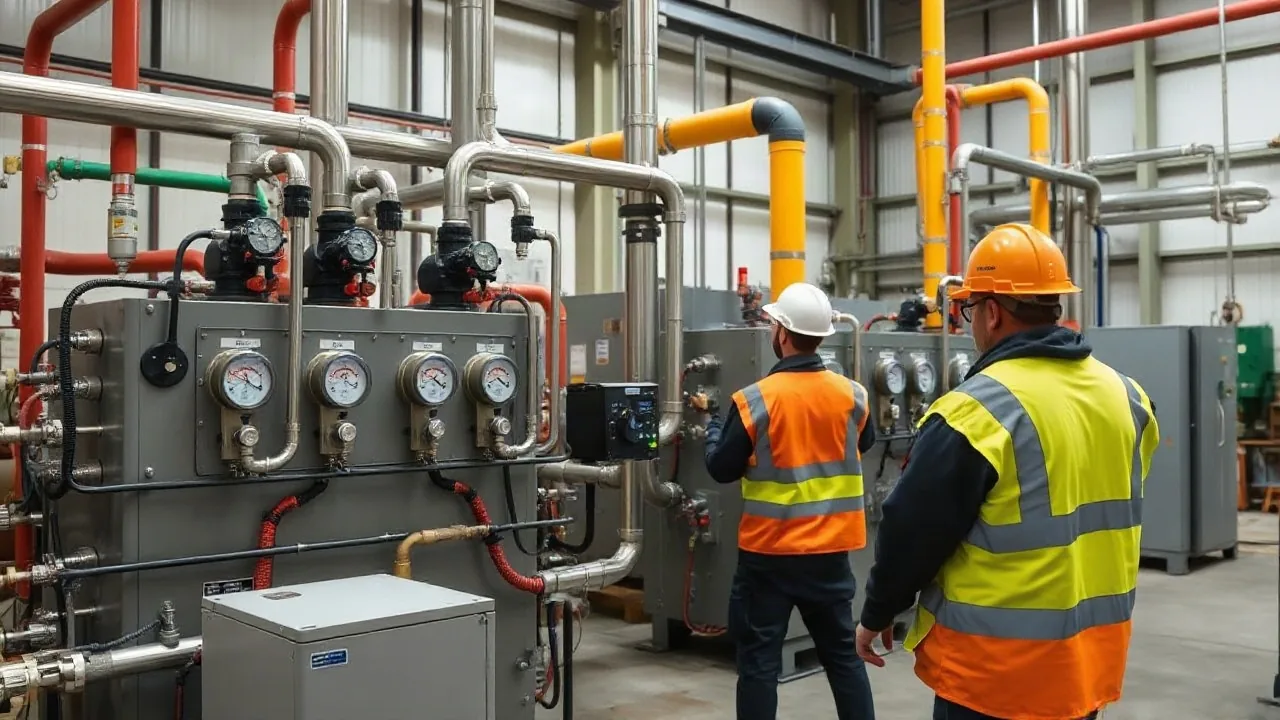
ArcelorMittal's hydrogen-powered steel facility in Sweden began commercial operations in October 2026, marking the first large-scale deployment of green hydrogen in primary steelmaking. The plant, using electrolyzer technology supplied by Plug Power, produces direct reduced iron without coal, cutting emissions by 95 percent compared to blast furnace methods.
This milestone reflects a broader acceleration in clean energy adoption. Global green hydrogen capacity reached 1.2 gigawatts by mid-2026, up from 0.3 gigawatts two years earlier, according to the International Energy Agency's quarterly report released in September.
"We are witnessing a genuine inflection point," said Dr. Sarah Chen, head of industrial decarbonization at the Global Energy Council. "The cost of green hydrogen has fallen 35 percent since 2023, and industrial buyers are now moving from pilots to contracts at volume."
Why Steel Industry Adoption Matters
Steel production accounts for roughly 8 percent of global carbon emissions. Traditional blast furnaces rely on coal and coke, processes that are difficult to electrify directly. Green hydrogen offers a chemical replacement that integrates into existing workflows with minimal equipment redesign.
Beyond ArcelorMittal, Thyssen Krupp announced in June 2026 that its flagship Duisburg mill in Germany would switch to hydrogen reduction by 2028, backed by 2.5 billion euros in funding from the EU's Innovation Fund. POSCO in South Korea launched a pilot program targeting 50,000 tons of hydrogen-based steel output by 2027.
The economic case is crystallizing. A ton of green hydrogen now costs approximately $2.50 to $3.00 per kilogram at the most efficient facilities, down from $4.50 in 2024. Carbon pricing in the EU and emerging schemes in North America have pushed the break-even point decisively in hydrogen's favor for large industrial consumers.
Electrolyzer Technology and Production Bottlenecks
The leap in capacity depends on electrolyzer manufacturing. Alkaline and proton exchange membrane (PEM) electrolyzers convert renewable electricity and water into hydrogen and oxygen. Three major manufacturers control the landscape: Siemens Energy, Plug Power, and a newly expanded fleet from Asian suppliers led by China's Sungrow.
- Siemens Energy increased electrolyzer output capacity to 500 megawatts annually as of July 2026.
- Plug Power commissioned its second US gigafactory in Georgia, targeting 1 gigawatt of annual production by 2027.
- Nel ASA (Norway) raised $400 million in October to triple PEM manufacturing by 2028.
Supply chain constraints remain real. Semiconductor components for power electronics and high-grade stainless steel for reactors are in tight supply. However, new foundries in the US and Europe are coming online, and sustainability procurement standards are driving vendor commitments.
Energy costs drive competitiveness. Facilities sited near hydropower, wind farms, or industrial wind curtailment points can achieve the lowest hydrogen costs. Norway, Iceland, Canada, and the Pacific Northwest of the United States are emerging as competitive production hubs.
Beyond Steel: Broader Industrial Uptake
The steel industry is the leading early adopter, but demand signals are broadening. Refineries are exploring hydrogen co-processing to reduce sulfur content in fuels while cutting emissions. Ammonia producers in the US Gulf Coast and Middle East are evaluating green hydrogen feedstock conversion, which could eliminate 2 to 3 percent of global CO2 emissions if widely deployed.
Chemical manufacturers including BASF and Dow announced pilot projects in 2026 to blend green hydrogen into their production loops. Cement producers, another hard-to-abate sector, are running trials in France and Germany.
Transportation and power generation remain nascent. Hydrogen fuel cell trucks are deployed in limited fleets in California and Europe, but passenger vehicle adoption has stalled amid fuel infrastructure delays. Power plants burning hydrogen are operational only in pilot form, though several utilities have announced construction plans for 2027 and beyond.
Innovation in electrochemistry continues to lower costs. Researchers at the Department of Energy's laboratories demonstrated a novel catalyst material in August 2026 that reduces the voltage required for PEM electrolysis by 12 percent, potentially cutting operational costs by $0.30 per kilogram at scale. Multiple venture-backed startups are pursuing alternative electrolyzer designs using solid oxide and solid polymer electrolytes, with commercial prototypes expected by 2028.
Policy tailwinds are substantial. The US Inflation Reduction Act's 45V hydrogen tax credit (up to $3 per kilogram) is driving investment in electrolysis hubs in Texas, Louisiana, and California. The EU Hydrogen Bank, backed by 3 billion euros, is underwriting long-term hydrogen purchase agreements. Japan's Green Growth Strategy mandates 15 percent hydrogen in its industrial energy mix by 2030.
The energy transition into heavy industry will not be instantaneous. Incumbent coal and natural gas incumbents retain regulatory favor in many regions, and retrofitting mills and refineries requires years of capital planning. Yet the trajectory toward green hydrogen is now visible to institutional investors, multinational corporations, and policymakers. By 2030, analysts at Bloomberg NEF project green hydrogen will represent 15 to 20 percent of industrial hydrogen demand in developed economies, with growth accelerating as production costs continue to compress.