
West US Glaciers Vanish: Nearly 300 Lost Since 1960s Due to Climate Crisis
The western United States has seen the disappearance of almost 300 glaciers since the 1960s, a stark indicator of the escalating climate crisis. Remaining ice formations are now facing drastic shrinkage.

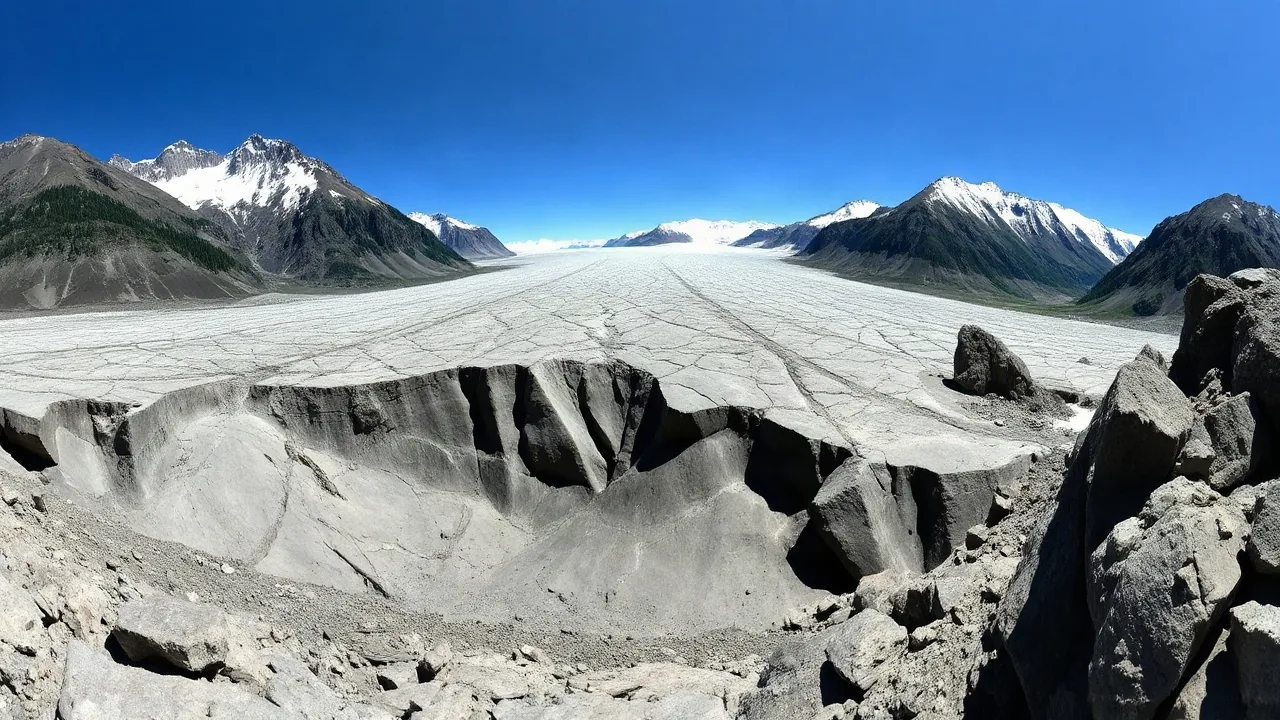
The western United States has experienced a dramatic loss of its glacial ice, with nearly 300 glaciers vanishing since the 1960s. This significant decline is a direct consequence of the escalating climate crisis, which is drastically shrinking the ice formations that remain, according to recent environmental analyses.
Scientists and researchers have documented a profound impact on the region's natural landscape, as once-prominent glaciers have receded or completely disappeared. The rate of melting has accelerated in recent decades, underscoring the urgency of addressing global warming. The loss of these glaciers is not merely an environmental concern; it carries significant implications for water resources, ecosystems, and historical climate records.
Environmental Ramifications of Ice Melt
The dwindling glaciers pose a substantial threat to the water supply for millions of people in the western U.S. These ice masses act as natural reservoirs, slowly releasing meltwater that sustains rivers and streams throughout the drier months. As they shrink, this vital water source diminishes, potentially leading to water scarcity for agriculture, urban populations, and natural habitats. Dr. Evelyn Reed, a glaciologist at the National Snow and Ice Data Center, stated, "The hydrological cycle in the western U.S. is intrinsically linked to glacial melt. What we are witnessing is a fundamental alteration of that cycle, with far-reaching consequences."
Beyond water availability, the loss of glaciers impacts biodiversity. Unique alpine ecosystems that depend on the cold, specific conditions created by glaciers are now under severe stress. Species adapted to these environments face habitat loss and increased competition, potentially leading to declines in population and even extinctions. Furthermore, glaciers are invaluable archives of past climate conditions. As they melt, the layers of ice that hold trapped air bubbles and dust provide crucial data about Earth's history, which is lost forever.
The ongoing warming trend, driven by human-induced greenhouse gas emissions, is the primary driver behind this accelerated glacial melt. Projections indicate that if current trends continue, many of the remaining glaciers in the U.S. West could disappear entirely within the next few decades. This stark reality necessitates immediate and substantial action to mitigate climate change and adapt to its unavoidable impacts. The resilience of both natural systems and human communities in the region will be tested as they confront the challenges posed by a warming planet and diminishing ice resources.