
Hunter's Moon Peaks This Weekend: Best Viewing Times
The annual Hunter's Moon will reach its peak illumination this weekend. Skygazers can anticipate optimal viewing conditions for the bright lunar event.

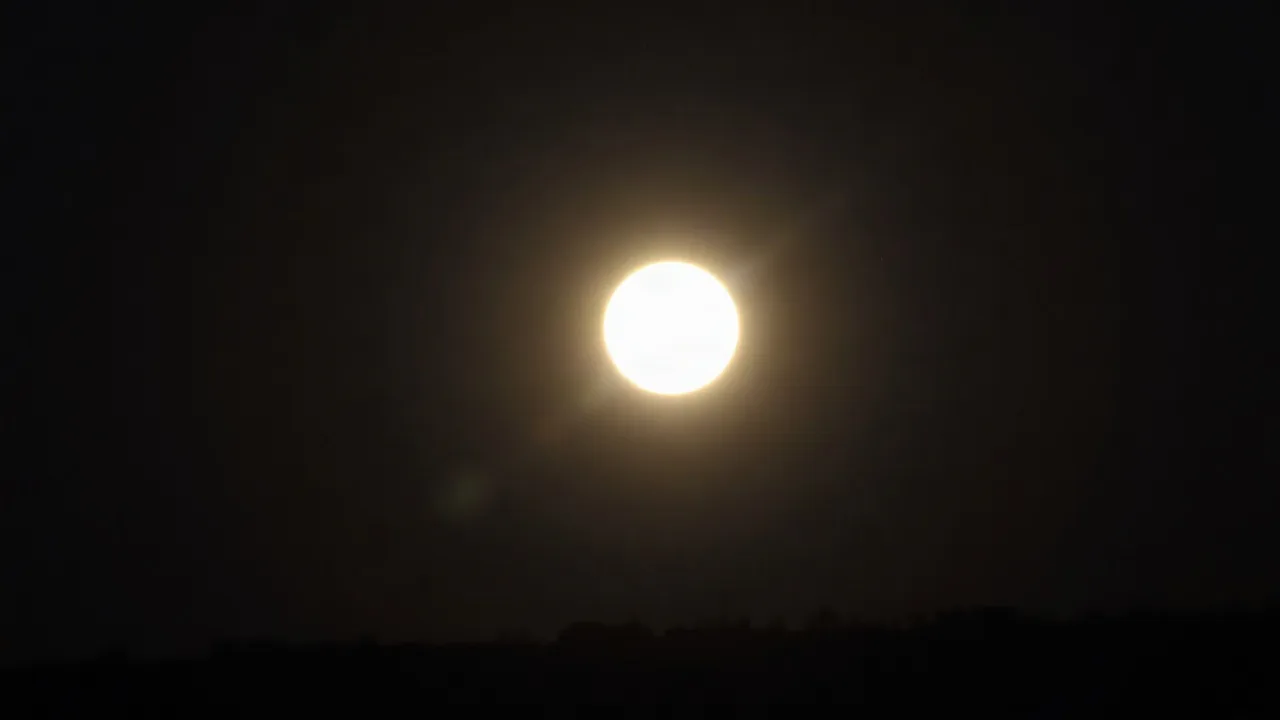
The much-anticipated Hunter's Moon will ascend into the night sky this weekend, offering a spectacular celestial display for observers across North America. This full moon, traditionally occurring in October, earns its name from historical hunting seasons when the increased moonlight aided hunters tracking game. The moon will appear fully illuminated on the night of Saturday, October 24, 2026, and will remain nearly full through Sunday evening, October 25, 2026.
For residents in the Eastern Time Zone, the moon will rise shortly after sunset, around 6:30 PM EDT on Saturday. Its peak illumination will occur in the early morning hours of Sunday, October 25, at approximately 3:47 AM EDT. While this precise moment might be inconvenient for many, the moon will still present a magnificent sight in the evening sky on both Saturday and Sunday nights. It will appear larger and brighter than usual due to its proximity to the horizon during moonrise, a phenomenon often referred to as the moon illusion.
Observing the Celestial Event
To get the best view of the Hunter's Moon, experts recommend finding a location away from city lights and light pollution. Areas with clear, unobstructed views of the eastern horizon will provide the most rewarding experience. While the moon will be visible to the naked eye, a pair of binoculars or a telescope can enhance the viewing experience, revealing lunar craters and surface details. This year, the Hunter's Moon presents a particularly good opportunity for amateur astronomers to observe, as it follows a period of clear weather in many regions.
The Hunter's Moon's appearance is a significant marker in the astronomical calendar, signaling the transition into late autumn. Its brilliance in the night sky historically provided essential light for traversing landscapes and completing harvests before the onset of winter. This year's event coincides with a relative lull in major meteor showers, making the moon the undisputed star of the night sky for several days.
The precise timing of the moonrise will vary slightly depending on geographical location. For instance, those in the Central Time Zone can expect moonrise around 7:30 PM CDT on Saturday, while Pacific Time Zone observers will see it ascend closer to 8:30 PM PDT. Regardless of the specific time, the sheer size and luminosity of the full moon are expected to captivate onlookers. This natural phenomenon serves as a reminder of the predictable yet awe-inspiring cycles of our solar system.