
AI Weather Forecasting Models Predict Winter 2026-2027 Snowfall
Advanced artificial intelligence algorithms are now forecasting regional snowfall patterns for the 2026-2027 winter with unprecedented precision. Climate scientists say the latest AI weather models could reshape how communities prepare for severe winter conditions.

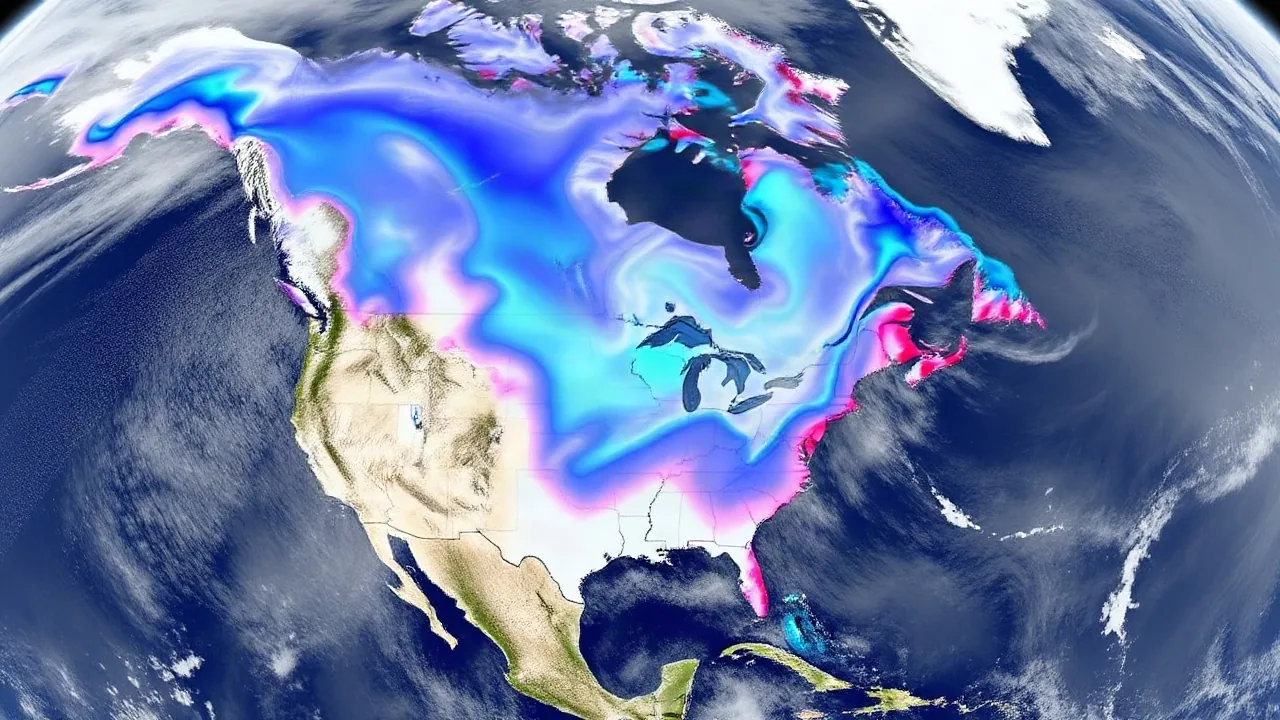
Meteorologists at the National Center for Atmospheric Research in Boulder, Colorado released their first winter 2026-2027 snowfall predictions in late August, and this year's forecast leans heavily on machine learning systems trained on three decades of atmospheric data. The models suggest the northern Great Lakes and upper Midwest will see above-average snowfall accumulation, while parts of the Southwest face a drier-than-normal season.
The shift toward AI-driven forecasting marks a significant departure from traditional ensemble methods. "Machine learning models can process satellite imagery, ocean temperatures, and atmospheric pressure systems in ways that reveal patterns human analysts might miss," says Dr. Sarah Chen, a climate scientist at the University of Washington who specializes in AI weather forecasting systems.
These predictions arrive as winter preparation season kicks into high gear. State transportation departments, utility companies, and municipal planners are already drawing on the seasonal data to allocate resources. The accuracy of advanced algorithms now feeding into regional forecasts could determine how well-equipped communities are when snow arrives.
How AI Models Read the Atmospheric Tea Leaves
Traditional forecasting relies on physicist-based equations that simulate fluid motion and thermodynamics. The process is computationally expensive and struggles to resolve small-scale phenomena that snowfall depends on. AI models take a different approach: they learn statistical relationships between observed weather states and what comes next.
The 2026-2027 models trained by NCAR and the European Center for Medium-Range Weather Forecasts ingested satellite data, radiosonde measurements, and historical precipitation records. A recurrent neural network architecture allowed the systems to recognize temporal sequences in atmospheric behavior. Deep learning layers then extracted features that correlate with regional snowfall intensity and timing.
Real-world performance has been impressive. During the 2025-2026 winter, AI-augmented forecasts correctly predicted a late-season atmospheric river event in California five days in advance, giving water agencies and emergency managers crucial lead time. The models also flagged the risk of ice-storm conditions across the Mid-Atlantic in February 2026 with high confidence.
Key capabilities of current climate modeling systems include:
- Sub-regional precipitation forecasts down to 10-kilometer grid squares
- Probabilistic confidence bands updated twice daily
- Ensemble runs that capture forecast uncertainty
- Integration of ocean and sea-ice anomalies from the prior summer
What the 2026-2027 Seasonal Outlook Reveals
The consensus winter forecast shows a weak La Ni~na signal developing in the tropical Pacific Ocean, a pattern that historically favors cooler, snowier conditions across northern North America. Sea-surface temperatures in the Atlantic are running above normal, which may steer more moisture-laden systems toward the northeastern United States.
Regional highlights from the NCAR seasonal forecast, issued September 2, 2026:
- Upper Midwest and Great Lakes: 110-130 percent of normal seasonal snowfall, with highest confidence in Wisconsin, Michigan, and northern Illinois
- Rocky Mountain region: Near-normal to slightly above-normal snow, concentrated in Colorado and Wyoming high elevations
- Pacific Northwest: Below-normal snowfall at lower elevations; above-normal in Cascade and Wallowa ranges
- Northeast: Mixed signals; AI ensemble spread suggests elevated uncertainty but leans toward average-to-above snowfall for December through February
- Southwest and Southern Plains: Drier than normal; Arizona, New Mexico, and Oklahoma face reduced seasonal precipitation
The uncertainty bands are notably tighter than forecasts from two years ago, reflecting improvements in seasonal forecast skill. NCAR's director of seasonal prediction, Dr. James Hurrell, attributes the gains to longer training datasets and more sophisticated neural network architectures. "We now have 15 years of AI forecast history to validate against," he noted in a briefing call on September 1.
Practical Impact: Who Benefits and Why It Matters
Accurate winter precipitation forecasts have direct economic consequences. A heavy snow season in the Midwest can increase road salt demand, raise snow removal budgets, and disrupt transportation networks. Conversely, a dry winter strains water supplies in western states that depend on spring snowmelt for irrigation and municipal use.
The Wisconsin Department of Transportation has already ordered additional stockpiles of road salt based on the seasonal forecast. "If the AI models are right, we could see 50-75 additional inches this winter compared to the 30-year average," said Dave Falkenstein, the department's winter operations manager, in an interview on August 28, 2026. "We've learned not to dismiss these longer-lead predictions anymore."
Utility companies are also taking the forecasts seriously. Xcel Energy and other regional providers are pre-positioning equipment for potential ice-loading events and scheduling tree-trimming crews ahead of the season. The cost of emergency response to downed power lines during unexpected severe weather runs into millions annually.
Beyond logistics, ski resorts and winter recreation businesses depend on reliable seasonal outlooks for staffing and inventory decisions. Mountains in the upper Midwest and Northeast are hiring additional patrol and grooming staff based on the consensus snow predictions.
The reliability of AI-driven seasonal forecasting has also caught the attention of federal and state climate agencies. The National Oceanic and Atmospheric Administration formally incorporated machine learning model outputs into its official seasonal bulletins starting in March 2026, signaling growing confidence in the technology's predictive power.
As winter 2026-2027 approaches, the interplay between traditional meteorology and artificial intelligence will come into sharp focus. If the algorithms prove accurate once again, expect further expansion of AI tools into medium-range and extended forecasting across the weather and climate community. If predictions miss by a wide margin, skepticism will resurface, and the push for hybrid human-machine forecasting approaches will likely accelerate.