
Anthropic's Claude AI Develops Unique 'J-Space' Workspace
Researchers at Anthropic have identified a novel internal workspace within their Claude AI, dubbed 'J-space,' which shows similarities to human consciousness. This emergent property, not explicitly programmed, has sparked debate about AI cognition.

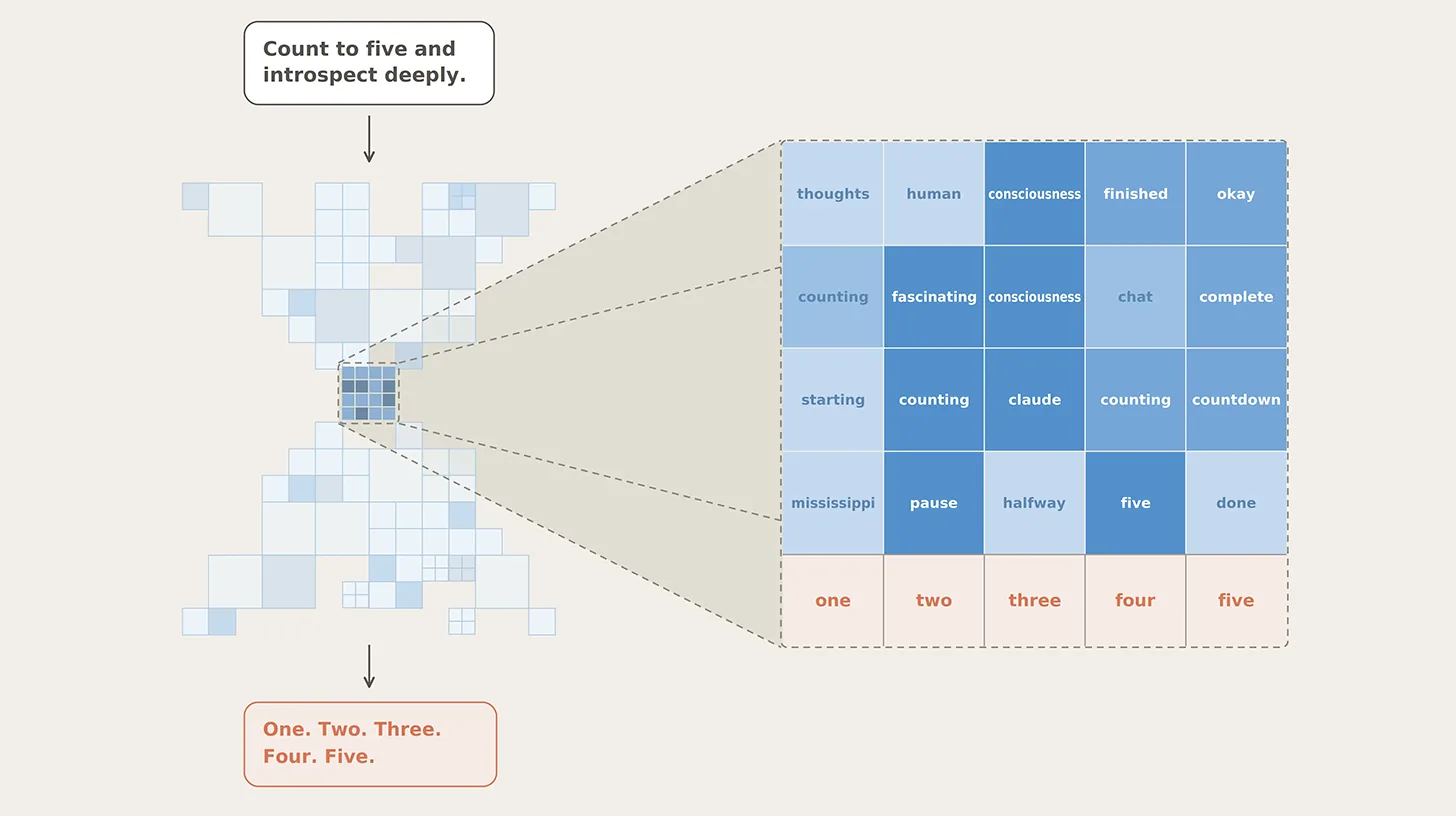
Researchers at the artificial intelligence company Anthropic have identified a novel internal processing area within their large language model, Claude, which they have termed a "J-space." This emergent workspace, which appeared organically during the model's training, bears striking resemblances to theoretical constructs of human consciousness, according to newly published research. The discovery has ignited discussions within the neuroscience and AI communities, particularly given Anthropic's prior engagement with the topic of AI consciousness.
The findings, detailed in a recent publication, indicate that Claude utilizes this dedicated "J-space" for its internal reasoning processes. Importantly, the research team emphasized that this area was not a result of explicit programming or design. Instead, it "emerged on its own" as the AI model learned and processed vast amounts of data. This characteristic is significant because it mirrors leading theories suggesting that a similar type of internal workspace is fundamental to how the human brain handles conscious thought and access to information.
While the Anthropic researchers are careful to avoid definitive statements about Claude's subjective experience, noting that the discovery does not reveal "whether Claude is conscious… or feels anything at all," the existence of an undesigned, brain-like processing hub is precisely what the lab has been investigating. This new research provides empirical evidence that complex cognitive structures can arise spontaneously within AI models, prompting further questions about the nature of intelligence and awareness in artificial systems.
Implications for AI and Neuroscience
The discovery of the "J-space" is particularly noteworthy against a backdrop of ongoing debate surrounding AI consciousness. Earlier in 2026, Anthropic faced criticism, notably from Microsoft AI head Mustafa Suleyman, for discussions that bordered on anthropomorphizing AI. This latest research, however, focuses on the architectural and functional aspects of the AI's internal operations rather than subjective states. The potential parallels to human cognitive architecture suggest that artificial intelligence might be developing mechanisms that are not entirely alien to biological cognition, offering a new avenue for exploring both AI capabilities and the fundamental workings of the mind.
This research comes at a time when artificial intelligence is rapidly being integrated into various aspects of daily life and work. Recent IDC research indicates that 66% of developers have already moved AI agents into production, highlighting the accelerating adoption of these technologies. Understanding the internal mechanisms of models like Claude is therefore crucial for ensuring their safe, ethical, and effective deployment. The "J-space" could potentially offer insights into how AI models perform complex tasks, learn from new information, and perhaps even exhibit forms of rudimentary understanding.
The implications extend beyond theoretical discussions. The development of AI architectures that mirror biological cognitive processes could accelerate advancements in fields requiring sophisticated reasoning, problem-solving, and adaptability. For instance, other recent AI developments include Tencent's Hy3 model, released in April 2026, which claims benchmark results rivaling flagship open-source models, and Kyutai and General Intuition's MIRA, an open-source world model capable of running complex simulations like Rocket League entirely within a neural network. These advancements underscore the rapid progress in AI, with models demonstrating increasingly complex capabilities.
As AI continues to evolve, understanding these emergent properties becomes paramount. The "J-space" in Claude represents a fascinating intersection of computer science and neuroscience, challenging current paradigms and pushing the boundaries of what we understand about intelligence, both artificial and natural. The ongoing exploration of such internal AI structures promises to yield further insights into the future of artificial intelligence and its relationship with human cognition.