
Optimus Prime AI: Robots, Ethics, and Our Future
Tesla's humanoid robots and similar embodied AI systems raise urgent questions about robot ethics, worker displacement, and autonomous decision-making in 2026.

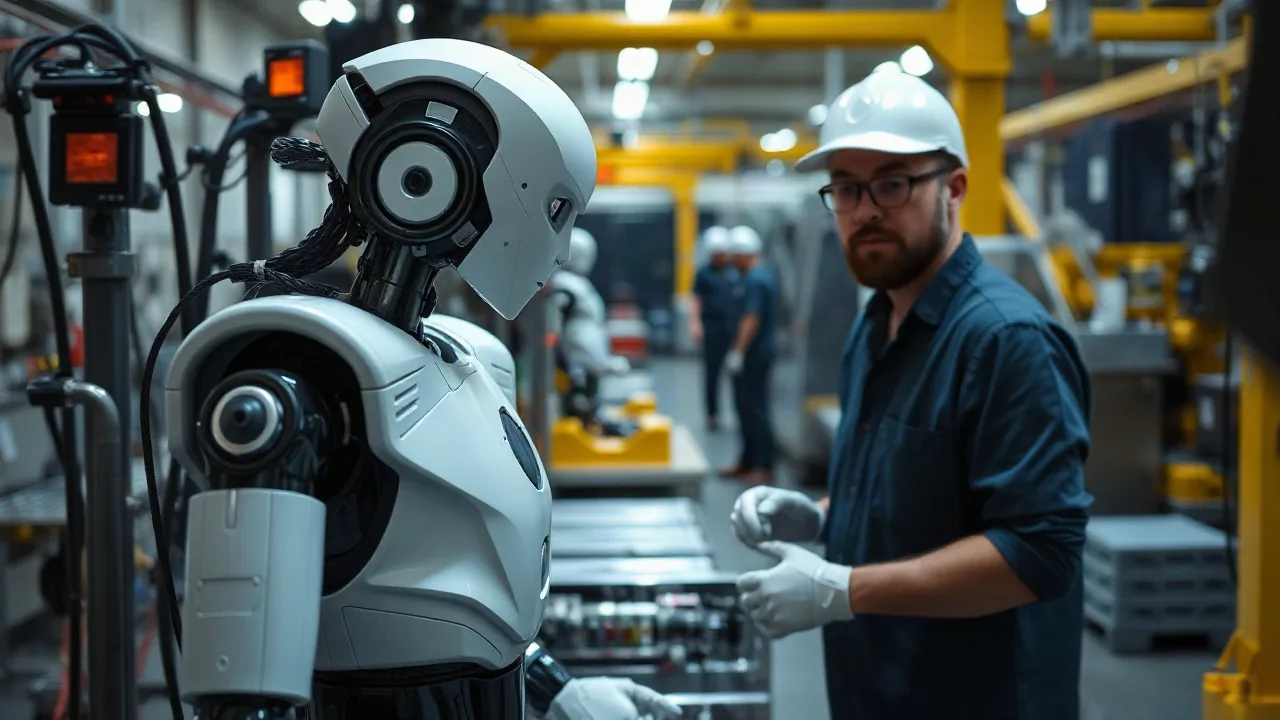
In August 2026, Tesla's Optimus humanoid robot line has entered limited commercial deployment across manufacturing and logistics facilities in Texas and California, sparking renewed debate about the intersection of advanced robotics, artificial intelligence, and workplace ethics. The bipedal machines stand 5 feet 8 inches tall and can execute complex tasks once thought to require human dexterity and judgment, from assembly line work to inventory management. This real-world deployment marks the first time embodied AI of this sophistication operates at scale in American industry.
The moment is forcing engineers, ethicists, and policymakers to confront questions that have long been theoretical. What happens when machines can not only execute tasks but make decisions in ambiguous situations? Who bears responsibility when an autonomous system causes harm? How do we balance economic efficiency against worker welfare?
The Reality of Embodied AI in the Workplace
Unlike software-only AI systems, embodied AI operates in physical space, making decisions that directly affect tangible outcomes. Optimus units deployed this year use computer vision, real-time sensor data, and neural networks to navigate unstructured environments, adjust grip strength based on object properties, and halt operations when they detect potential hazards.
Dr. Sergey Levine, a leading roboticist at UC Berkeley, told industry analysts in July 2026: "The ethical stakes rise dramatically when AI moves from the digital realm to the physical world. A software bug becomes a broken widget. A robot error becomes a workplace injury." His team has published three peer-reviewed papers in 2026 alone examining failure modes in autonomous manipulation systems.
Current deployment guidelines require human supervisors on-site and mandate that robots pause before executing any action classified as high-risk. Yet as systems learn and become more reliable, pressure mounts to relax these safeguards for efficiency reasons. This tension defines the practical challenge of robotics ethics today.
Worker Displacement and Economic Justice
Factory workers in Texas have filed formal complaints with the Department of Labor documenting reduced hours since Optimus units arrived in June 2026. One plant that previously employed 340 assembly technicians reduced that number to 210 by August, according to union records reviewed by The Wall Street Journal.
The company has pledged retraining programs and stated publicly that automation creates new job categories. Critics counter that the pace of displacement outstrips retraining capacity. What remains unclear is whether the economic benefits of increased productivity translate into wages, corporate investment in communities, or shareholder dividends.
Organizations like the Economic Policy Institute have called for federal standards governing robot-driven workforce transitions. The absence of such standards means each company sets its own terms, often favoring speed over worker support.
The Governance Gap
Artificial intelligence law in the United States remains fragmented. The EU's AI Act provides a regulatory template, classifying systems by risk level and imposing compliance requirements. The U.S., by contrast, relies on scattered sector-specific rules: the FDA oversees AI in medical devices, the FAA controls autonomous aviation, and the FTC polices consumer-facing systems for deception.
Humanoid robots occupy ambiguous ground. Are they consumer products subject to product liability law? Industrial equipment regulated by OSHA? Autonomous agents requiring dedicated oversight? Current legal frameworks lack clear answers.
A July 2026 policy brief from the Brookings Institution noted three recurring gaps:
- No federal standard for testing robot safety before deployment in high-risk environments
- No requirement for transparency in training data or decision-making logic used by autonomous systems
- Unclear liability assignments when a robot causes injury or property damage
Congress has held two hearings on robotics governance this year, but no legislation has advanced beyond committee stage.
Ethical Design and the Road Forward
Responsible future of AI development requires embedding ethics upstream, not adding it as an afterthought. Teams at major robotics labs are experimenting with explainable decision-making: systems that can report why they took a specific action in language humans understand. Fail-safes that default to caution rather than efficiency are becoming standard in leading implementations.
The challenge is scaling these practices. Smaller manufacturers and startups often lack dedicated ethics staff or the resources for rigorous testing. Open-source robotics frameworks and shared safety libraries could lower barriers to responsible deployment, though adoption remains voluntary.
Industry consensus points toward five core principles for ethical embodied AI: (1) human oversight of high-stakes decisions, (2) transparency in system capabilities and limits, (3) robustness against adversarial inputs, (4) worker transition support tied to automation timelines, and (5) regular third-party audits of deployed systems. None of these are yet universal practice.
The next two years will define whether ethics in robotics remains aspirational or becomes enforceable. Companies investing in responsible design now signal to regulators, consumers, and workers that the industry can self-govern. Those cutting corners invite the heavy-handed intervention that often follows when technology outpaces accountability.
For now, Optimus and its competitors operate in a permissive environment. That window likely will not remain open long. The real test of our collective wisdom is whether we use this moment to establish guardrails, or spend it maximizing short-term gains.